Control Resonant and Massive Roster of Upcoming Games Highlight New NVIDIA RTX and DLSS Implementations
 DaRmaZat
<< Press Release >>
Following major showcases at COMPUTEX, GTC Taipei, and Summer Game Fest, global developers and publishers have pulled back the curtain on an extensive wave of upcoming titles integrating NVIDIA’s performance-enhancing RTX technologies.

While hardware integrations took center stage with CEO Jensen Huang demonstrating the new RTX Spark superchip architecture alongside competitive staples like League of Legends and VALORANT, the software highlight belongs to Remedy Entertainment. The studio confirmed that its highly anticipated sequel, Control Resonant, will push visual boundaries by integrating full path tracing alongside advanced DLSS features upon its release this autumn.
A comprehensive breakdown of all games, expansions, and tech demos officially highlighted for their upcoming or newly implemented NVIDIA RTX and DLSS support includes:
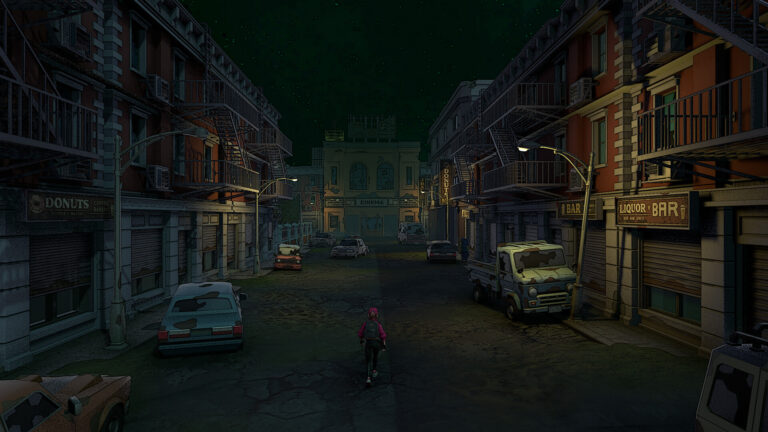
- Control Resonant: Remedy Entertainment’s highly anticipated sequel launches on September 24. Set in a devastated Manhattan plagued by paranormal anomalies, the title will leverage cutting-edge path tracing, NVIDIA RTX Mega Geometry, DLSS Ray Reconstruction, and DLSS 4.5 Dynamic Multi Frame Generation.
- League of Legends / VALORANT: Riot Games is officially partnering with NVIDIA to optimize both standard-setting titles for the RTX Spark chip ecosystem, granting high-performance frame rates to thin laptop users.
- PUBG: BATTLEGROUNDS / Subnautica 2: KRAFTON demonstrated both flagship survival experiences running natively on the new RTX Spark personal AI architecture.
- CINDER CITY / AION 2: NCSoft showcased high-fidelity gameplay of both projects on RTX Spark, alongside playable PC developer demos for CINDER CITY utilizing GeForce RTX desktop hardware.
- Deep Rock Galactic: Rogue Core: Ghost Ship Games’ 1-to-4 player co-op roguelite spin-off is available now, featuring built-in DLSS Super Resolution and Multi Frame Generation, with manual upgrade paths to DLSS 4.5 via the NVIDIA app.
- Dune: Awakening: Funcom’s detailed open-world survival game arrives on September 22. The single-player Arrakis adventure supports DLSS Frame Generation, Super Resolution, and NVIDIA Reflex out of the box, with optimization scaling for GeForce RTX 50-Series users.
- Gothic 1 Remake: Developed by Alkimia Interactive and THQ Nordic, this modern remake of the classic 2001 open-world RPG launched on June 5 with native, day-one support for DLSS 4.5 Super Resolution and Dynamic Multi Frame Generation.
- GOALS: This fast-paced, free-to-play competitive football game launched last week built around low-latency online performance, utilizing day-one DLSS Super Resolution and Multi Frame Generation.
- Onimusha: Way of the Sword: Capcom is reviving its iconic samurai action franchise, launching fully on September 25. Ahead of release, a downloadable gameplay and story demo is live on PC, featuring performance upgrades via DLSS 4.5, NVIDIA DLAA, and Reflex.
- Fatekeeper: Launching into Early Access last week, this handcrafted atmospheric indie showcases breathtaking dynamic environments as one of the first titles to implement Unreal Engine 5’s ray-traced MegaLights technology alongside standard DLSS.
- Marathon: Bungie’s sci-fi extraction shooter just kicked off Season 2. Alongside new equipment, weapons, and environmental hazards, the patch integrates DLSS Frame Generation support for GeForce RTX 40 and 50-Series users.
- NBA THE RUN: Developed by Play by Play Studios, this stylized 3v3 street basketball game launches today featuring fully integrated, out-of-the-box support for DLSS 4.5 Super Resolution.
- Tides of Tomorrow: Digixart and THQ Nordic’s post-apocalyptic narrative game dealing with the fictional Plastemia disease is available now, packing built-in DLSS Super Resolution support.
- Aniimo: Pawprint Studios announced an upcoming closed beta test for this next-gen, free-to-play monster-taming open-world RPG. The final release will support native DLSS 4.5 Super Resolution and Dynamic Multi Frame Generation.
 Simone