 DaRmaZat
When Rockfish Games released the original EVERSPACE, it delivered a fast-paced roguelike space shooter built around repeated runs, randomized upgrades, and the constant threat of losing your progress. For its sequel, however, the studio decided to move away from that structure and turned EVERSPACE 2 into a story-driven, lore-rich space shooter with a sprawling campaign shaped by faction conflicts scattered across a vast universe.
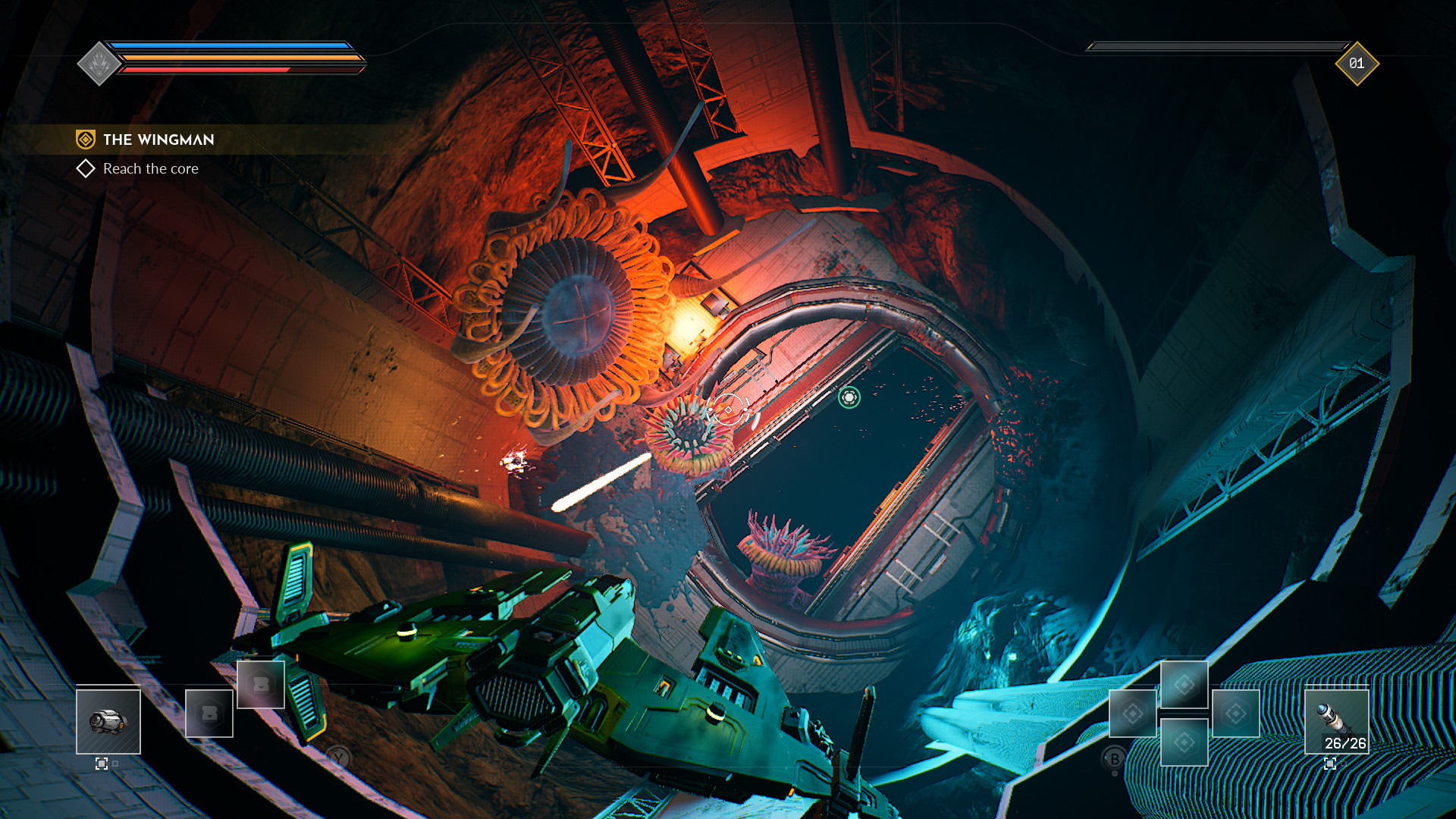
That change was already apparent during the game’s early access phase on PC, which began in 2021. Since August, EVERSPACE 2 has also been available for Nintendo Switch 2, and for this review we took a closer look at the Galactic Edition, which contains the base game, both major story expansions, Titans and Wrath of the Ancients, topped off by the Supporter Pack.
You pick up the story as Adam, one of the surviving clone pilots from the first game. What starts as a simple merc contract soon pulls him into a much larger web of outlaws, corporate factions, ancient secrets, and rising tensions between humanity and the alien Okkar, all while he continues to evade Colonial authorities on the fringes of space and encounters a wide range of factions, from the Outlaws and Ancients to Bloodstar, Zurilia, and G&B. The result is a good old-fashioned single-player space adventure, and frankly, that is exactly what I expected.
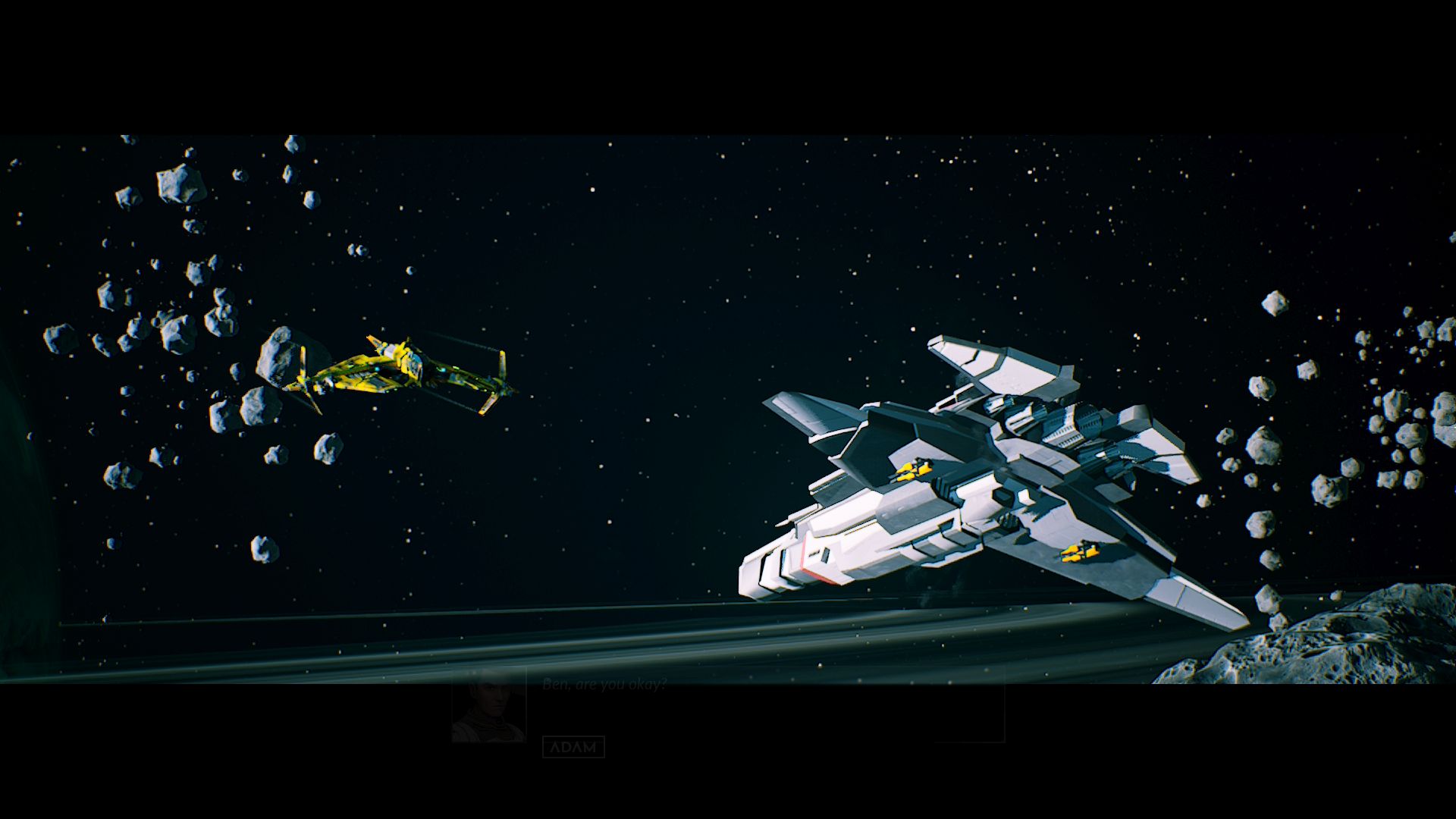
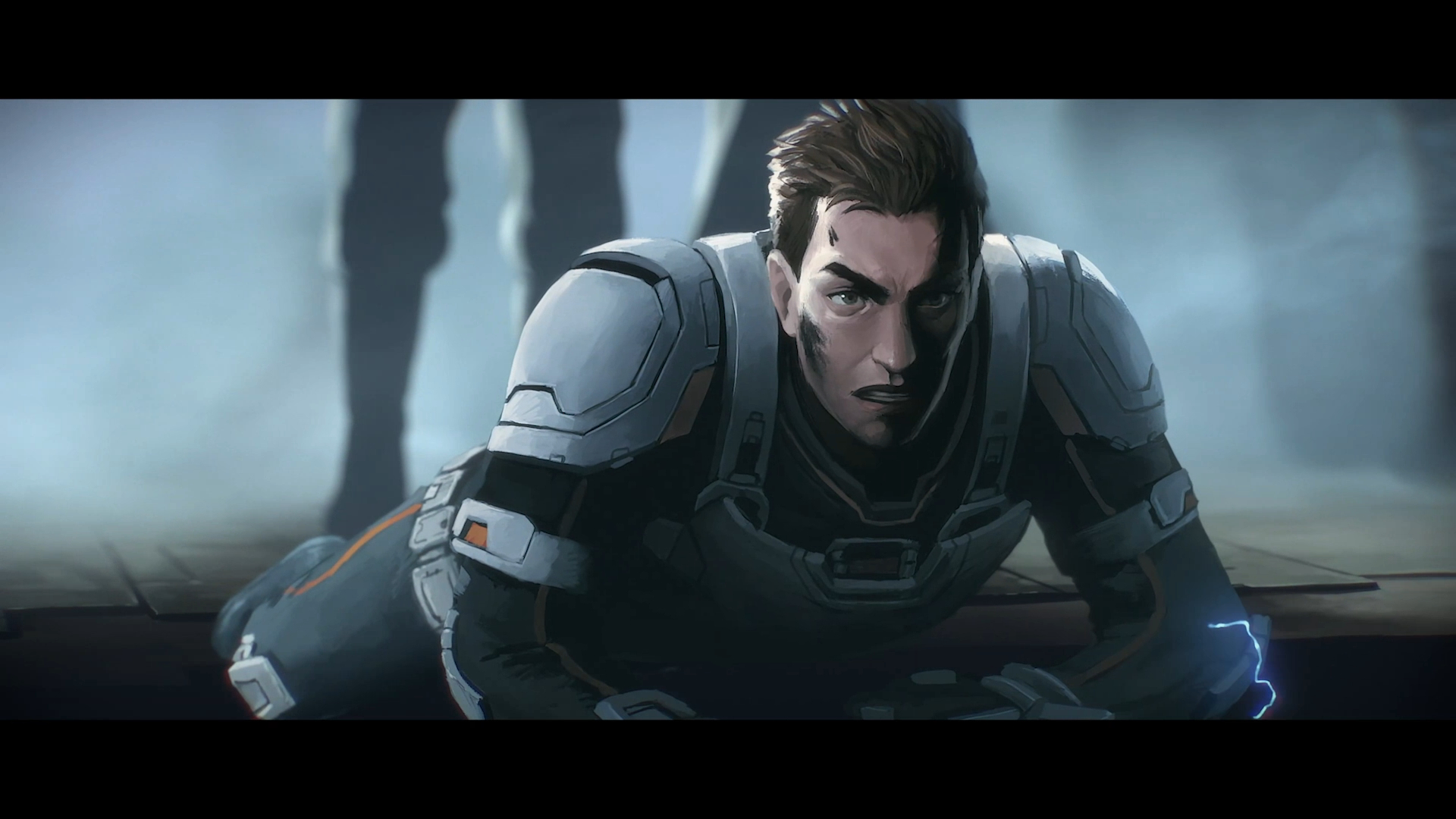
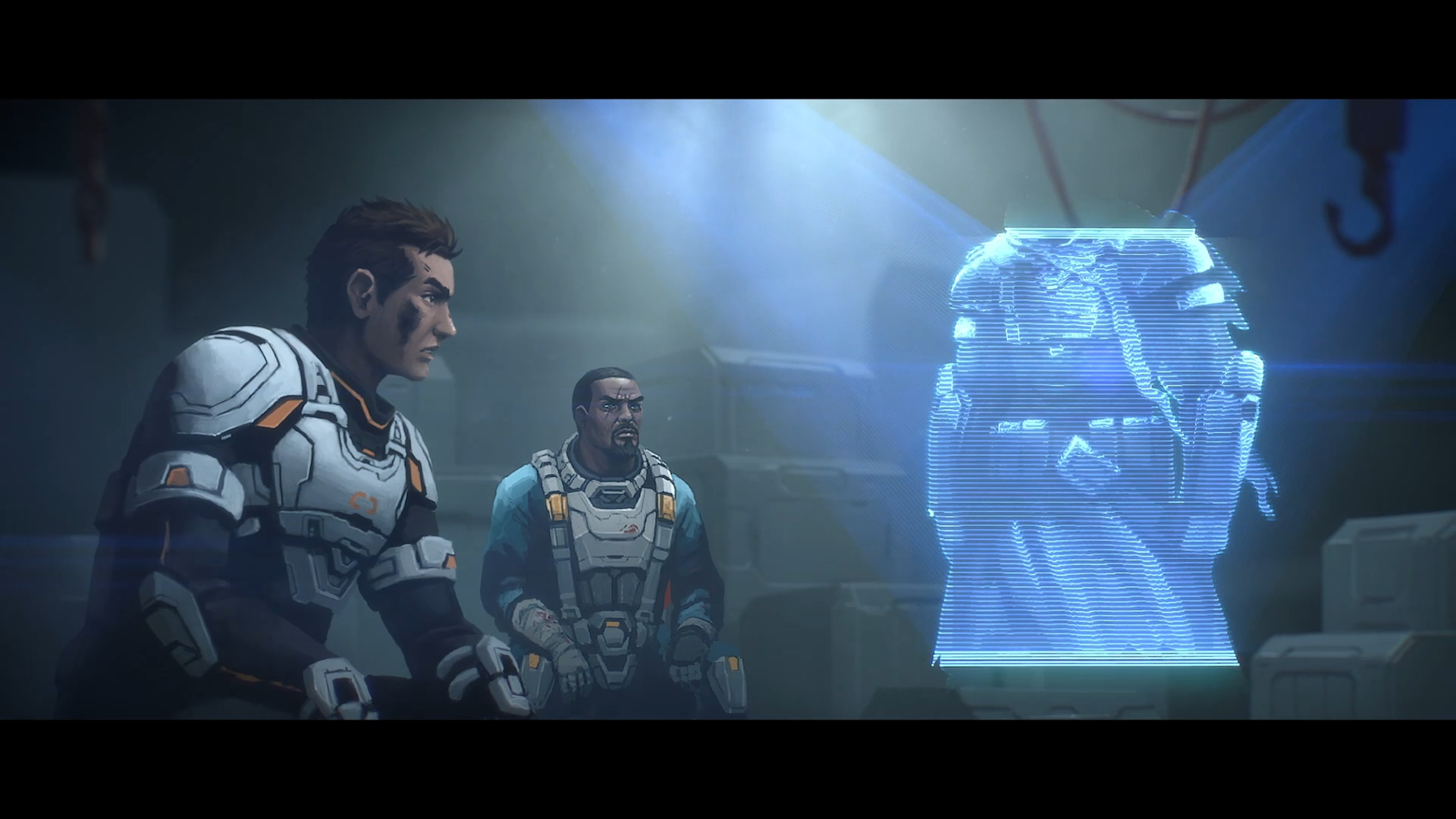
The DMZ within Cluster 34, where everything takes place, has plenty of lore to uncover, and it’s all neatly tied together through characters, missions, and the places you visit. Along the way, you’ll recruit a diverse crew of useful companions, like Ben and Dax, who become an important part of both the gameplay and the story. While most of them stay at your homebase to unlock passive perks – enhancing essential ship mechanics like boost capacity, tractor beam range, or crafting efficiency – others, like the Okkar pilot Elek, can actually be summoned into battle to fight by your side as a wingman.
Moreover, their distinct personalities, personal backgrounds, and interactions make the campaign feel much more alive. The motion-comic cutscenes play a big part in that, too. They give the characters room to shine while moving the plot forward. It is a surprisingly effective way to tell this kind of story, and one that fits the game’s overall aesthetic remarkably well.
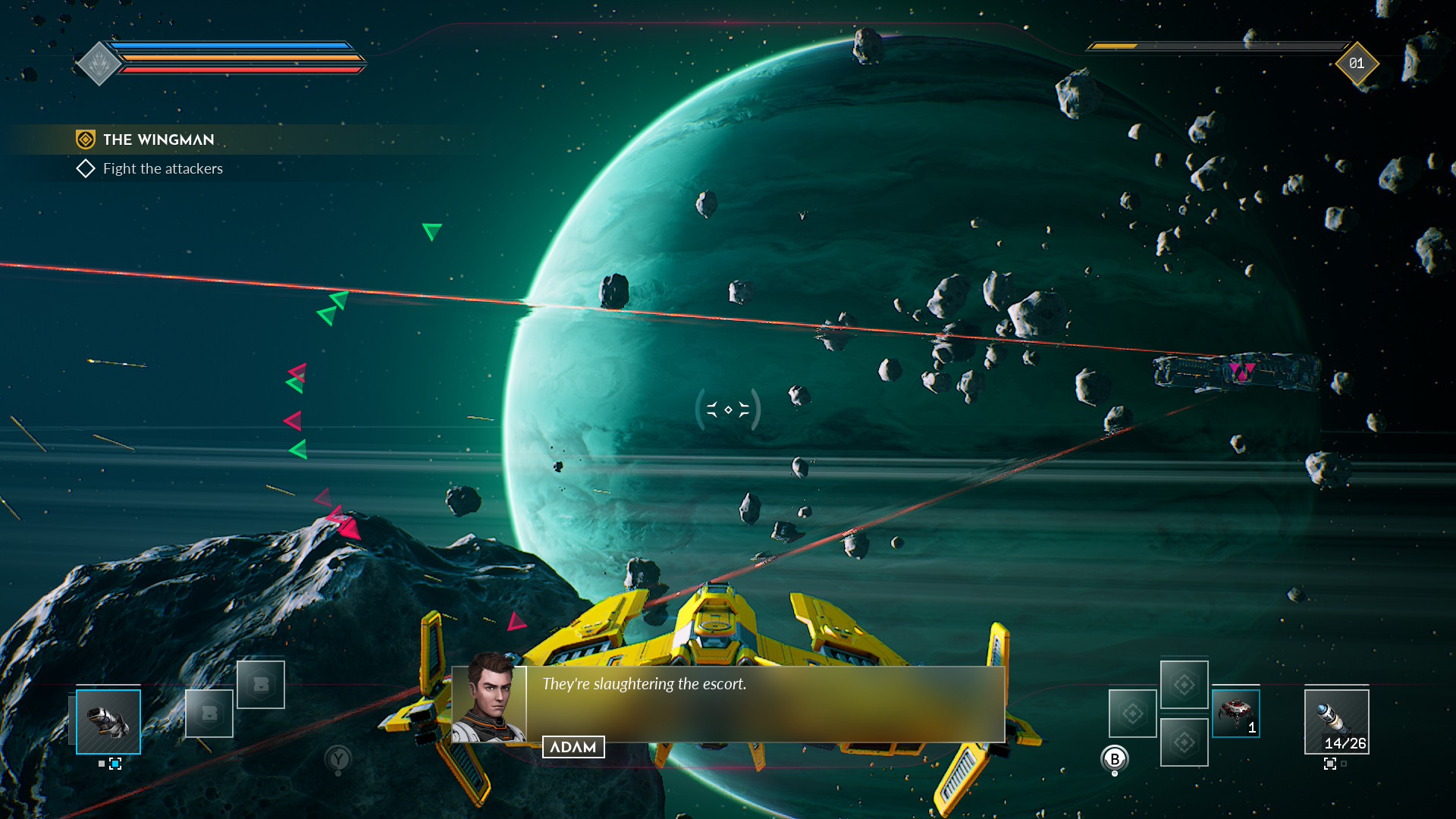

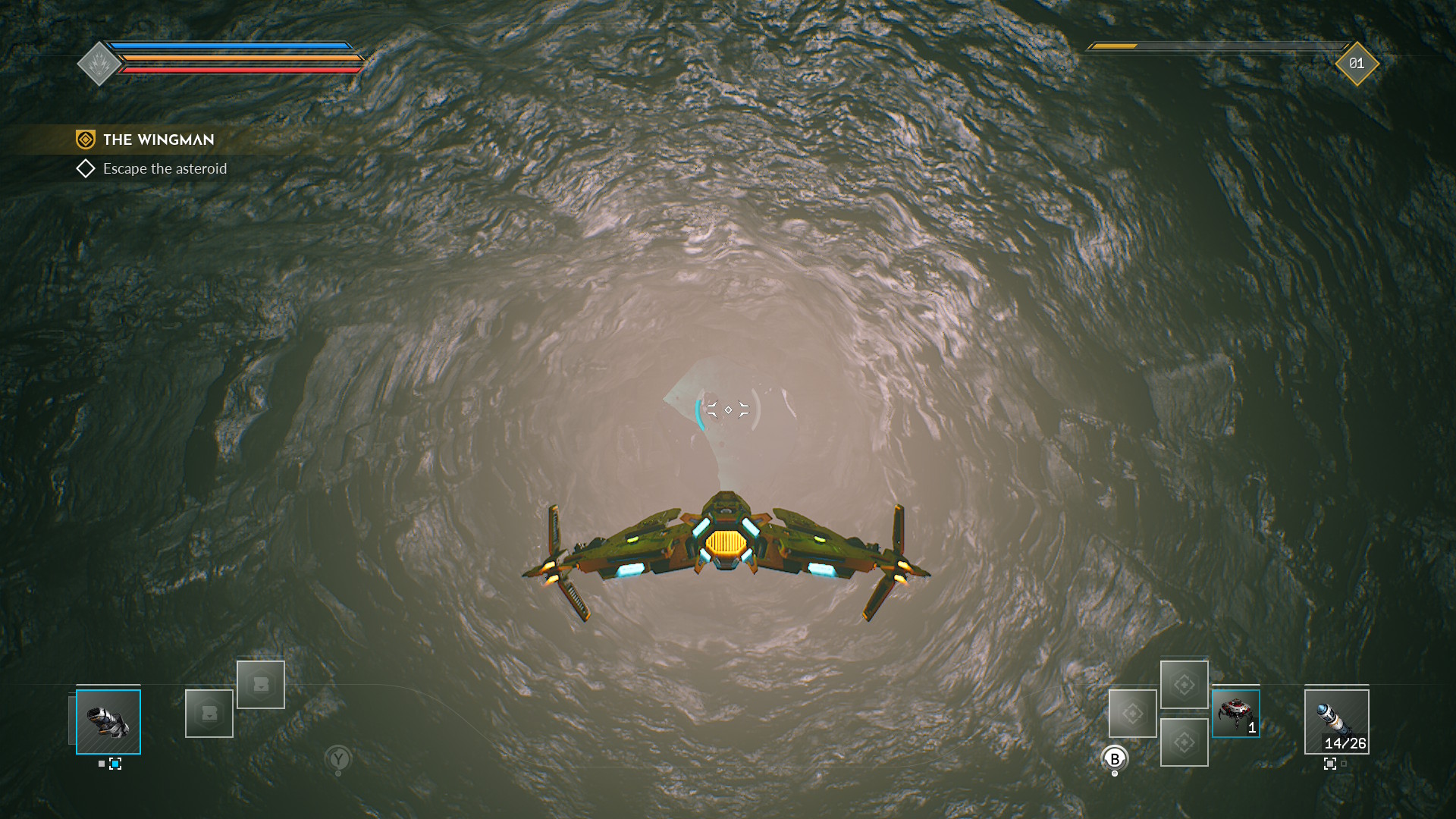
Gameplay-wise, EVERSPACE 2 immediately feels like a modern take on the classic space-flight formula, with a little Freelancer in its DNA. While the opening hours do suffer from a sluggish pace – relying heavily on the genre-typical routine tasks like collecting resources, killing outlaws, and reactivating protective devices like signal disruptors – the vastness of the campaign really starts to sink in when new star systems open up. It is a slow burn, but the longer I played, the more invested I became in its vast universe and its friendly and not-so-friendly inhabitants.
You pick up contracts, visit new locations, fight outlaws, salvage wrecks, upgrade your ship, and often end up taking on one more mission. As your ship levels up, you gain boosts to certain base stats and earn Device Upgrade Tokens that can be used to improve specific devices. Weapons and components come with different rarity tiers, passive modifiers, and elemental effects, while ship classes, equipment, and devices – divided into Warfare and Support categories – all play a role in customizing your ship. The sheer number of options, from managing your ship at the hangar and crafting new equipment to buying and selling gear with the many vendors and traders scattered across the cluster, can feel overwhelming at first. Throwing numerous overlapping systems at you without explaining the optimal synergies, the game leaves it up to you to discover what works best.
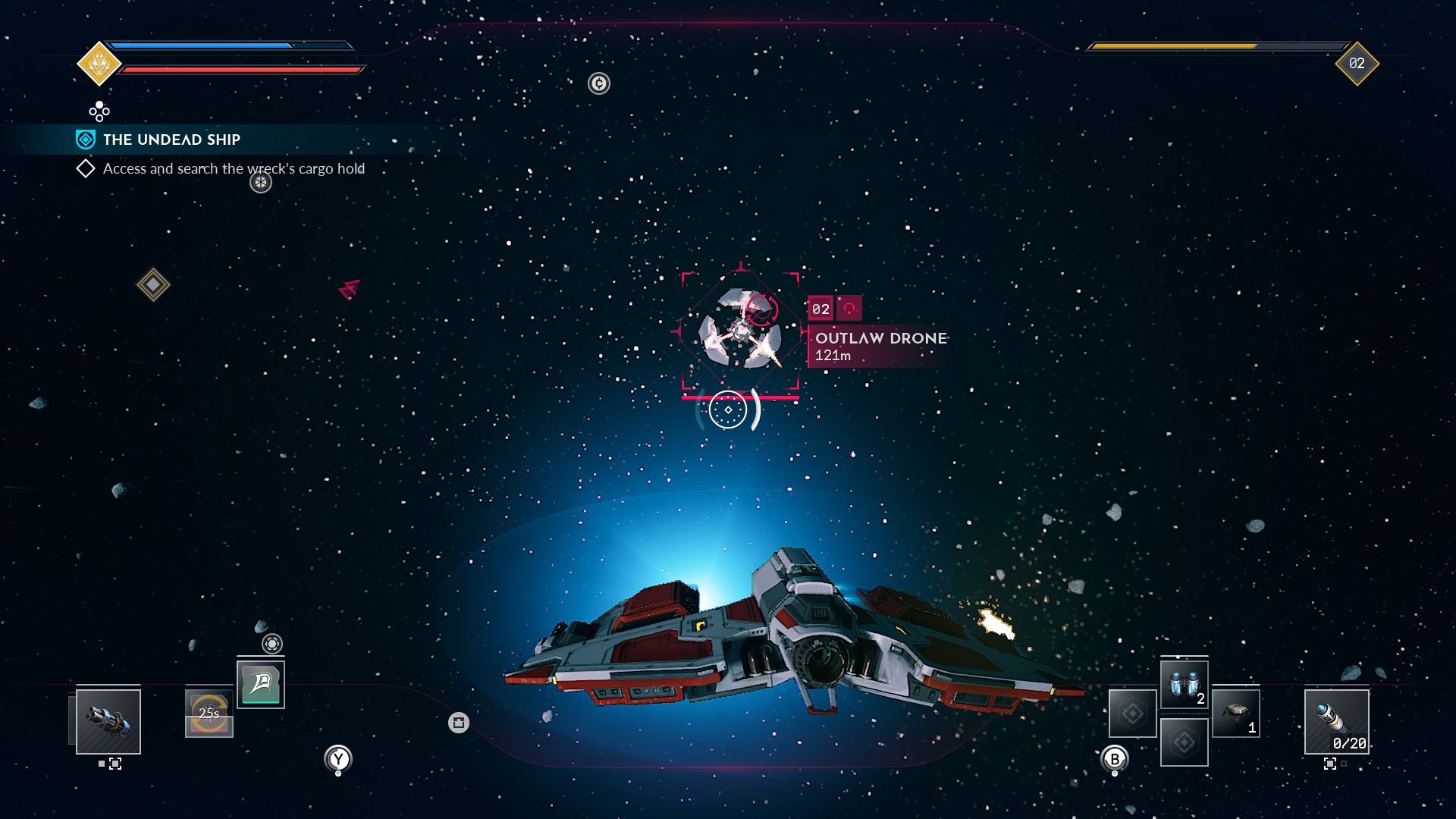
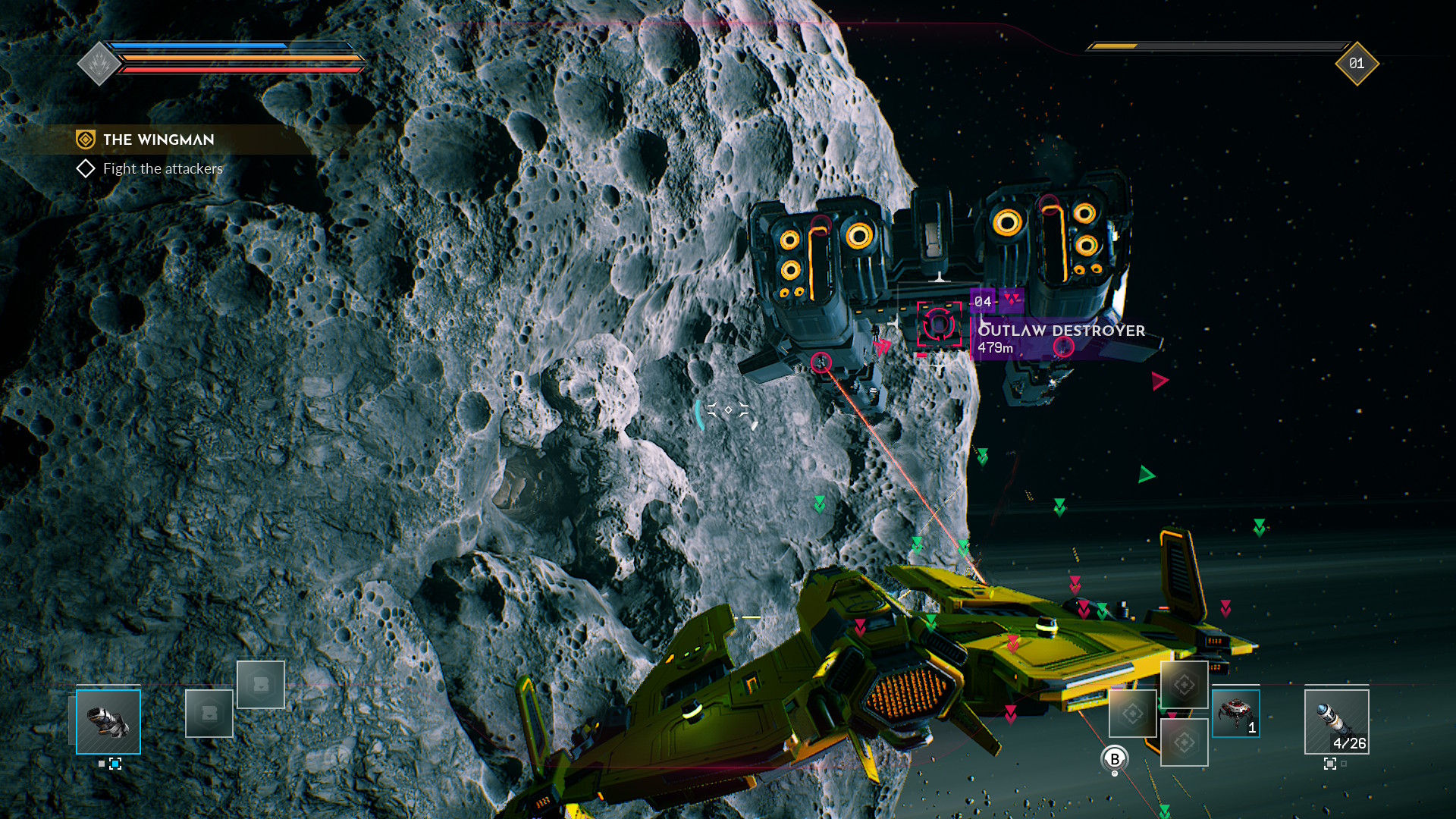
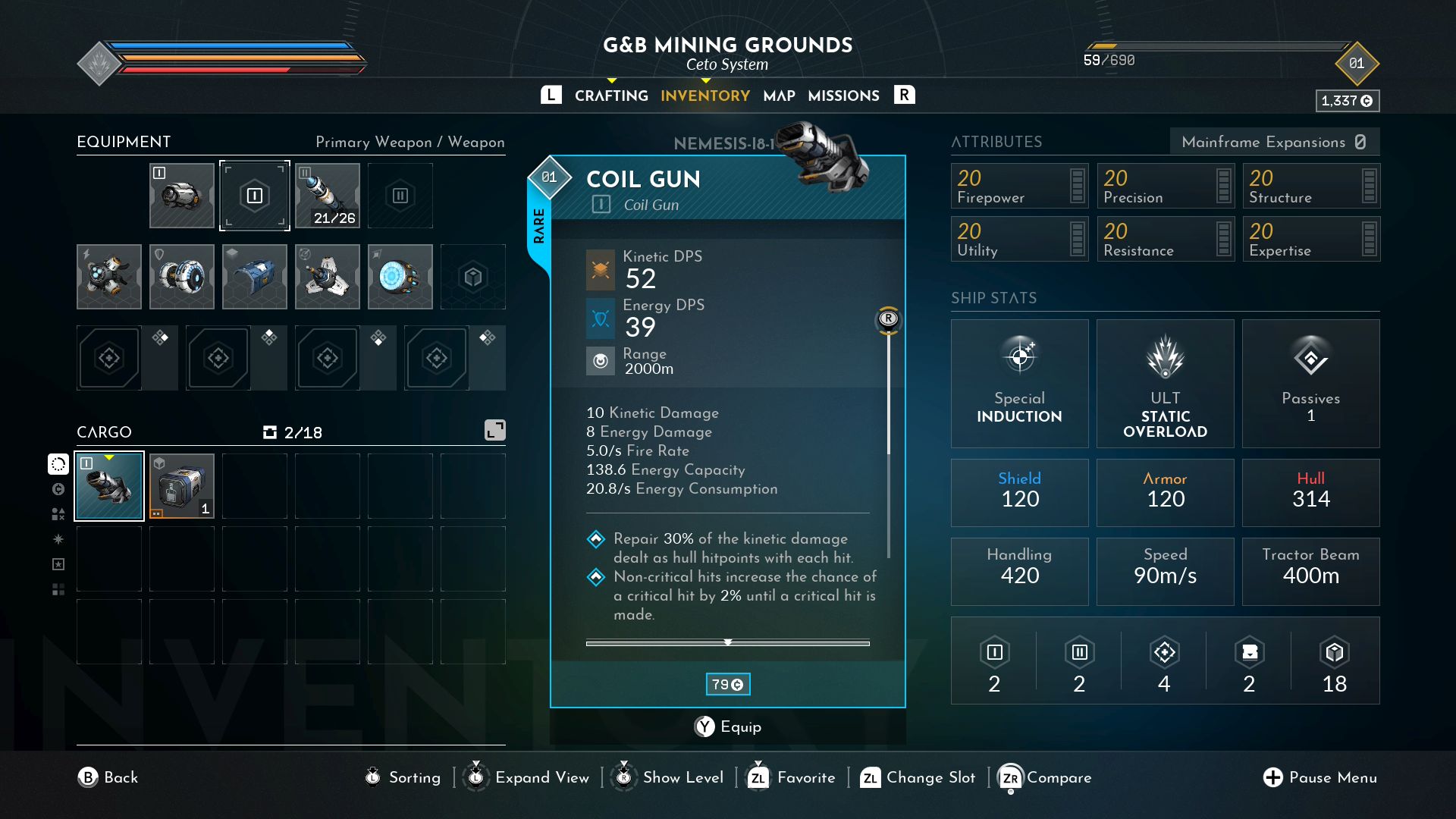
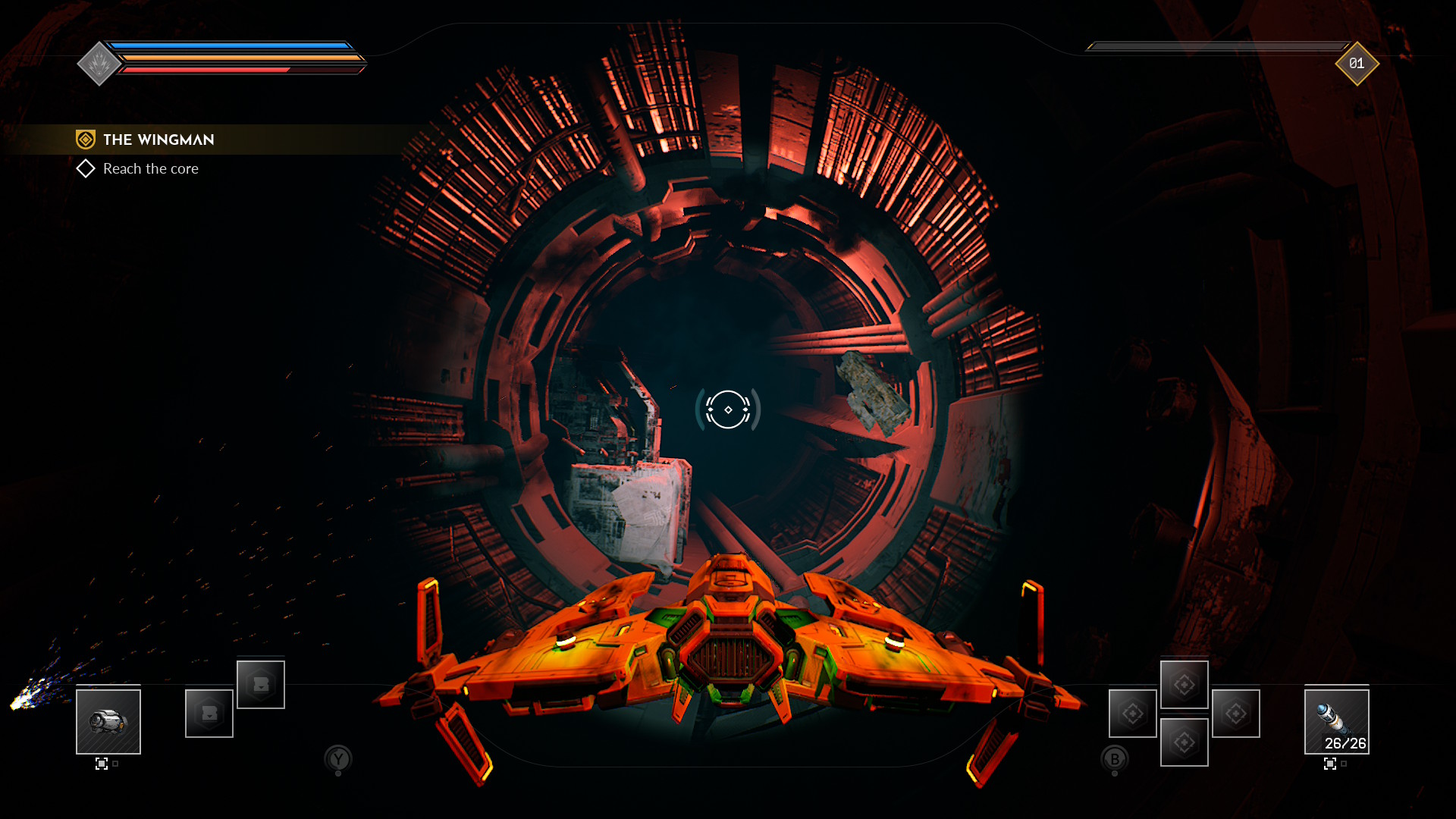
The controls also have a fairly steep learning curve, and you may need to fine-tune the sensitivity. As is typical for the genre, you frequently need to switch from regular flight to faster travel modes like cruise control and the jump drive when traveling between locations. However, the default right-stick setting makes flight feel floaty and overly loose during hectic battles, though lowering the pitch from 0.50 to 0.15 made an enormous difference, as did switching the boost setting from Hold to Toggle, making short bursts of movement during combat more comfortable.
Once you get used to the controls, the arcade-style space combat is really satisfying. It feels responsive, fast, and heavily reliant on fluid movement. To win encounters, you need to constantly boost, roll, and strafe around enemy formations while cycling through primary weapons and active devices. To use tactical tools like EMP blasts, you can briefly pause the action, while nanobot repairs can be triggered with quick button combos. And then there are ULTs, spectacular ultimate abilities tied to your ship’s class that charge during combat and allow you to turn the tide of a battle by unleashing devastating attacks. They’re highly effective and deliver a great spectacle on screen as well.
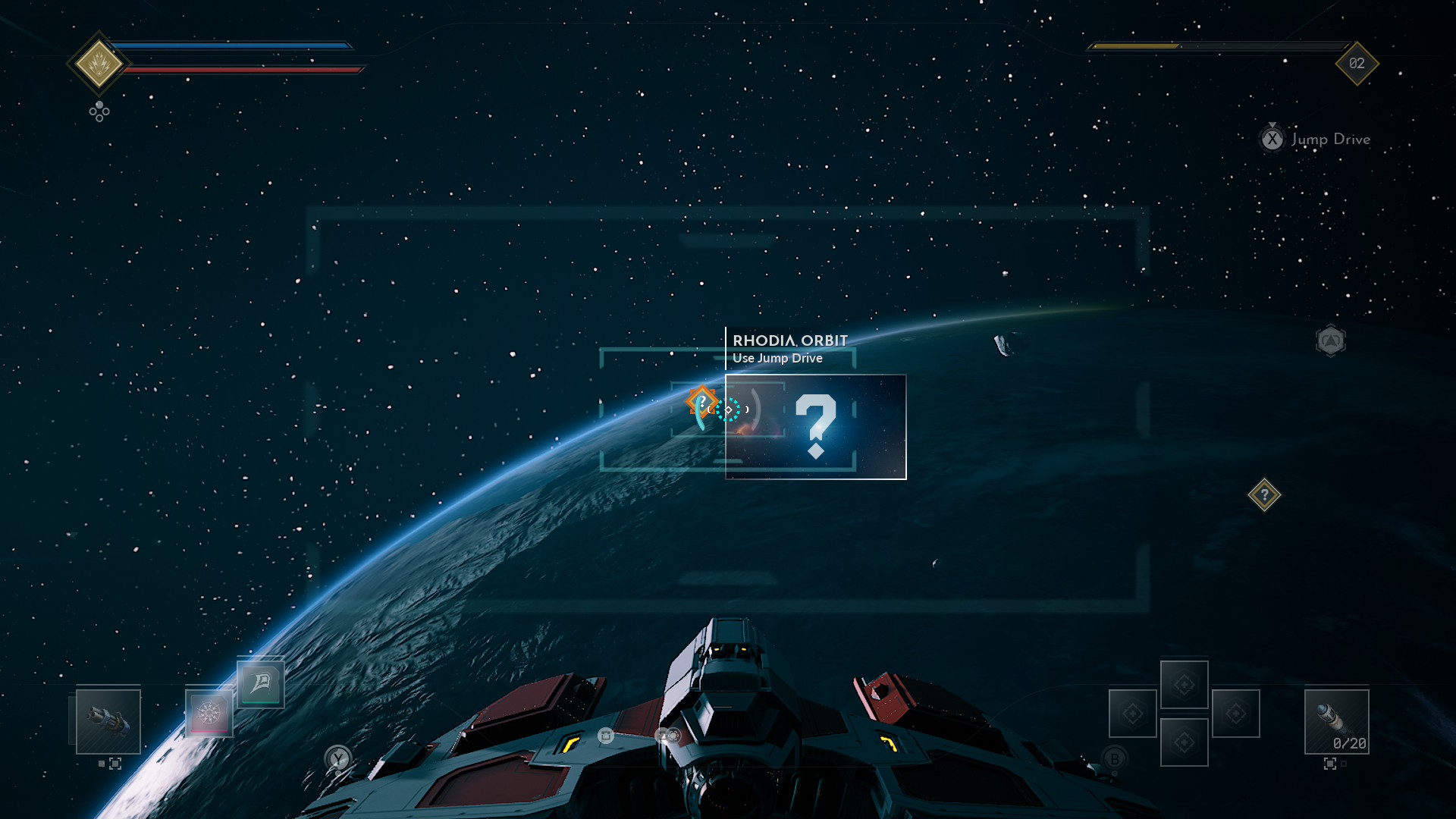
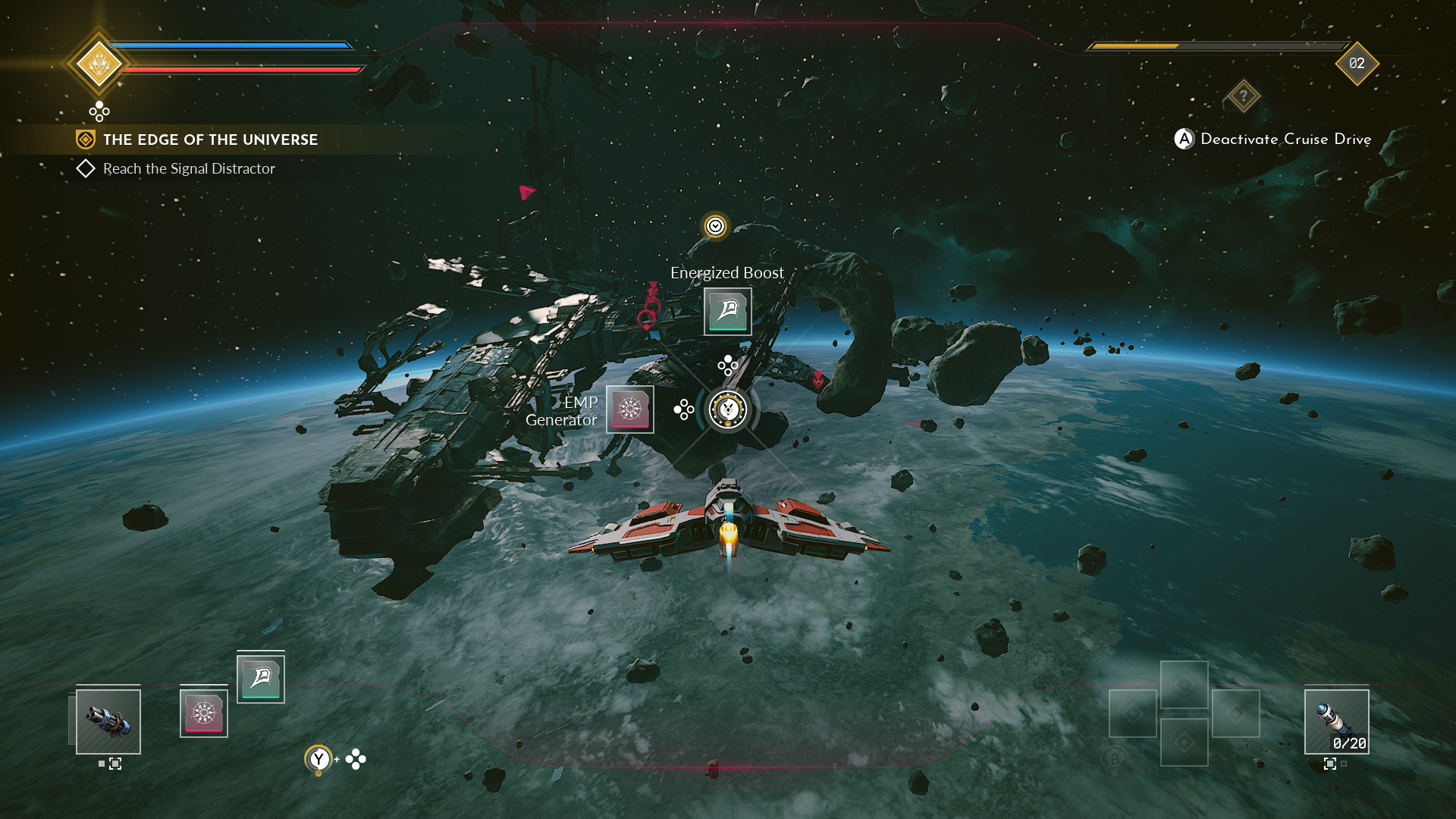
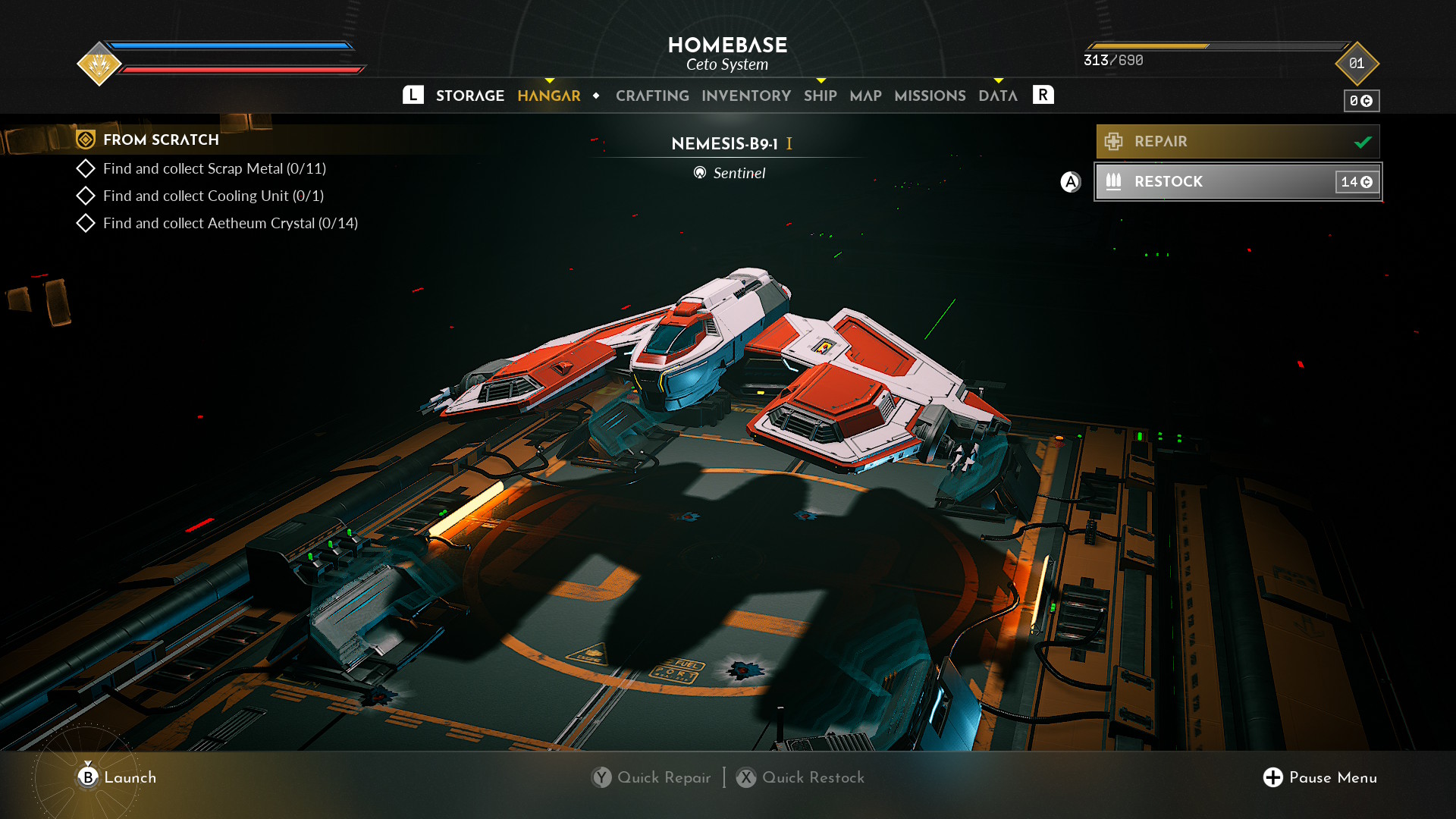
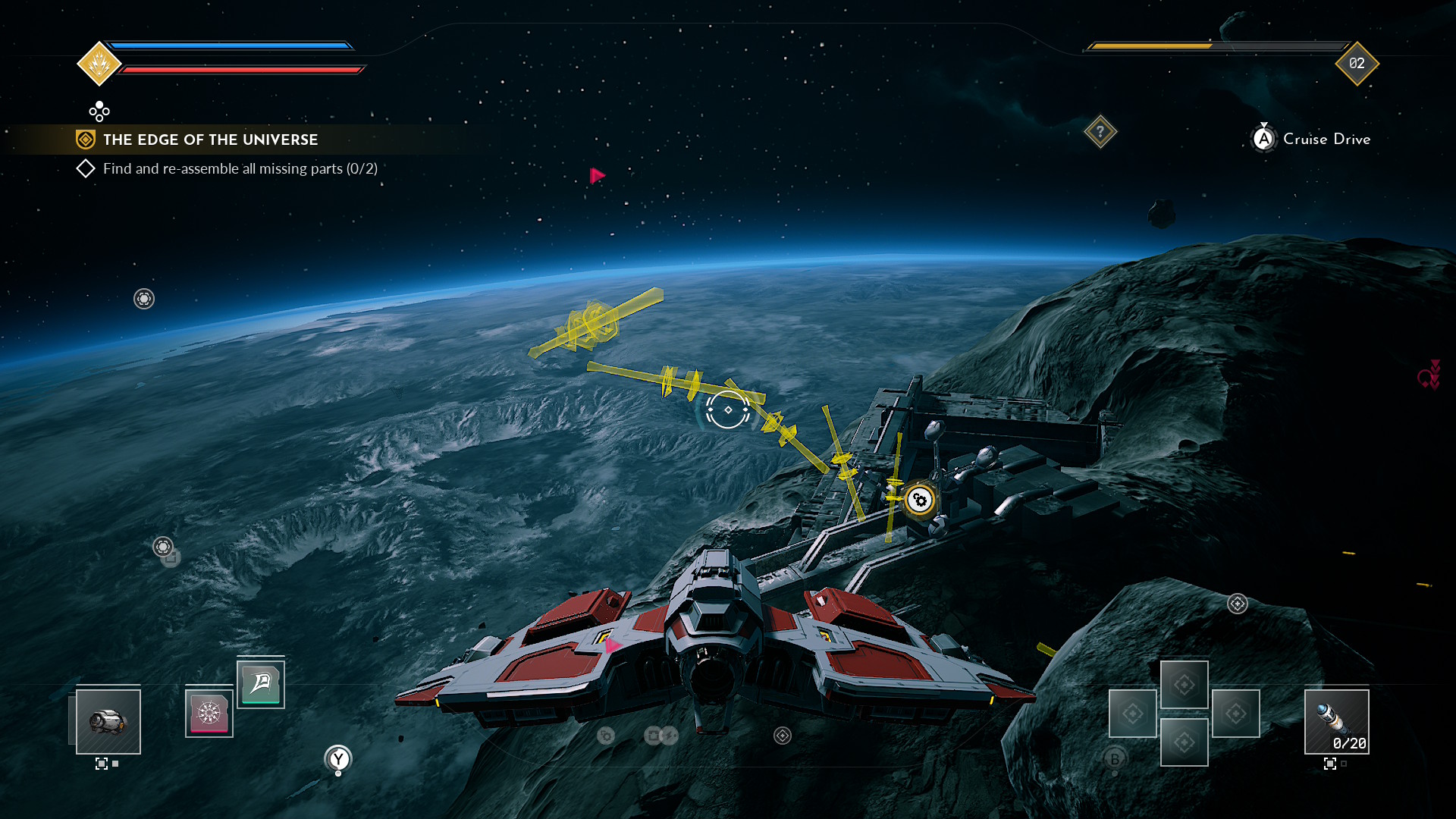
However, while it frequently yields valuable rewards, from hidden loot caches and crafting blueprints to rare ancient ruins, navigation can occasionally frustrate. This is especially true during wreckage salvage missions, where too many overlapping objective markers make finding specific quest items nearby feel like searching for a needle in a haystack. The galactic map also requires you to pin objectives manually, while the local mini-map offers only broad directions. To round things out, while indicators for boost energy and weapon status are present directly around the reticle, they are so subtle and minimalist that it’s still easy to overlook them during frantic firefights.
Also worth mentioning is the wonderful retro-synth soundtrack, while the environments grow far more impressive as you advance beyond the relatively empty starting zones. Later systems showcase dense asteroid belts, massive military strongholds, industrial mining hubs, and sprawling planetary outposts. Each star system has its own aesthetic, story missions, and sudden ambush encounters. Simply moving through these spaces feels great, whether you are weaving through narrow debris fields or activating cruise drive to cross large spans of open space. And to my own surprise, performance on Switch 2 remains surprisingly smooth, handling the game’s scale and particle-heavy battles with no significant frame rate drops.
Final Thoughts
EVERSPACE 2 is a nostalgic yet deep space adventure that reinvents the original game’s core structure, taking classic space-flight tropes and executing them with enough polish. Its vast universe is filled with interesting characters and lore, backed by satisfying arcade-style space combat, deep ship customization, and an exquisite retro-synth soundtrack, while progression and reward keep you coming back for more.
On Switch 2, this release delivers an exceptionally smooth, content-rich port of an addictive space shooter that managed to make me lose track of time, something I hadn’t experienced in a long time. Several hours into playing, I would still be flying around, eliminating outlaws, upgrading my ship, and telling myself that I’d just do one more mission. That is exactly the kind of game EVERSPACE 2 is, and it is all the better for it.
Additional Information
Release Date: August 12, 2026
Reviewed On: Nintendo Switch 2. Download code provided by the publisher and PR agency.
Developer: ROCKFISH Games
Publisher: ROCKFISH Games
Relevant links: Available via Nintendo eShop and Steam.