 DaRmaZat
The creator of Blood Omen: Legacy of Kain and Eternal Darkness: Sanity’s Requiem, Denis Dyack, is back. With his new studio, Apocalypse Studios, Dyack returns to the dark fantasy genre to deliver Deadhaus Sonata – a third-person, narrative-driven action RPG that flips the traditional script by letting you become the undead.
Whether playing alone or in co-op with up to six players, the game has the promise to invite you to master supernatural powers, feed on the living to grow stronger, and explore a vast ocean of lore. However, stepping into its current Early Access build reveals that the road to achieving this grand vision is still very long.
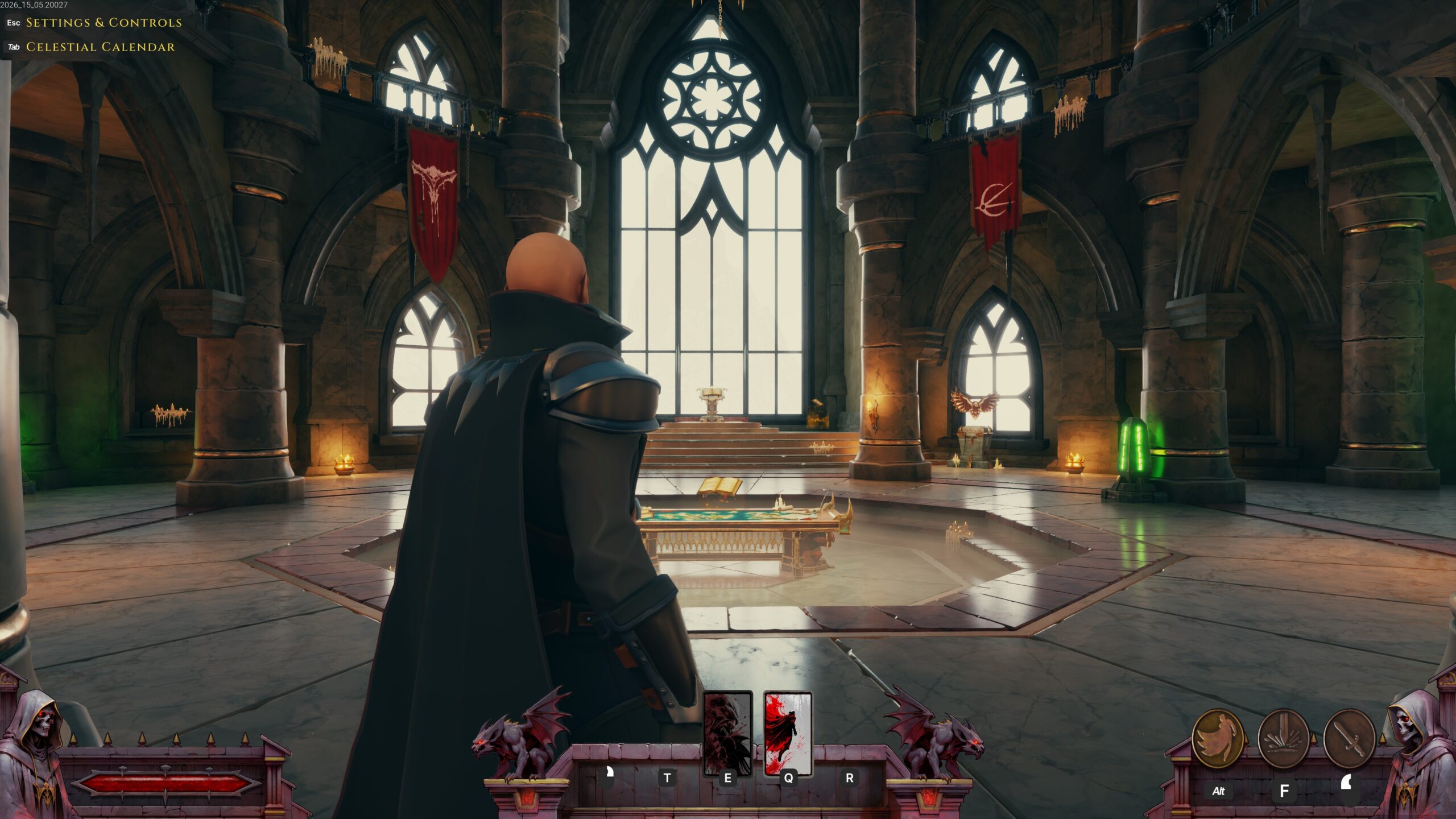
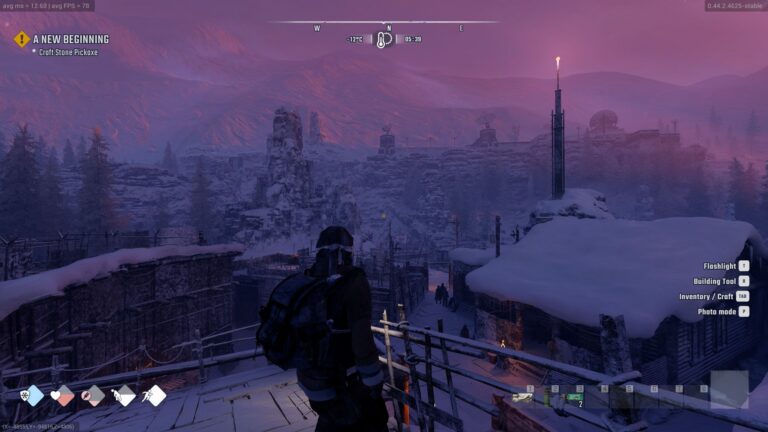
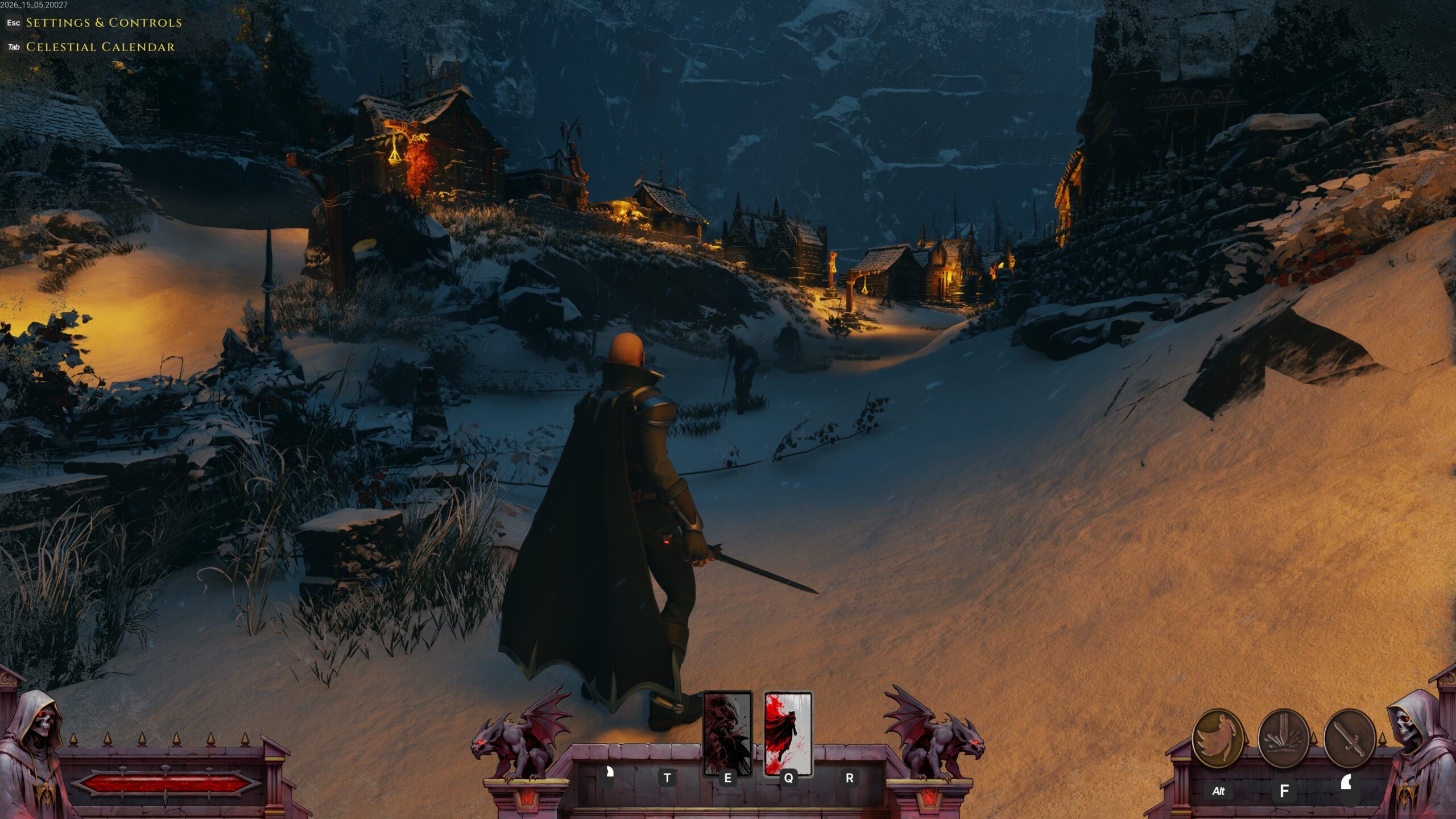
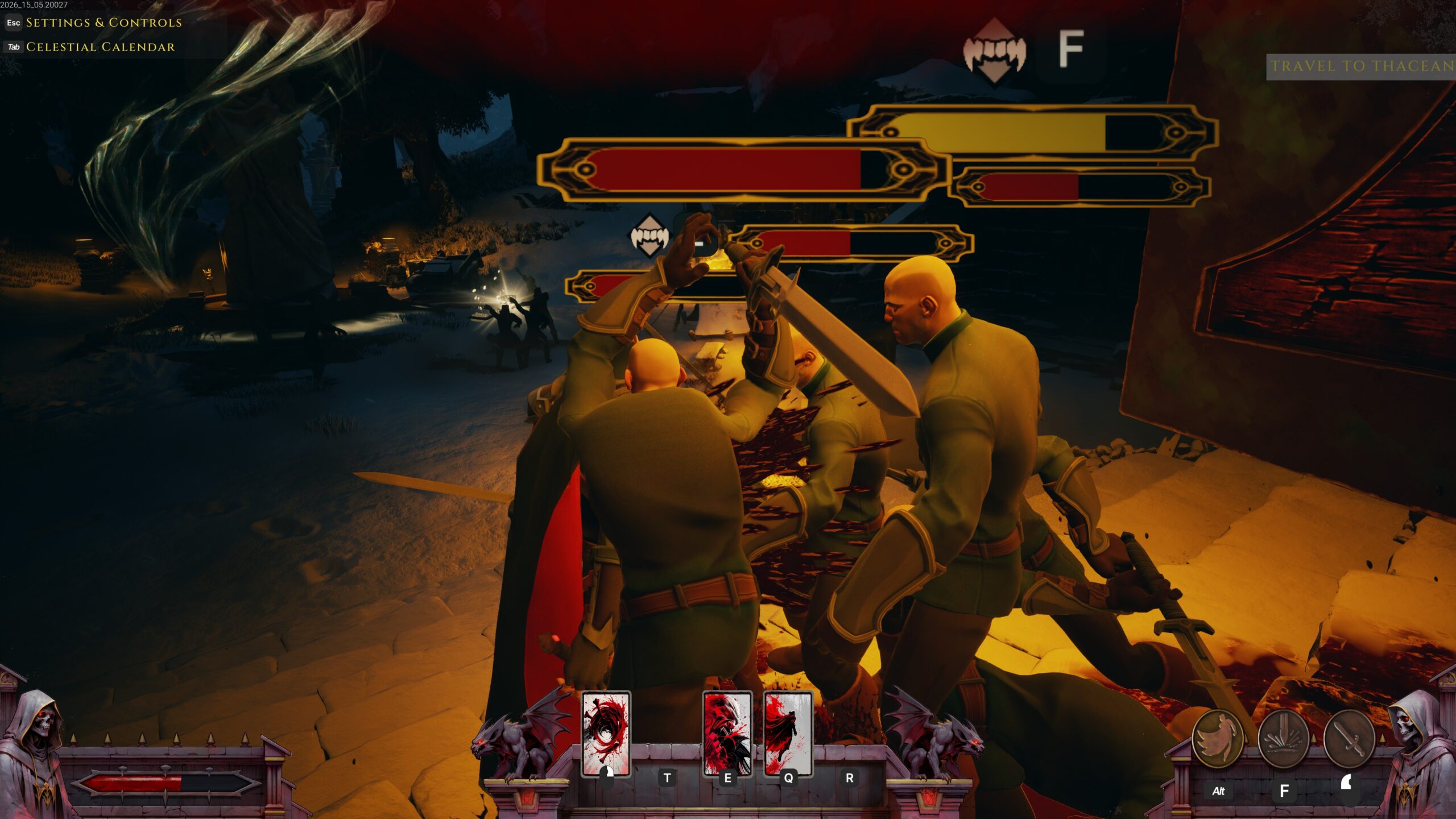
At present, Deadhaus Sonata offers options for both solo and co-op play. There is no character creator available yet, though the game gives a clear impression that this feature will be added later. For now, you are stuck playing as the exact same vampire, and to make matters worse, all enemies look identical to you. These are clearly placeholder mobs, which frequently results in a pretty bizarre sight. That said, when starting solo mode, you are dropped straight into the snowy valleys of the Northern Provinces as this bloodthirsty vampire, completely devoid of any backstory.
Currently, only two linear maps are available in this region, though the developer plans to add the Beltlands and the Southern Provinces during Early Access, with hopefully many more to follow. In terms of story, a brief textual backdrop is eventually provided regarding the Thacean Empire – the last of humanity’s once-great powers, locked in a desperate struggle for survival against a ruthless tide of the undead. But for the time being, that is truly all you have to go on.
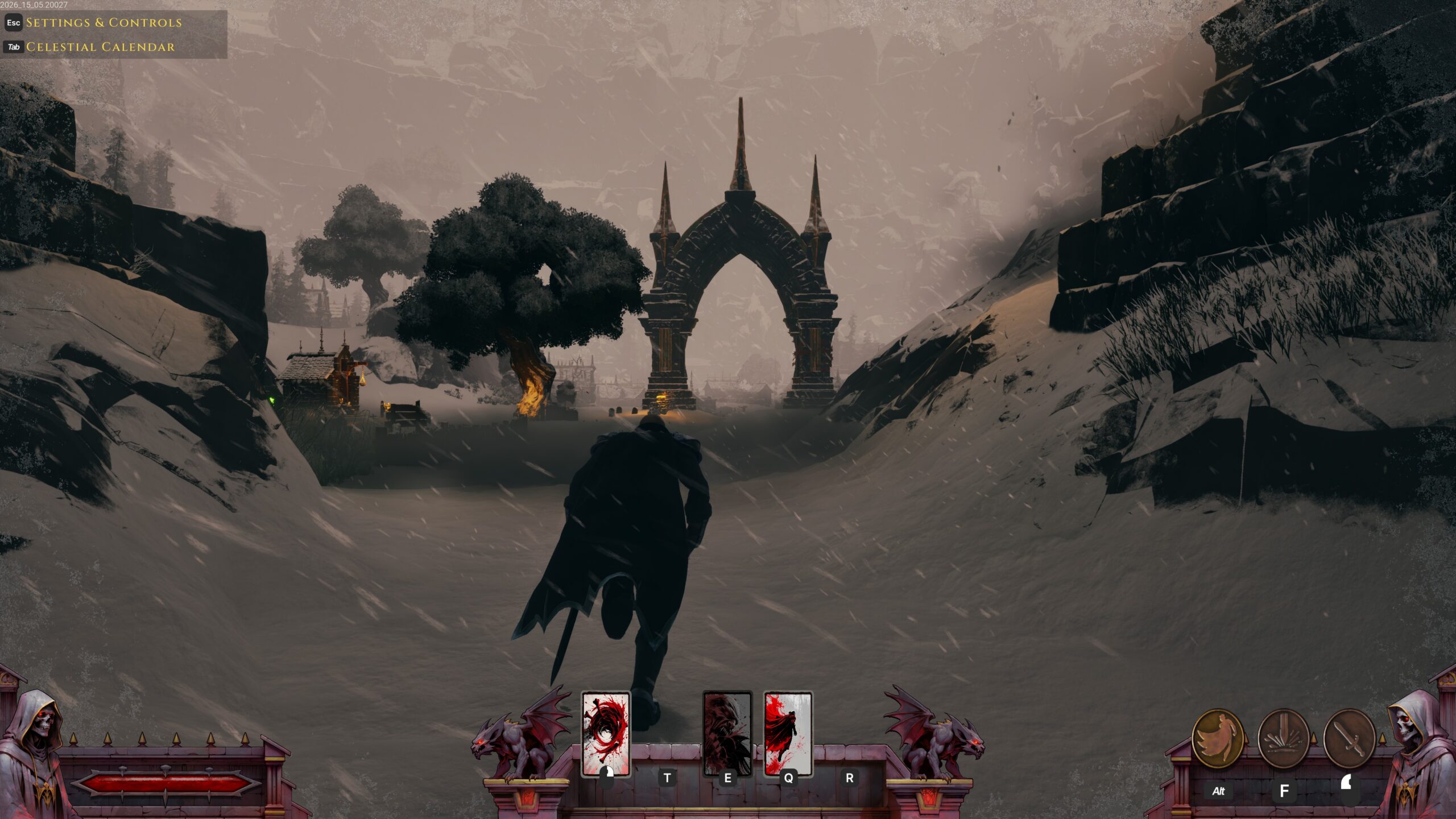
The world itself looks fairly generic for an Unreal Engine asset build, consisting of boulders, snow-covered villages, and portals that are generally inaccessible due to being a work in progress. As it stands, the lore and world-building offer nothing special yet, and since most events take place during broad daylight, you completely miss out on that dark, gothic vampire atmosphere.
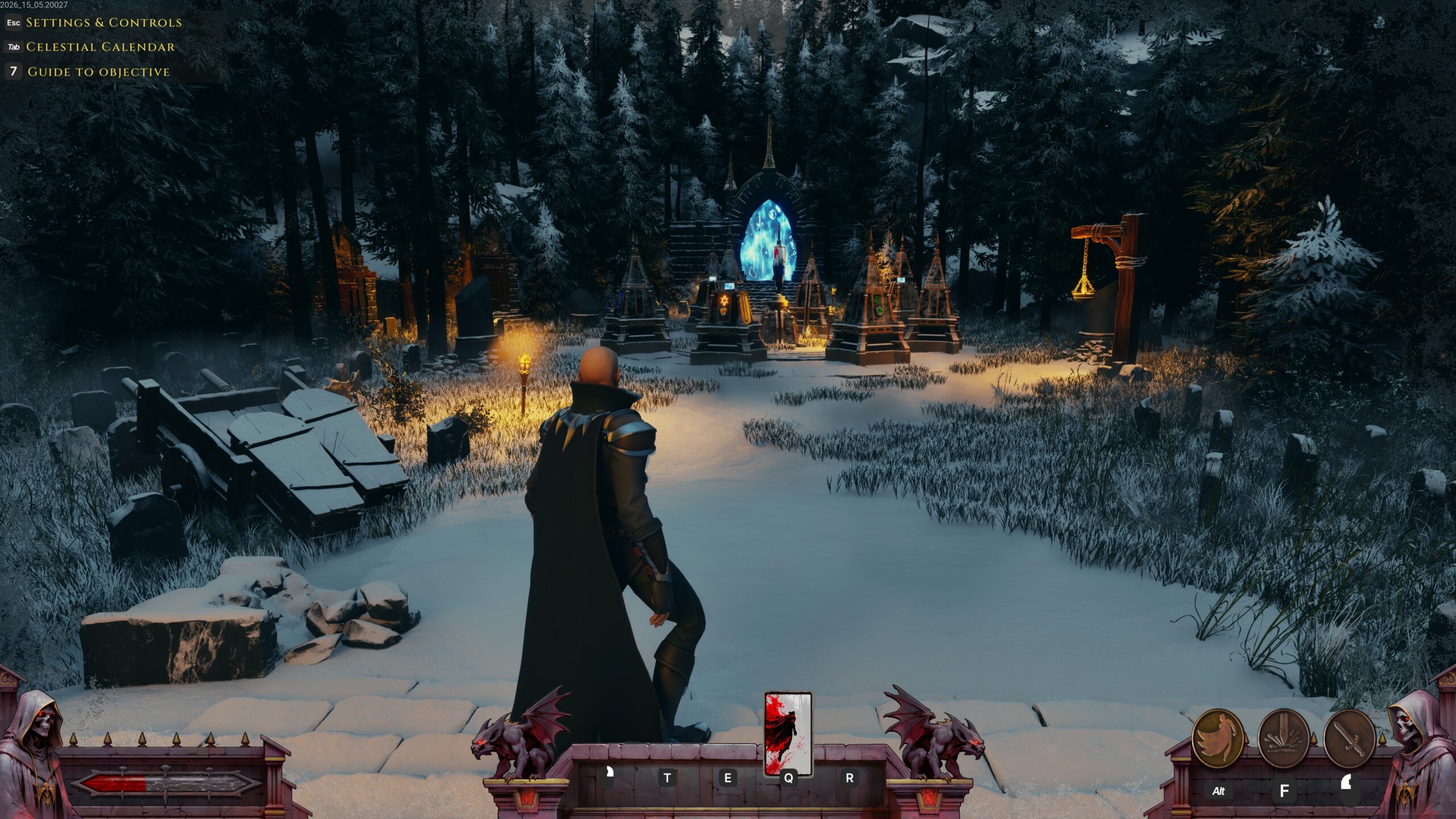
Still, the game puts your brain to work within the very first minutes, forcing you to solve a Celestial puzzle to open the door to Corpsehold – your personal hub and sanctuary, which you can return to at any moment. What makes this puzzle unique is that the planetary alignment you need to decipher is dynamically based on the actual time you are playing the game. Fortunately, a handy, voiced, and illustrative tutorial is available to assist you.
In stark contrast, the combat feels incredibly clunky and remains highly rudimentary. Combined with an awkward, frequently auto-rotating camera and a handful of enemies that visibly respawn out of thin air every few seconds, encounters quickly devolve into chaos. There is no parry or block mechanism available; your only defensive option is a backward dodge. The core offensive toolkit also feels very old-school with a basic attack, a finisher move, and a blood-sucking bite for health regeneration.
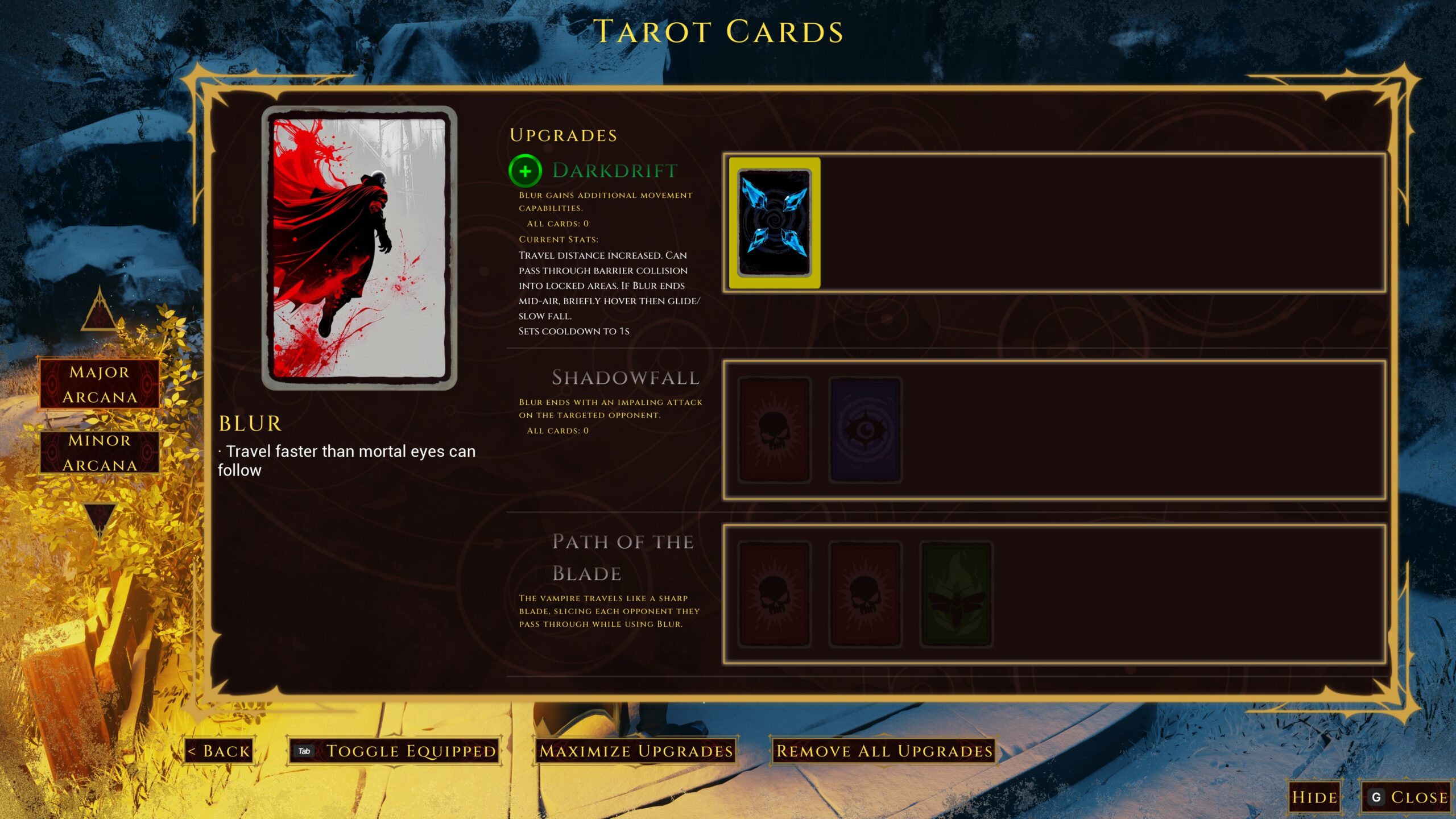
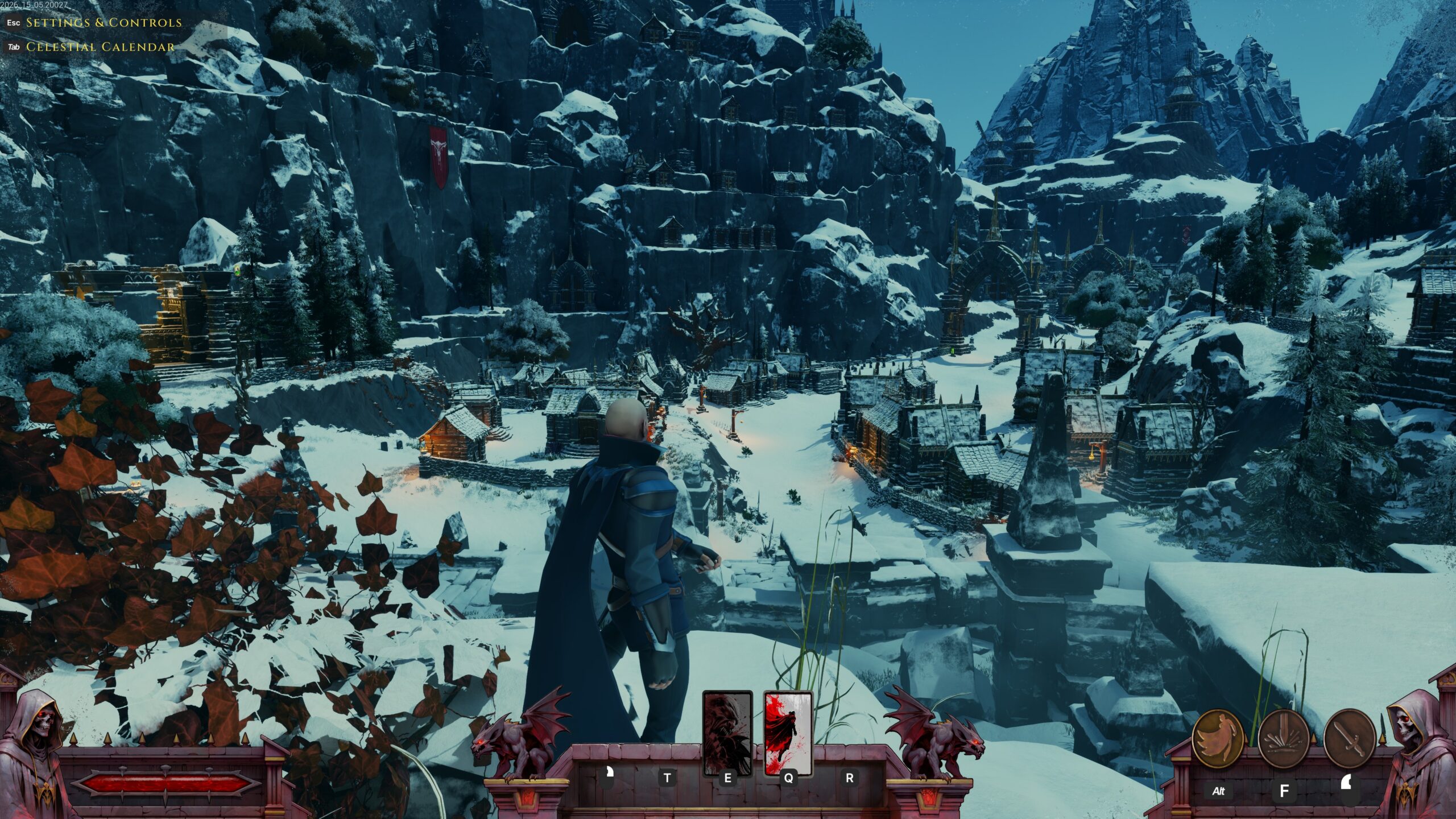
Additionally, you can equip up to five special abilities, which are assigned through a customizable Tarot card deck that you find or earn in the world. Each Tarot card can be assigned to your major and minor arcana via a Tarot Table, and certain arcane combinations grant you specific perks or new status effects. Darkdrift, an ability that allows you to fly (albeit limited by a cooldown), is the first skill you receive. You will need it immediately, too, because your vampire instantly dies the moment he falls into water. Alongside a feat-based loot system where playing is literally crafting, you earn Inscriptions by completing specific objectives, which you can then use in your hub as enhancements for your weapons and armor. However, that is the extent of the progression system right now.
The UI is also heavily a work in progress; it looks incredibly cluttered, and both the font and menu scaling are clearly not optimized yet. You even have to manually input certain game settings using decimal numbers instead of traditional sliders, which honestly speaks volumes about the current state of the build.
It should come as no surprise, then, that this build is plagued by bugs, ranging from nonsense character animations to enemies getting stuck on geometry or suddenly freezing completely. Yet, despite the shader compilation that takes place during booting up, the harshest criticism has to be directed at the performance: it is downright terrible. Running on standard settings at 4K, the game fails to even hit 30 FPS on an RTX 4090. Furthermore, the image becomes blurry whenever you rotate the camera, even with the motion blur strength explicitly dialed down to 0.0. The game also suffers from severe stutters that freeze the screen for over a second, sometimes resulting in hard crashes. Even by Early Access standards, there are limits, right?
Preliminary Thoughts
Dyack’s Deadhaus Sonata shows an ambitious dark fantasy setting rooted in Legacy of Kain series, but the current Early Access build offers only a thin narrative framework and heavily underdeveloped world-building. The action combat and tarot-based ability system also feel mechanically rough and unfinished, resulting in an experience that still plays more like a prototype than a fully realized RPG.
Deadhaus Sonata‘s performance also requires urgent optimization, alongside expanding the content, which currently feels incredibly thin. You can easily see everything this build has to offer in a single evening. Because of this, I would strongly recommend waiting before sinking your teeth into this first public build.
Additional Information
Release Date: May 14, 2026 (Early Access)
Previewed On: PC. Download code provided by the publisher and PR agency.
Developer: Apocalypse Studios
Publisher: Apocalypse Studios
Relevant links: Available on STEAM