 DaRmaZat
The 1.0 launch of Dragonkin: The Banished marks a major milestone for a title that has steadily grown through Early Access. The journey takes you from the last human bastion, Montescail, to the world’s most toxic reaches, focusing heavily on a dragon-slaying power fantasy. With the full narrative finally unlocked, a revamped Hunting Board, and a new end-game system starting at level 50, the game is clearly attempting to carve out its own niche in the crowded hack-and-slash landscape.
Of Hunters and Hatchlings
Without hesitation, Dragonkin: The Banished drops you straight into the boots of a Dragon Hunter in a world physically rotting from draconic essence. That is, unless you sit through the optional, cinematic-heavy prologue where a yarn of backstory is spun, sketching out the setting and classes before the ‘real stuff’ actually kicks off. After this introduction, you’re tasked with selecting your champion—be it the spear-fighting warrior, the magic-wielding sorceress, the hammer-swinging barbarian, or the nomadic archer—to lead the charge through the campaign.
Each of these selectable characters plays a role in the dialogue and the plot. However, the story itself is largely fixed, which is why Dragonkin doesn’t truly feel like a full RPG in the narrative sense. Even though the mechanics constantly suggest otherwise, and you can certainly fine-tune and sculpt your own powerful build, there are no meaningful choices to be made—unless you count selecting your quest rewards. The experience is much more focused on the adventure and the raw satisfaction of the combat itself.
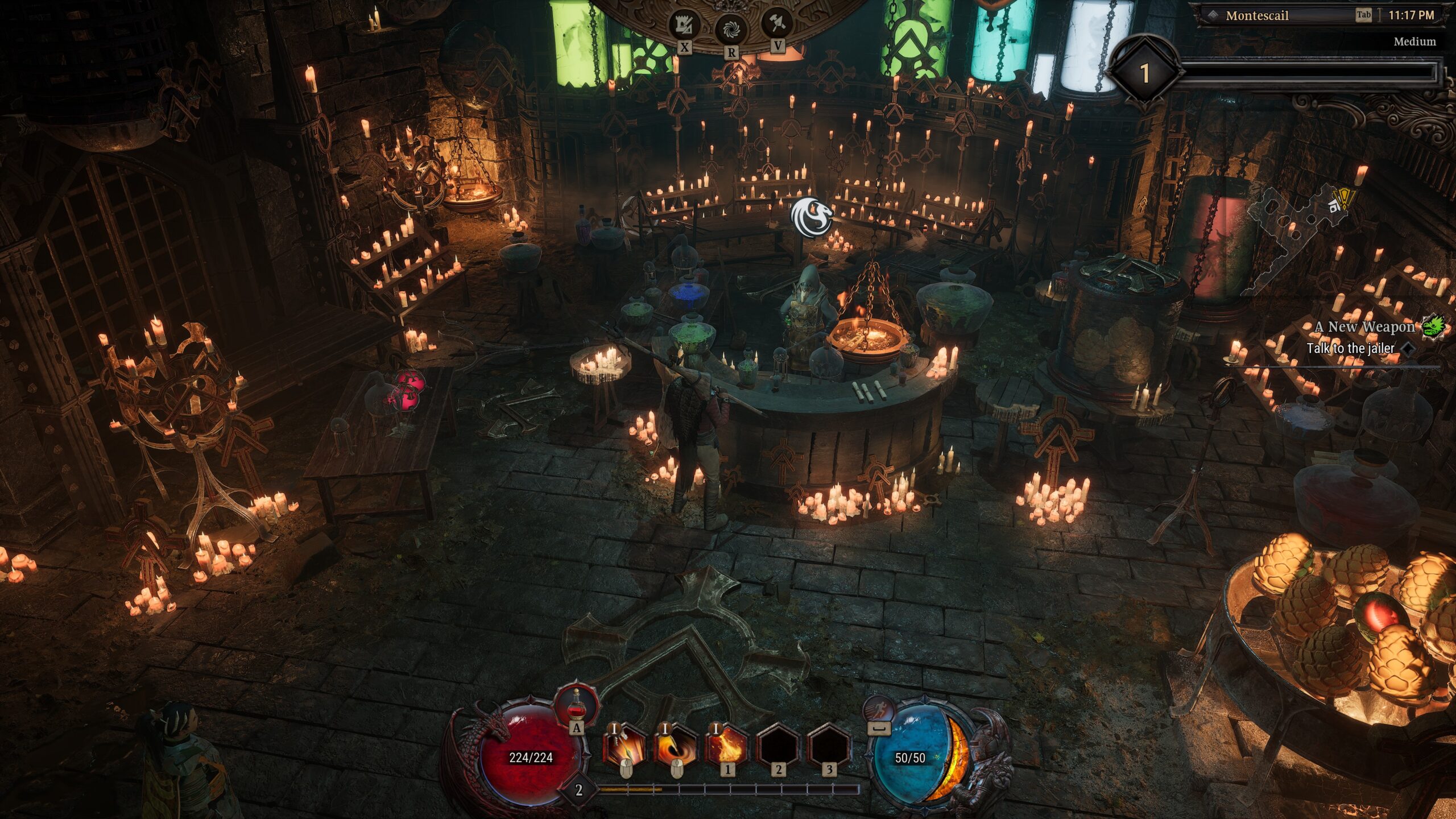
Soon, your character is joined by a Wyrmling—a magical dragon hatchling with specific abilities. You can choose its basic type of spells at the city jail, and it levels up right alongside you. As quest rewards, you receive Ancestral Fragments, which you can slot into a massive skill tree known as the Ancestral Grid to further refine your power and that of your dragon child.
Smooth Combat in a Static World
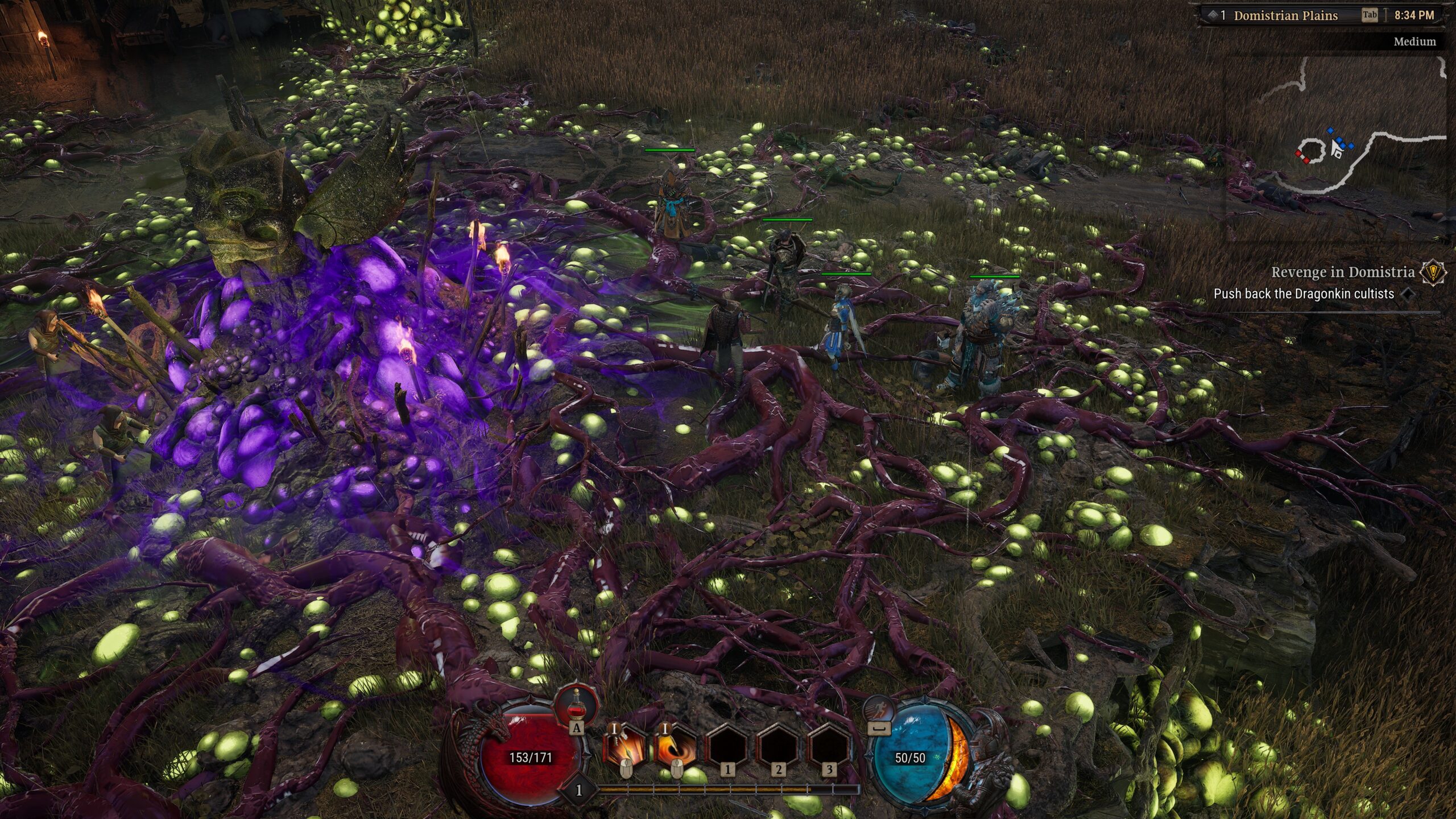
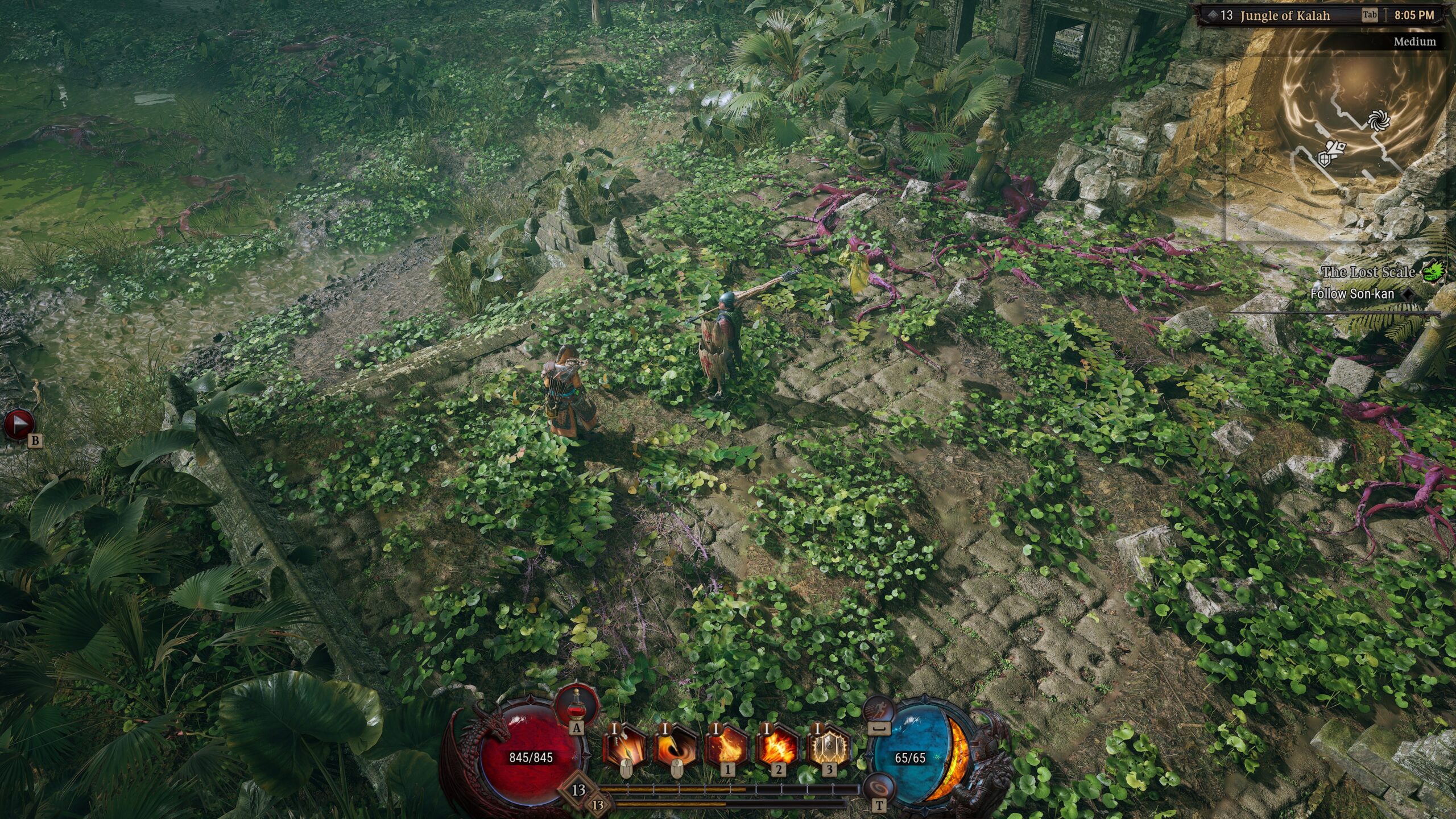
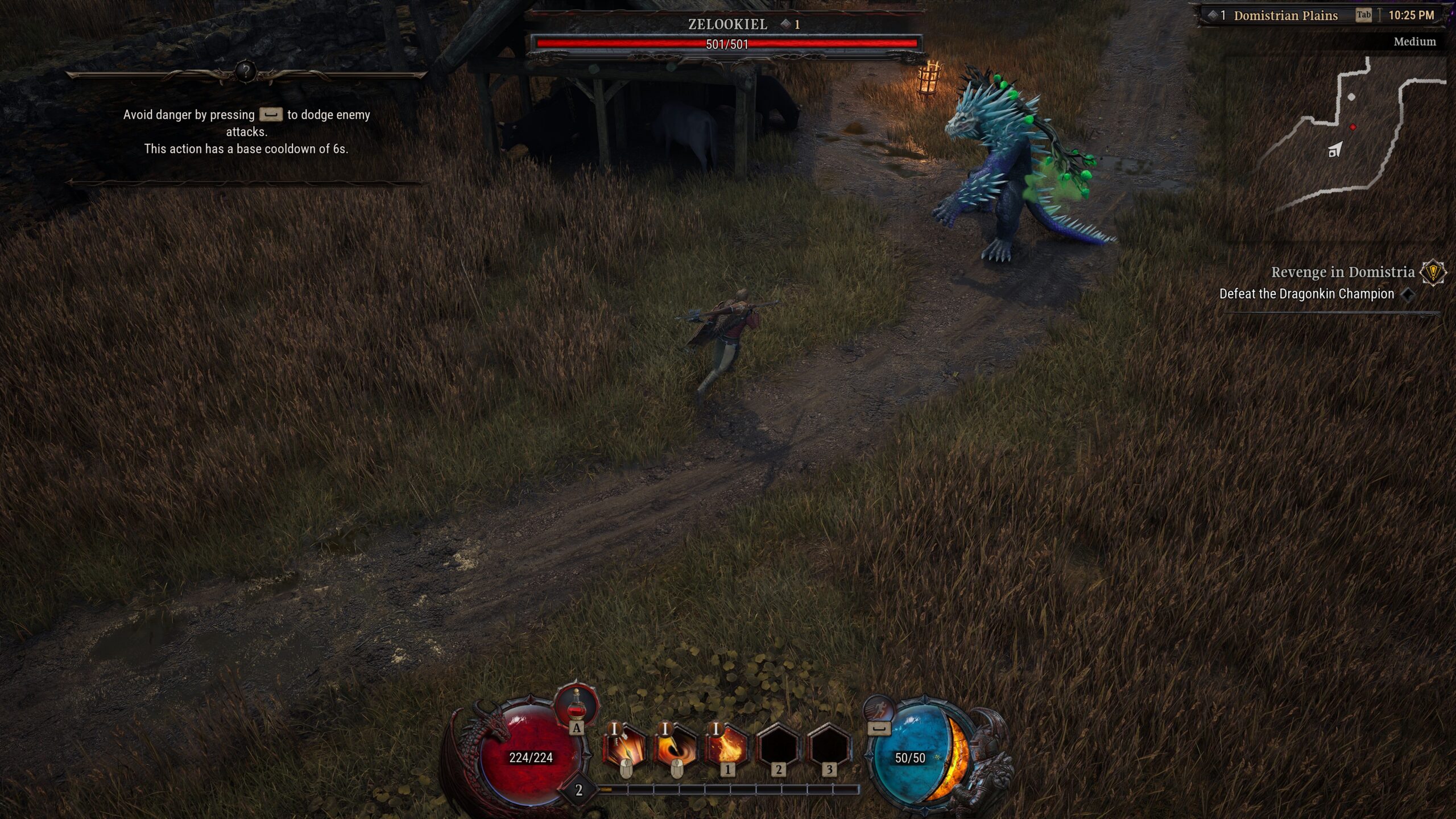
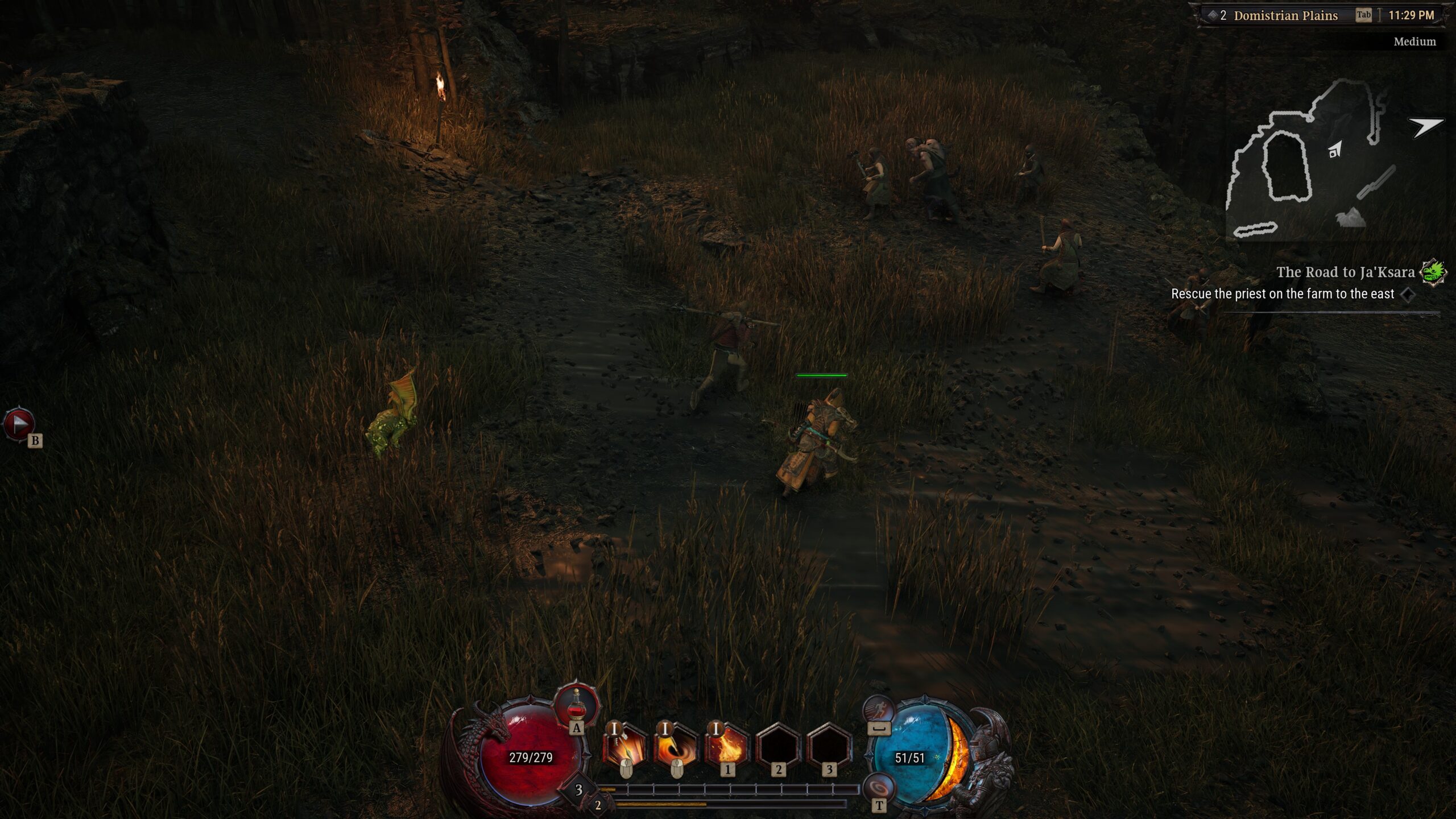
Dragonkin‘s gameplay and UI—with its action bar and classic health and mana orbs—unmistakably echo Diablo; it wears its inspiration firmly on its sleeve. One practical tip: you’ll likely want to set the mini-map in the top-right corner to transparent. The size isn’t configurable, and by default it covers a significant portion of the screen. Fortunately, the combat flow is incredibly smooth. By simply holding down the mouse button, basic attacks are largely automated, which you can alternate with right-clicks for heavier hits. Meanwhile, various unlockable special abilities can be triggered via the number keys when things get a bit too ‘hot’ around you.
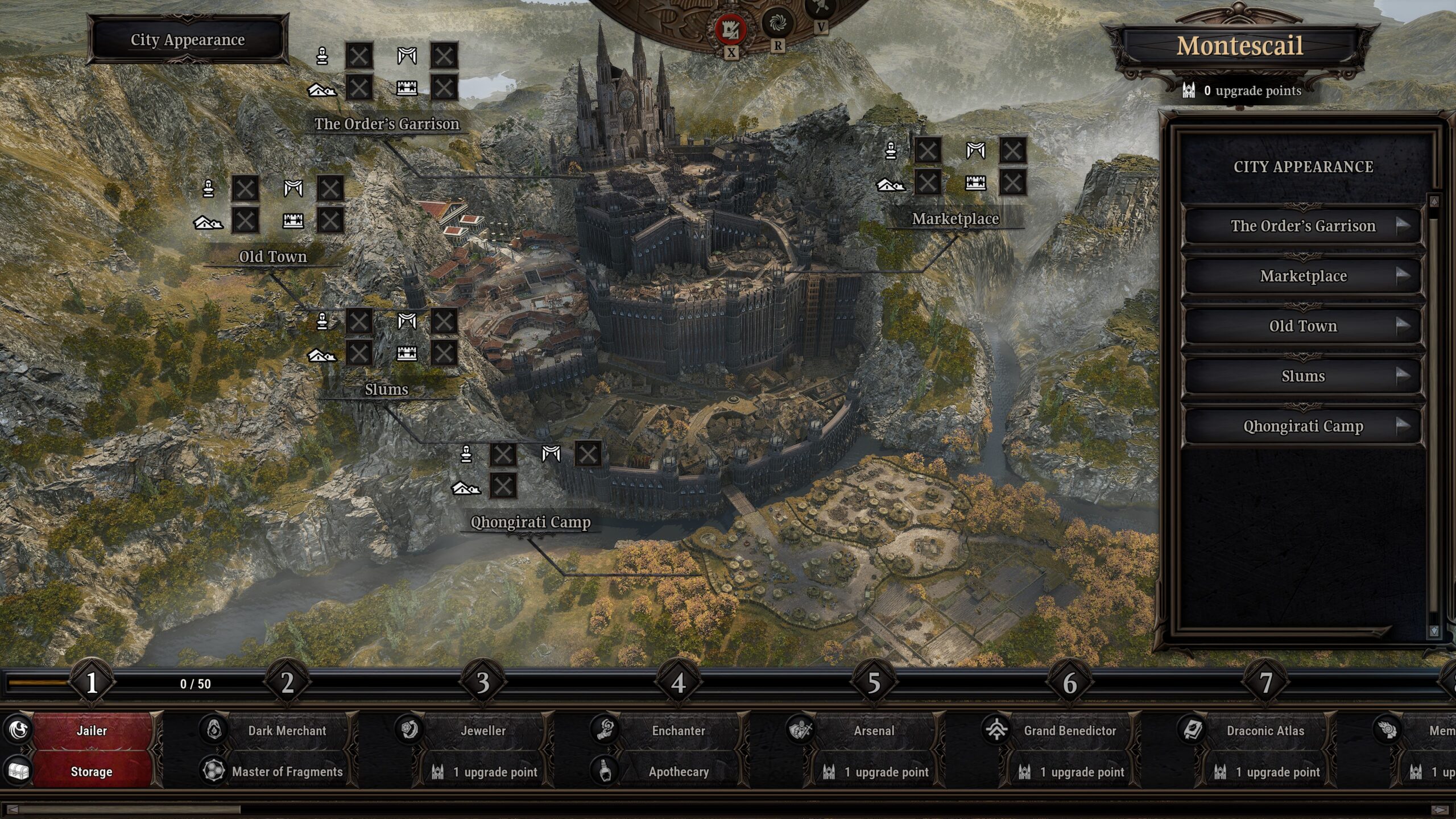
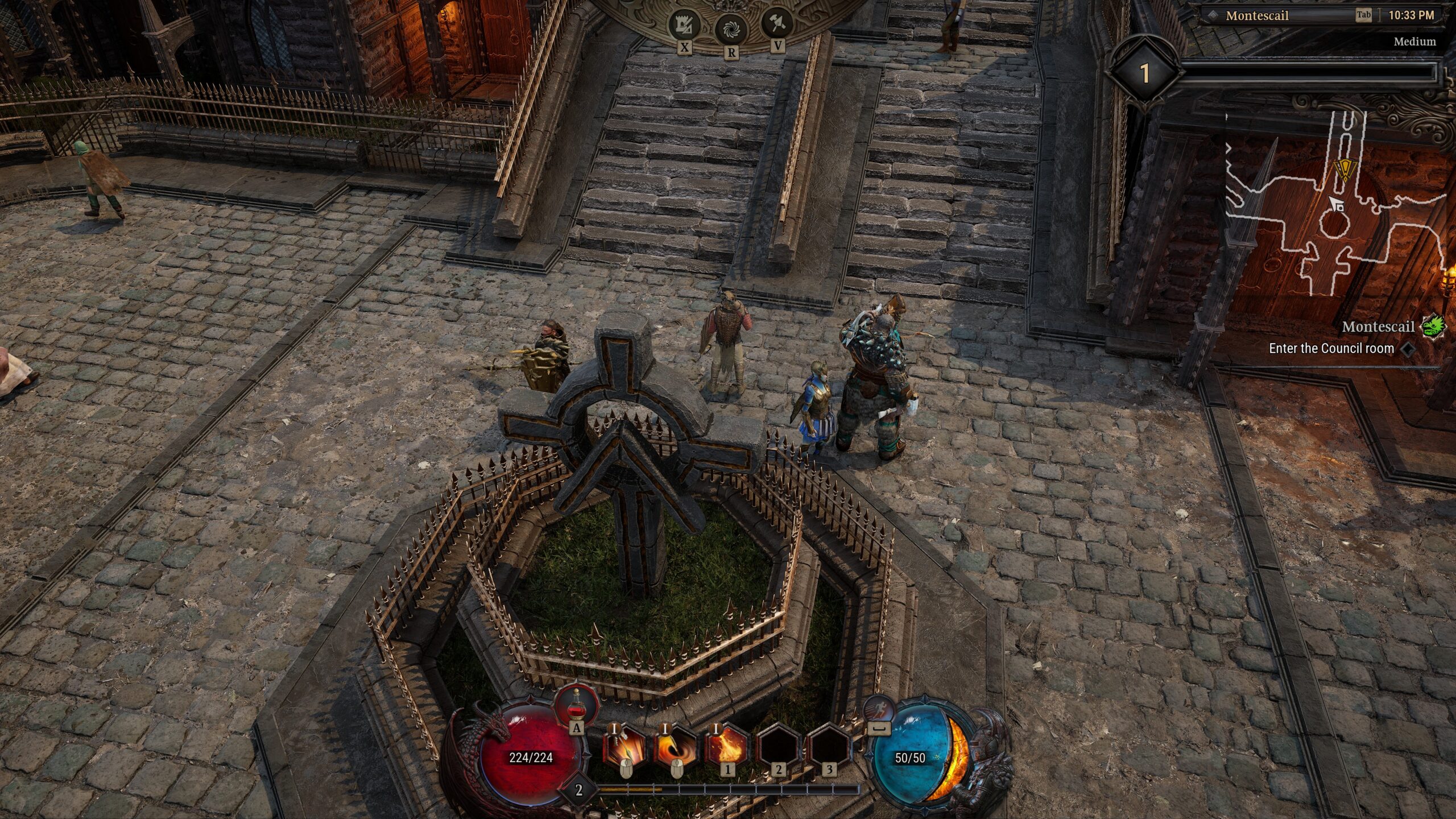
The game isn’t exceptionally difficult, featuring an abundance of loot and a setup that actively encourages grinding with respawning enemies. But for those who do struggle: at the Montescail guard post, you can adjust the difficulty level and manage the group your character joins for—both story-based and standalone—Dragon Hunts. Within the city’s urban layout, you’ll find all sorts of facilities to strengthen yourself, which can be upgraded just like your Wyrmling. The scale and depth of upgrades and specialization for combat are impressively vast and substantial.
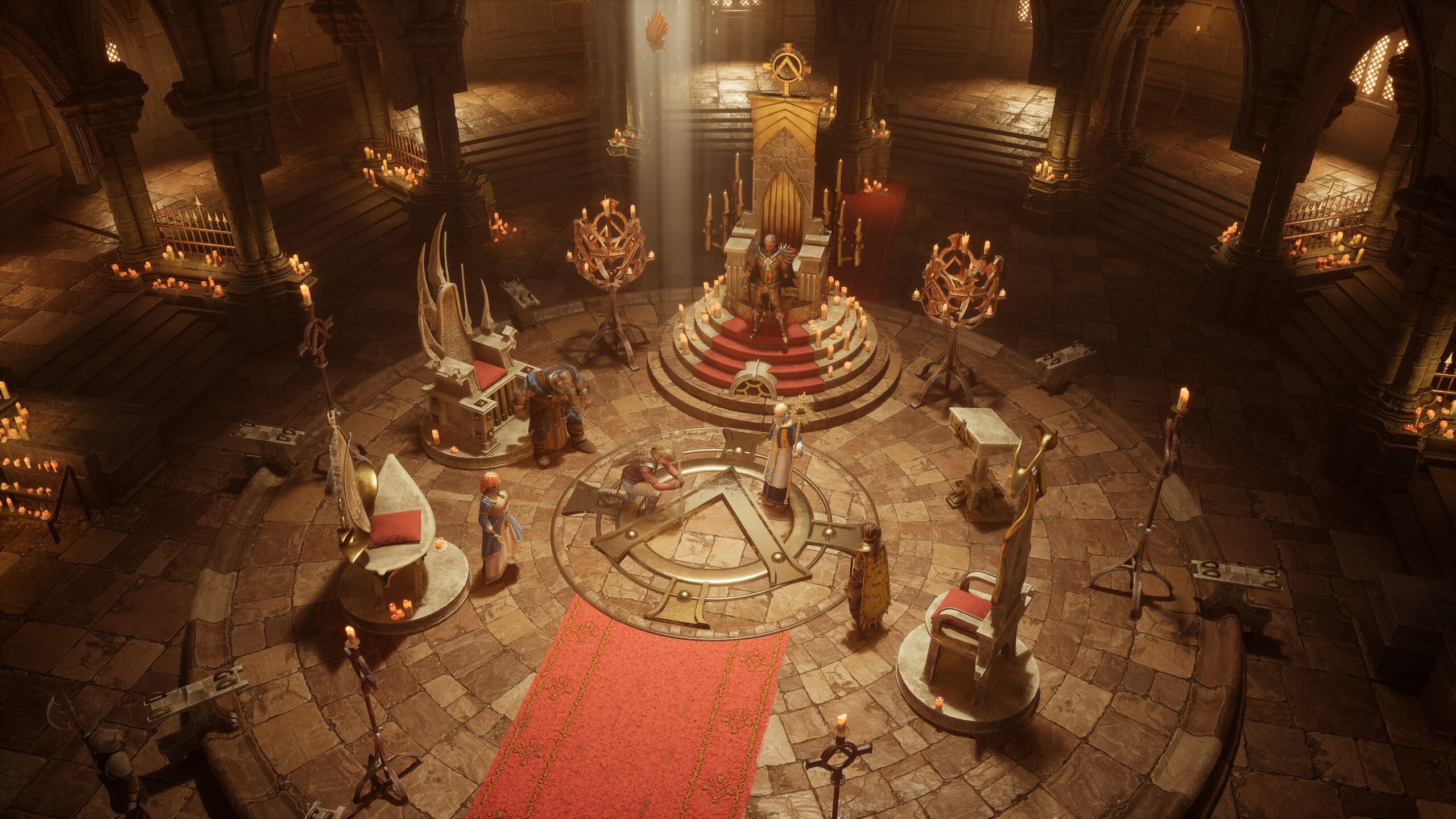
When it comes to interacting with the world—objects, buildings, and inhabitants—it’s a different story. Outside of dialogues and cutscenes, everything feels rather static, with little to no interaction possibilities. Indeed, Dragonkin is a very linear game in that regard, though the advantage is that you seldom get distracted from your goals.
Boss Fights as the Standout Feature
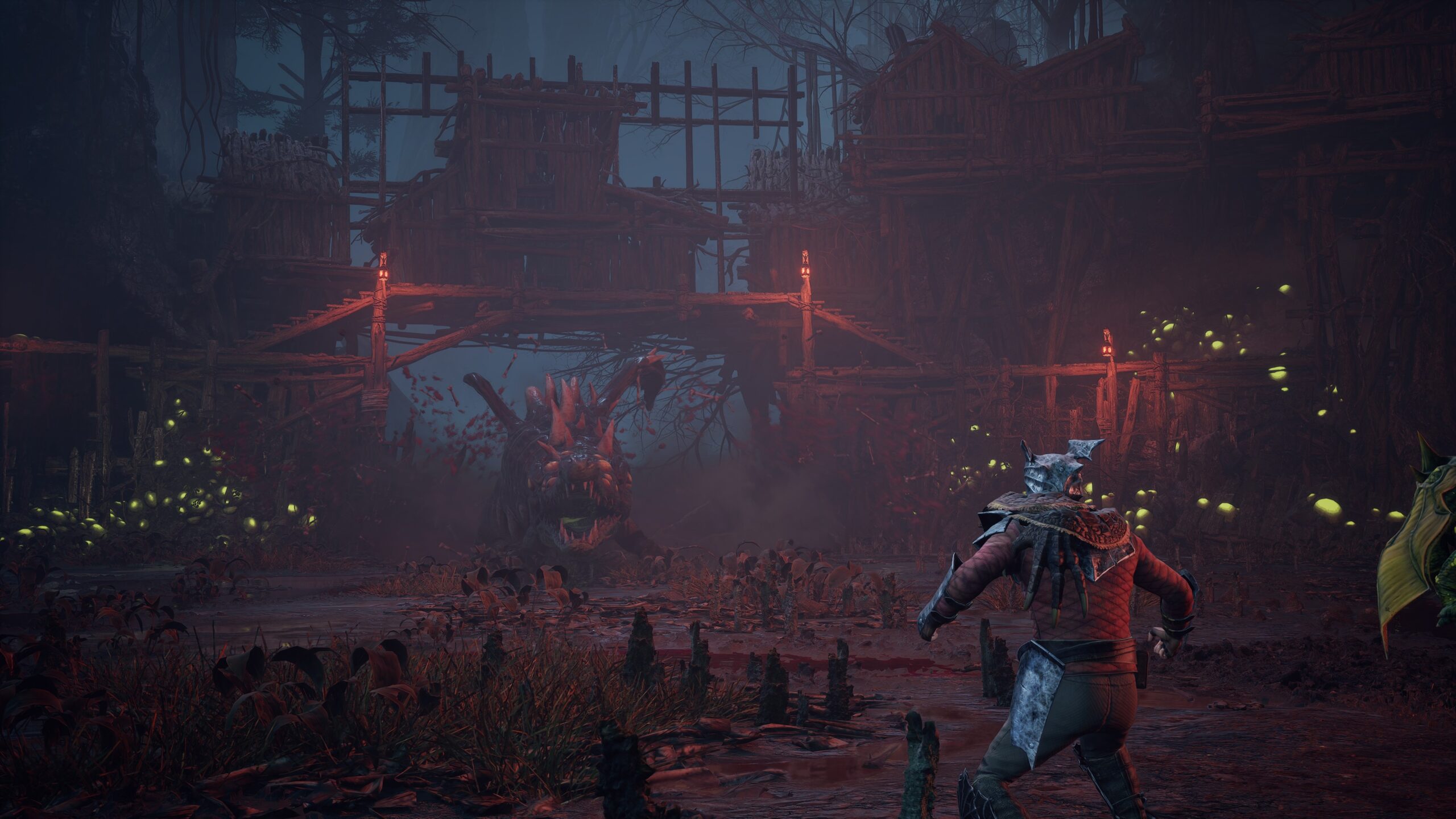
For me personally, the boss battles are easily the best part of Dragonkin: The Banished. The lead-up to them, however, can become quite repetitive. While the biomes themselves are varied, the environments within them often feel monotonous. Most encounters boil down to smashing through wave after wave of the same enemies, with occasional variations such as freeing hostages or destroying dragon eggs—though even then, you still have to eliminate the surrounding vermin first.
The automatic save system is another drawback. In this PC version, the option to quick save and reload really should have been included. As it stands, you often have to replay significant sections if you quit the game between checkpoints. Even more frustrating is the fact that you can’t pause this single-player, offline game. No matter which menu you open, dialogue and combat continue in the background. It’s a shame, because it forces you to keep fighting for your life before you can even activate that hard-earned level-up for yourself or your Wyrmling—until the battlefield finally settles down again.
Final Thoughts
In short, Dragonkin: The Banished is a solid action-RPG with clear Diablo influences, but presented as a sort of stripped-down, lighter version. As a result, it is highly accessible for those who find the genre heavyweights a tad too much in terms of difficulty, scope, or mechanical depth. Furthermore, while the mission grind and combat repetition are present, the boss battles remain the undeniable highlight of the experience. Graphically, the game runs fine, and the intriguing world truly captures the imagination. And while your character might not be the most fascinating, the lore and linear story are well-developed enough to keep you engaged.
Additional Information
Release Date: Mar 16, 2026
Reviewed On: PC. Download code provided by the publisher and PR agency.
Developer: Eko Software
Publisher: Nacon
Relevant links: Available on STEAM