 DaRmaZat
Fragments Of Hope and Empathy Across Lost Time.
Originally released on PlayStation in 2000, Dragon Quest VII distinguished itself with an unusually vast scope and a somber, episodic structure, following a young hero as he restores a world reduced to a single island by traveling into the past and reviving lost continents. Traditional turn-based combat was paired with a deep class system and a famously slow, puzzle-heavy opening, making it one of the longest mainline entries in the series. A streamlined Nintendo 3DS remake and mobile versions followed over a decade later, and now, as a modern rebuild of one of the most ambitious and divisive entries in Square Enix’s renowned JRPG series, Dragon Quest VII Reimagined launches on February 5.
Skipping Pilchard Harvest Day for a Higher Purpose
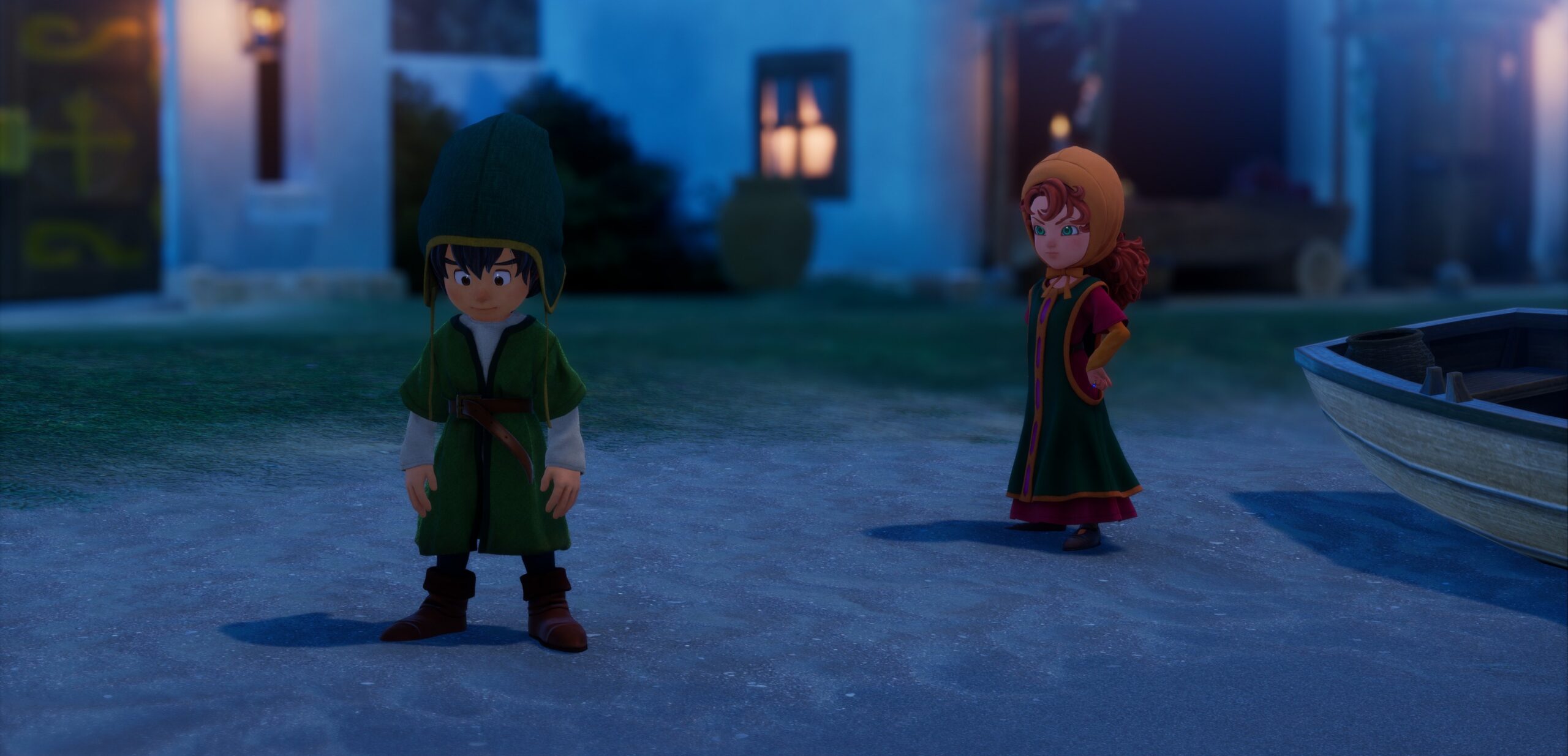
Evening settles over Pilchard Bay while you stand on the beach, trading barbs with the sharp-tongued, red-haired Maribel. She knows you keep disappearing into the cave with your best friend Kiefer, the prince of Estard, to scheme, and she resents being left out—especially as a girl, convinced boys get away with more in this village. Tomorrow is Pilchard Harvest Day, the most important day of the year. However, you hardly get to enjoy it, because a messenger summons you to Estard Castle, and on top of that, Maribel insists on tagging along. Someone like Maribel does not take no for an answer, and actually, neither do many other NPCs in Dragon Quest VII Reimagined. Yes, now and then, you are presented with dialogue choices, but the story moves forward regardless. Still, beneath that rigid structure, a positive, gently unfolding story slowly takes shape, whether you resist it or not.
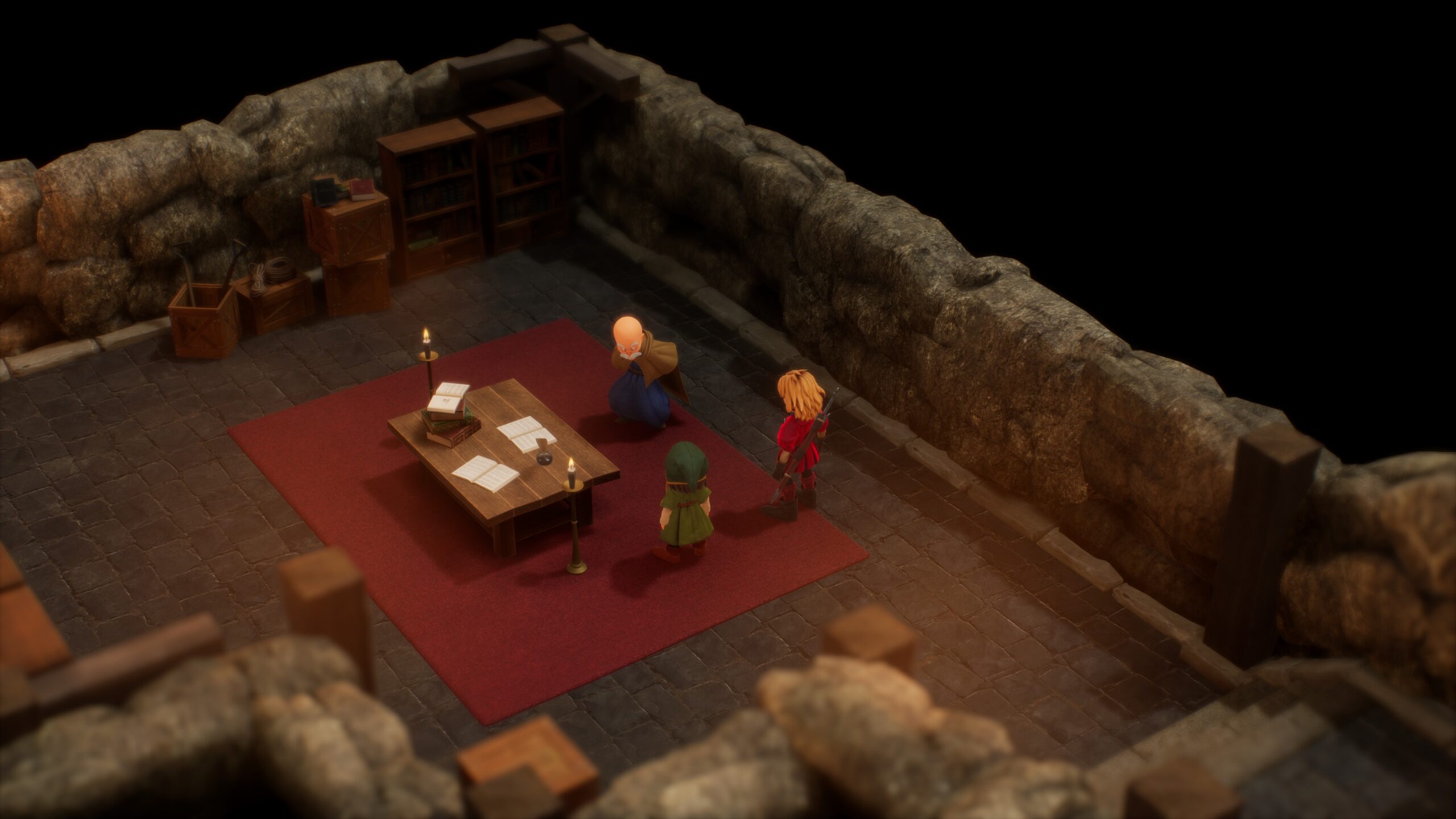
From Pilchard Bay, you quickly find yourself in Estard, the second village, and things finally start to click. Inside the castle, Kiefer rushes toward you. He recently found a mysterious stone tablet fragment and is utterly convinced it will help him prove that the world extends beyond your single island. A ritual at a magical shrine reveals the truth—this fragment is one of four needed to open the Doors of Destiny. That possibility alone is enough. Kiefer joins your party immediately, and before long, other familiar faces begin to fill out the group.
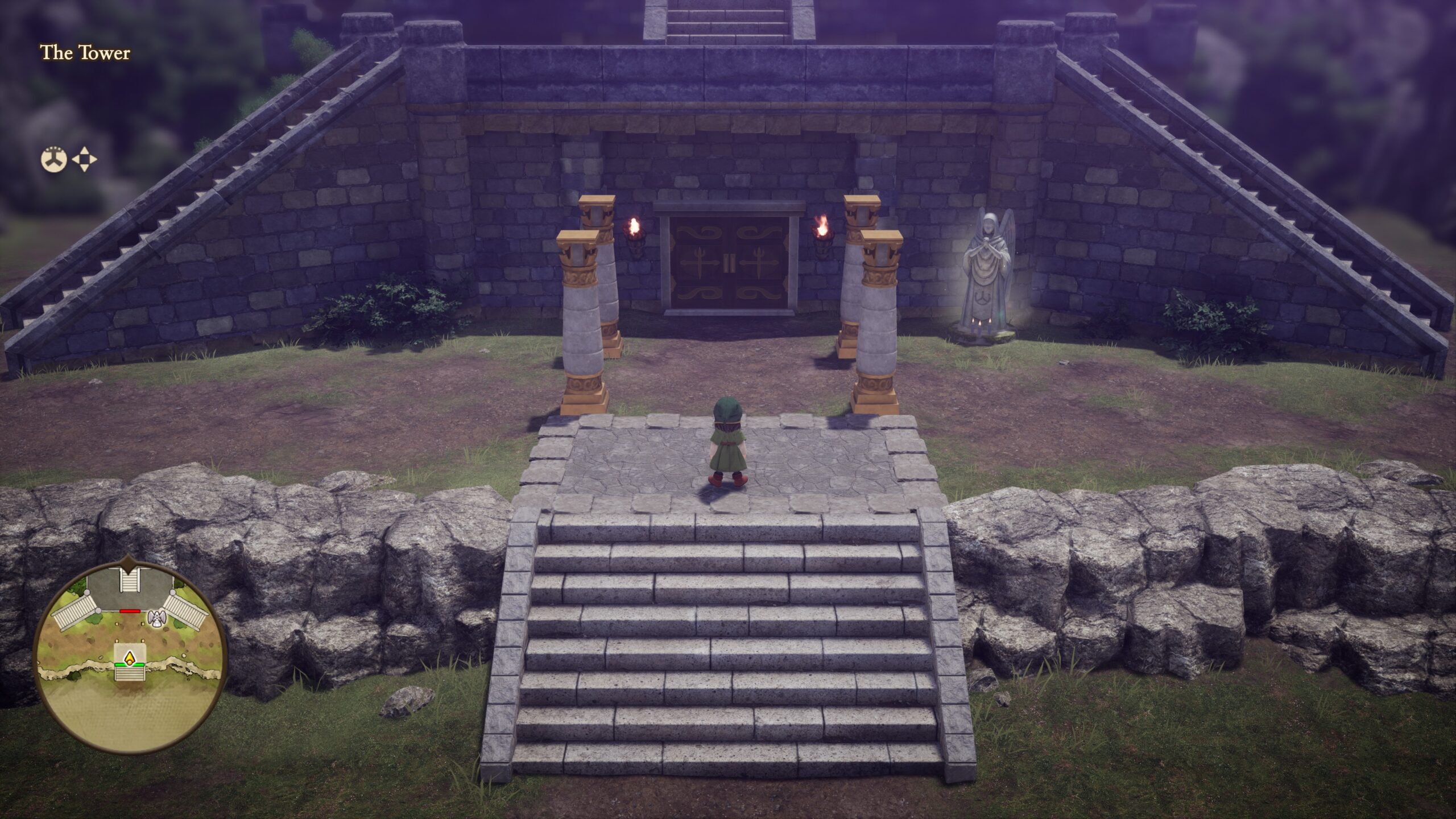
What follows is a frantic, wide-eyed search for the remaining fragments and the islands from the past waiting behind them, accessible through time portals. By exploring the world, helping others, defeating monsters, and solving puzzles, you collect new fragments, place them into special pedestals, and watch forgotten islands reappear on the present-day world map. True, these plot beats may no longer sound particularly original today, but combined with the innocent, joyful presentation, they have not lost their nostalgic charm.
Comfortingly Simple, Surprisingly Complete
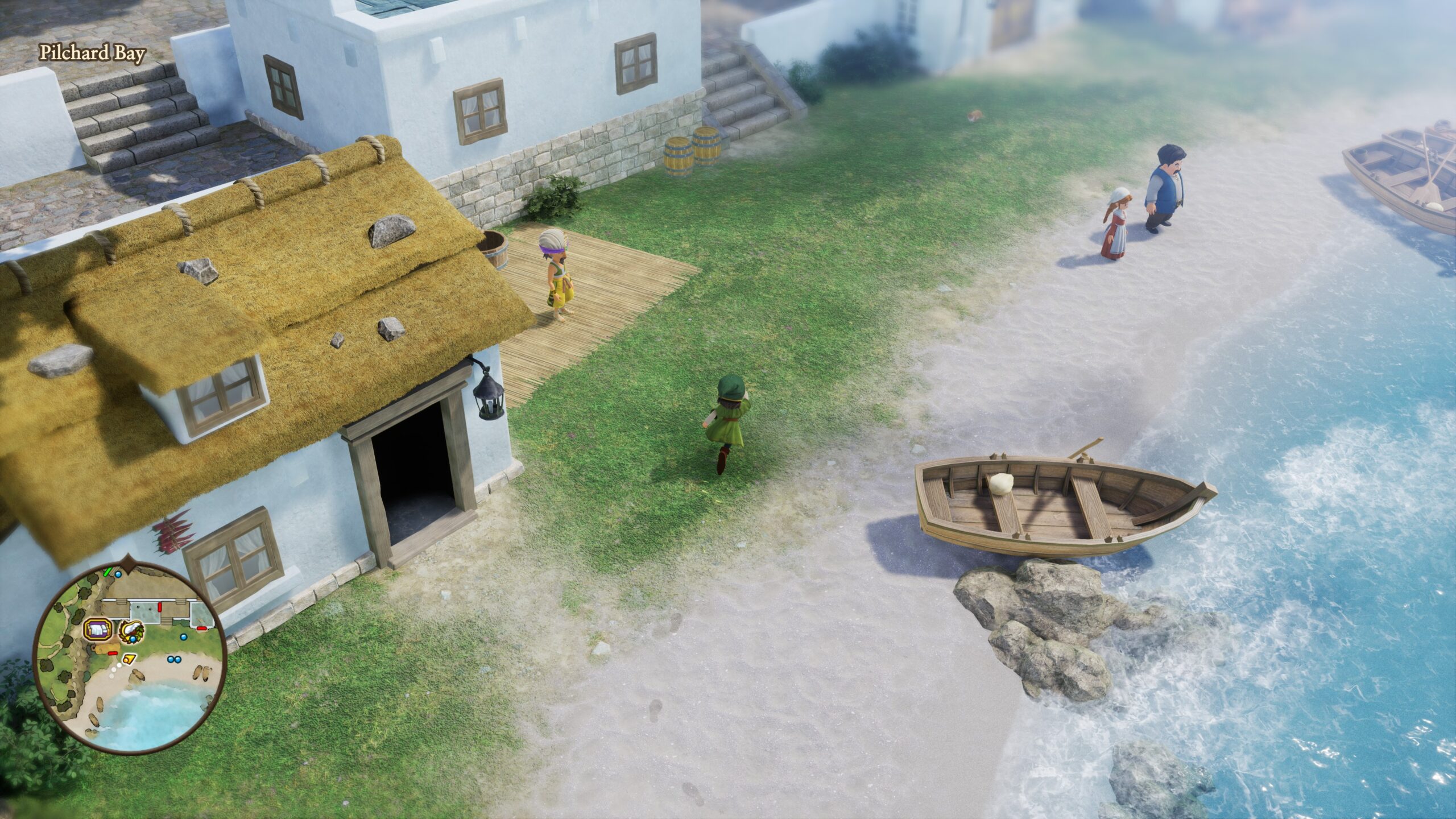
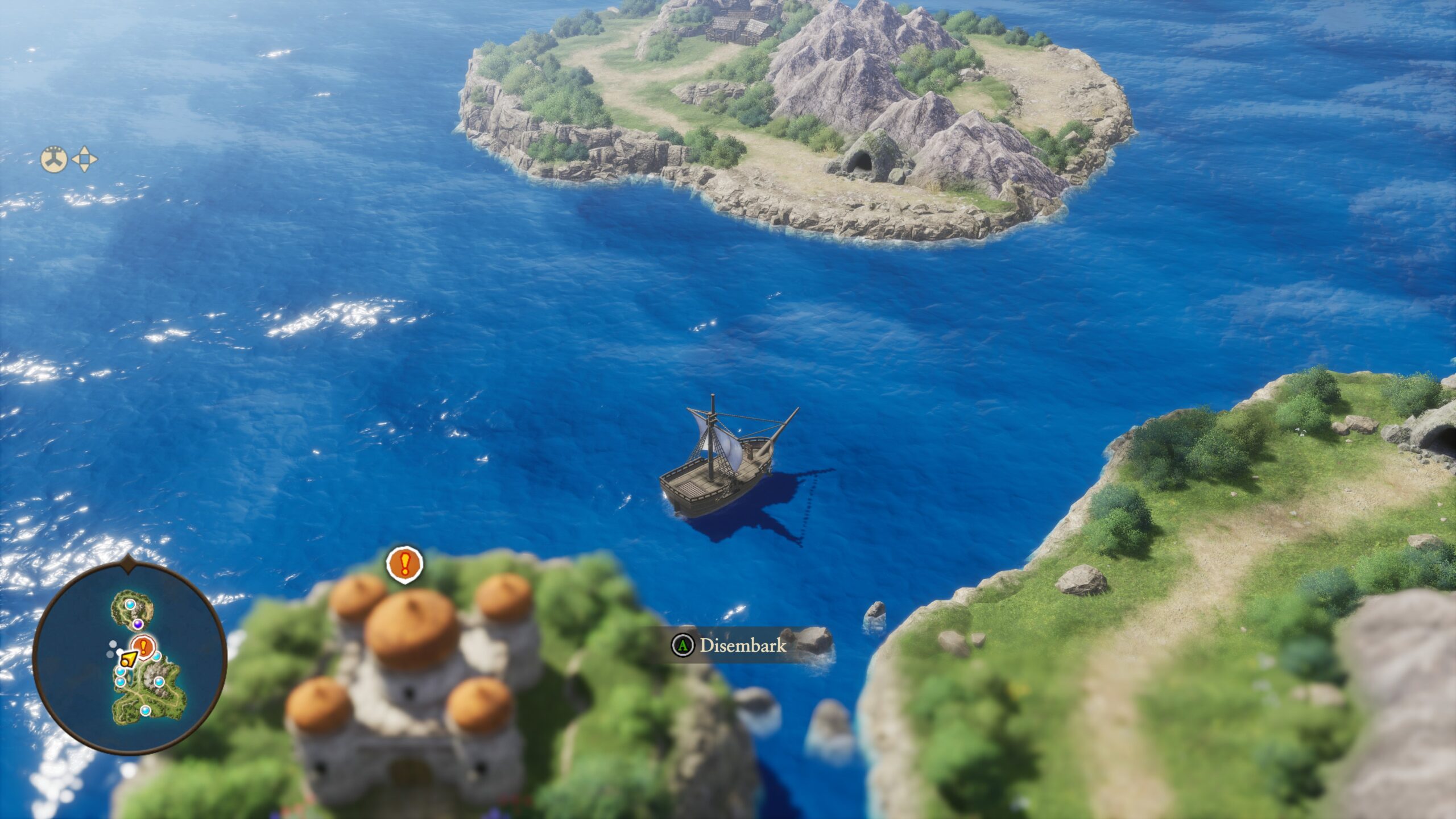
A miniature world map paired with clear markers keeps navigation in Dragon Quest VII Reimagined painless, and whenever you feel stuck, talking to one of your companions usually results in genuinely helpful advice. Much of the retro charm comes from how stripped-down everything feels. Stats and inventory avoid modern excess entirely: HP, MP, a generic level, and nothing resembling min-maxed perk trees or endless gear optimization. Equipment stays humble—sword, shield, cape, a ring or two, some items, a few skills. That’s all you ever manage, and it feels liberating.
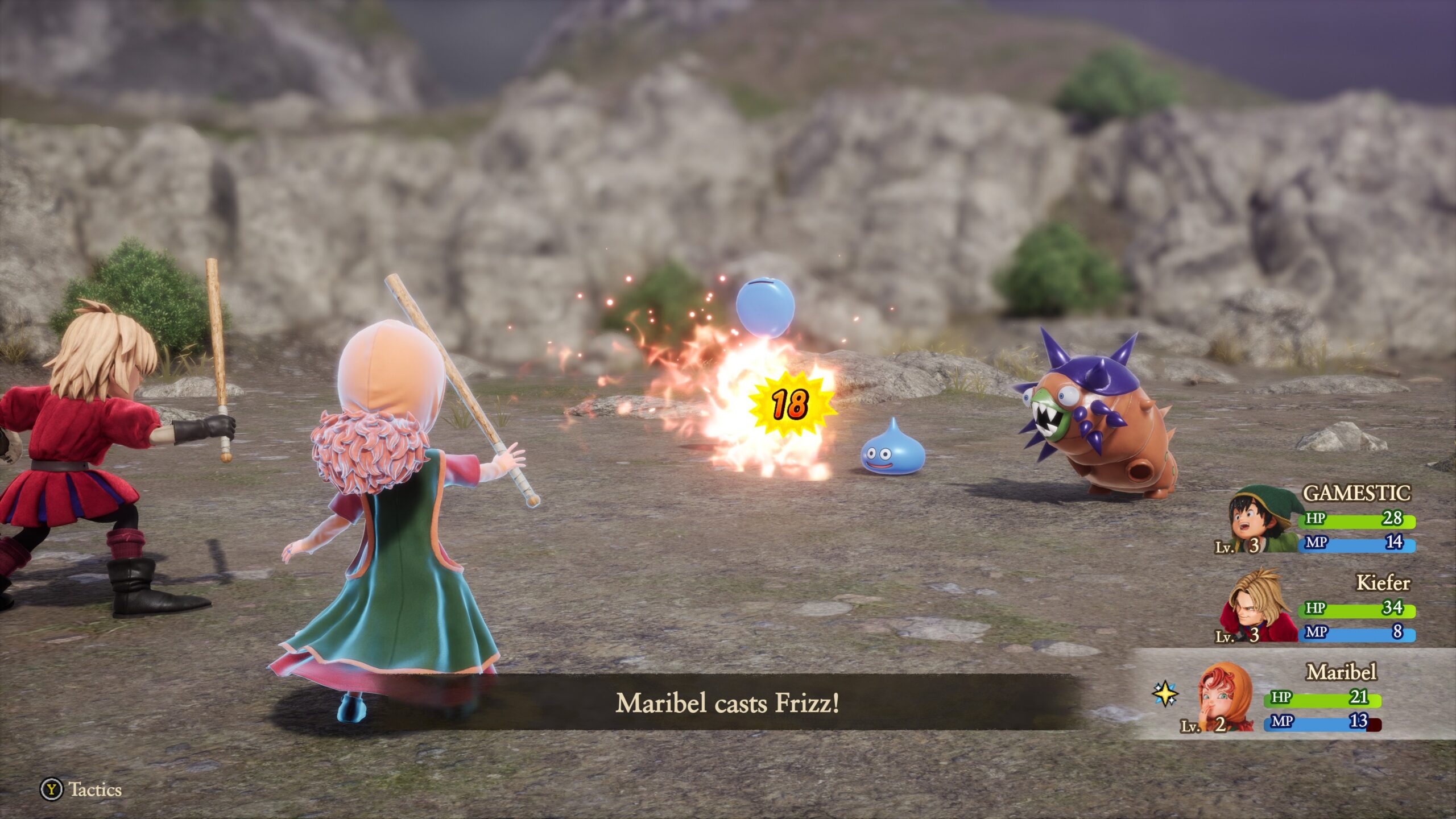
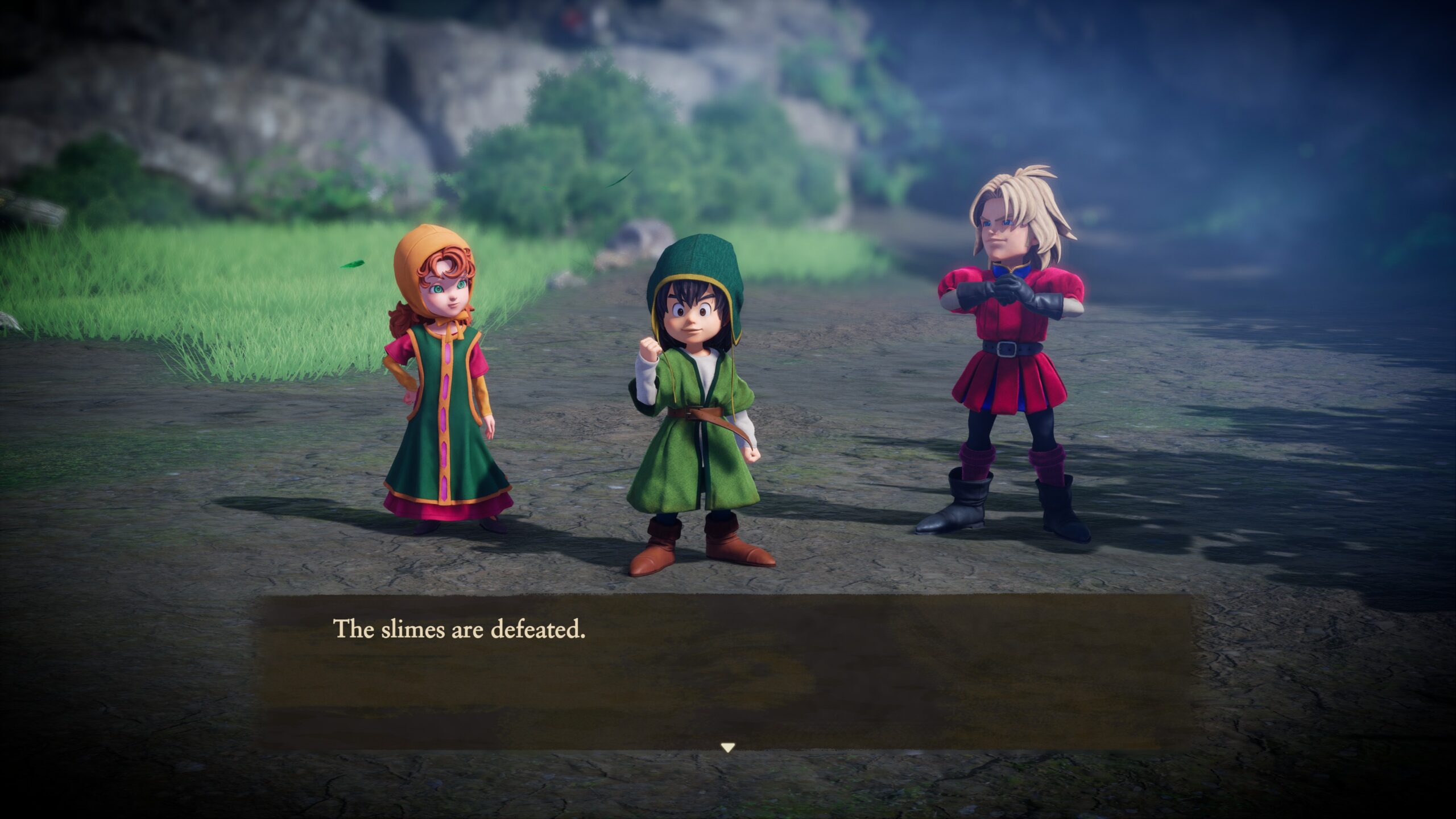
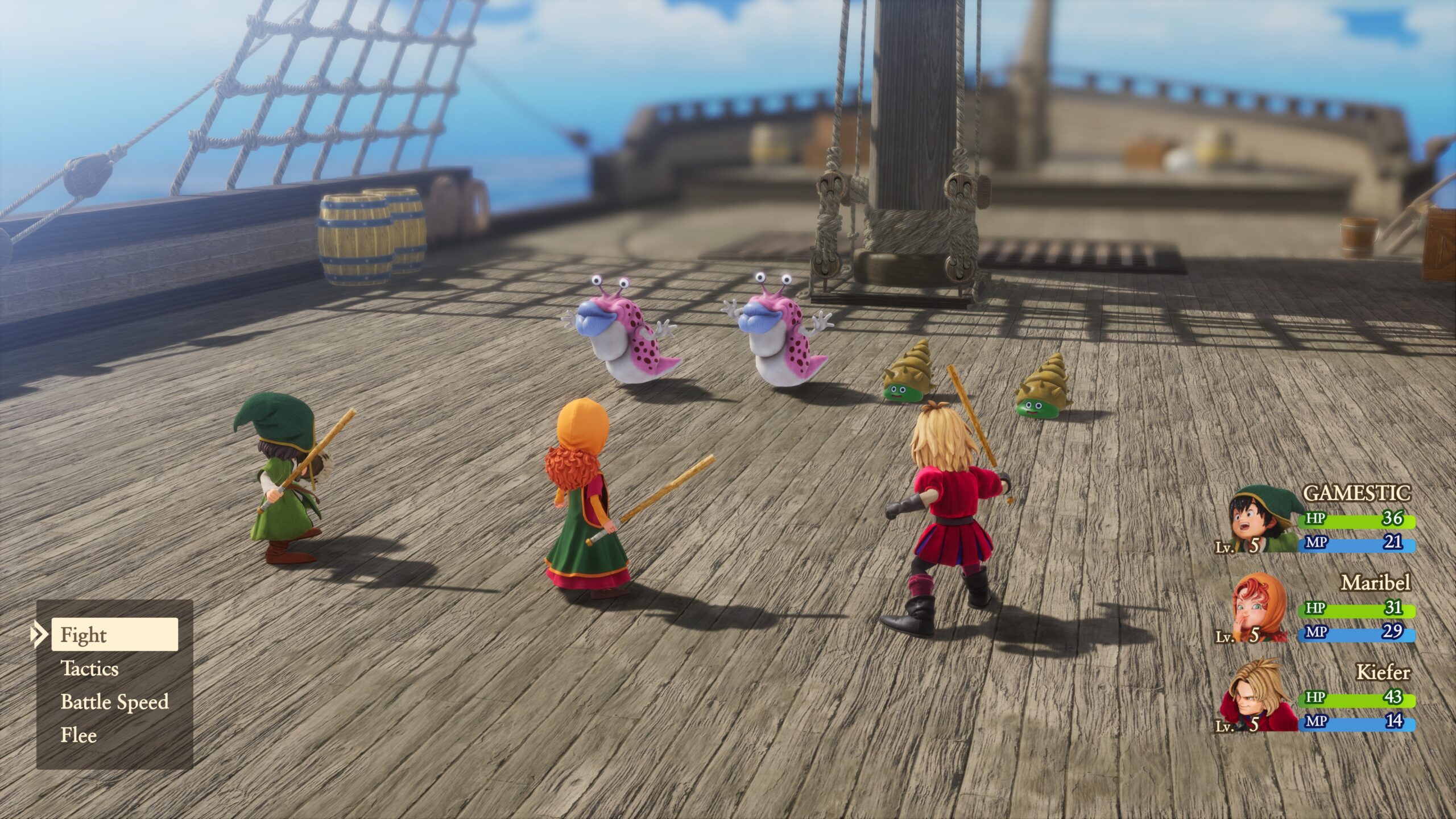
Although combat takes its time to show up, the first tactical fight—against two Tribulators—sets expectations clearly. Turn-based JRPG staples rule every encounter: attack, defend, choose a skill, adjust tactics, use an item, or flee if things spiral out of control. At least one party member needs to survive, with healing each other and medicinal herbs keeping HP afloat. Battle speed can be adjusted, and full auto-battle is available. Tactics options pair well with automation, whether you want a healing focus or a balanced approach between offense and defense. Actions are now chosen per character in turn order, new spells and skills have been added, and the Moonlighting dual-vocation mechanic lets characters master two classes simultaneously, enabling hybrid builds and strategic play—such as building up Worked Up through combat to unleash a powerful, vocation-specific Let Loose attack at the right moment. After victory, rewards follow naturally—gold coins, level-ups, proficiency upgrades—or, put differently, anyone familiar with the genre will not be surprised and will settle in quickly.
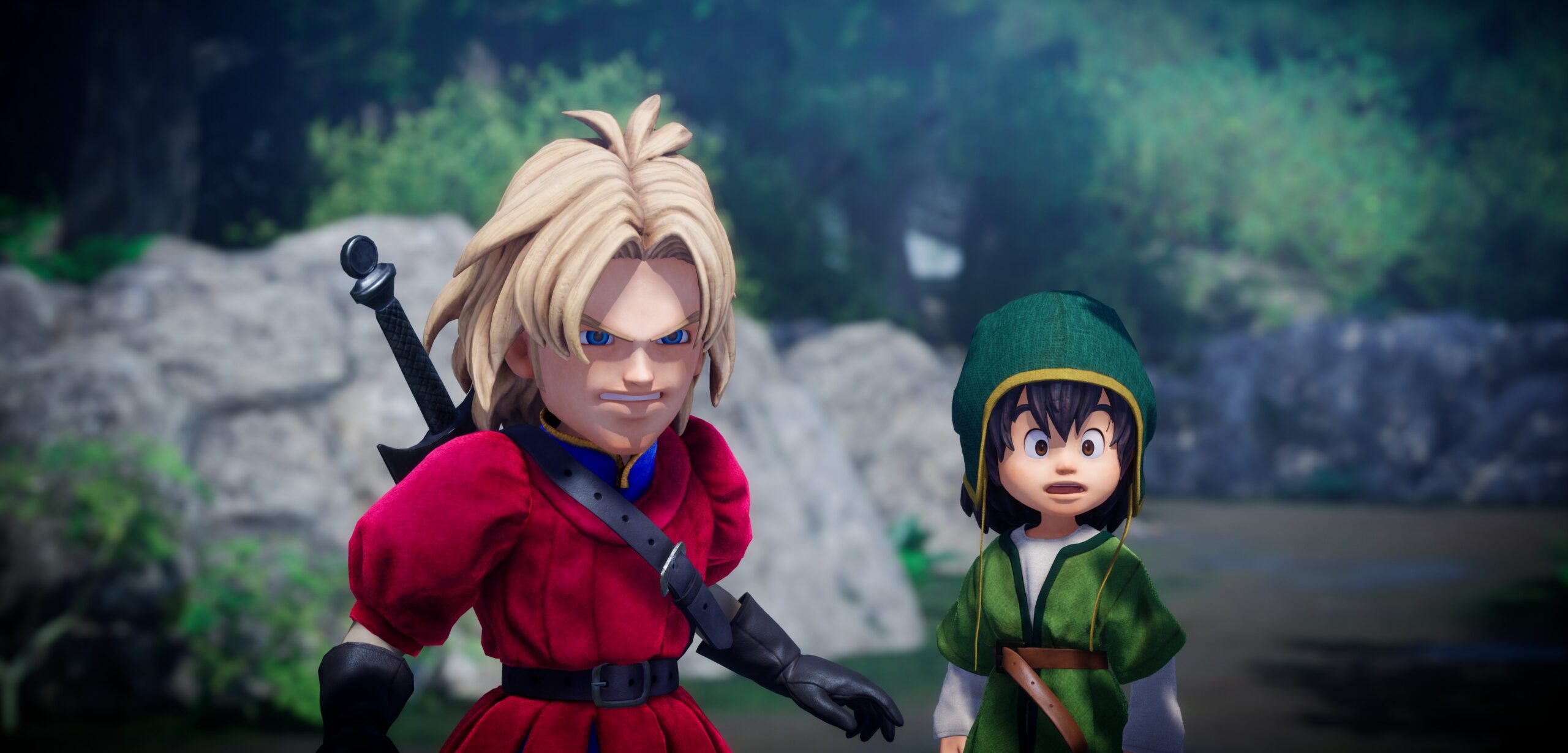
There are some caveats, though. Disabling auto-battle during combat can feel oddly unresponsive, especially because fights play out so fast, even on the default speed. After some battles, the screen can also freeze in an old-fashioned way while updated stats scroll by. The first time that happened, I genuinely believed the game had locked up.
Beyond getting to know the world and its inhabitants while battling enemies, Reimagined’s puzzles stand out as consistently enjoyable. No puzzle feels unfair, and solutions always follow clear logic. At certain points, progress does come to a halt because you are required to speak to specific NPCs before anything moves forward again. That said, the quest log usually points you in the right direction, and companions regularly make this clear as well. The save system deserves praise too. Manual saving happens inside buildings such as churches and near statues, while the automatic save system works reliably in the background.
An Honest Reimagining in Visuals and Sound
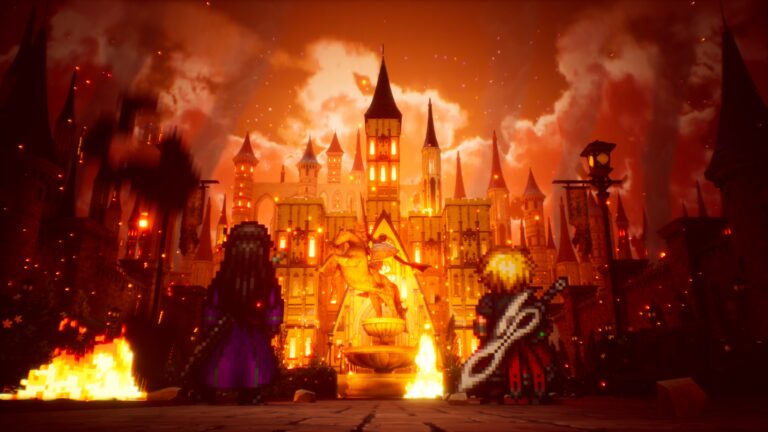
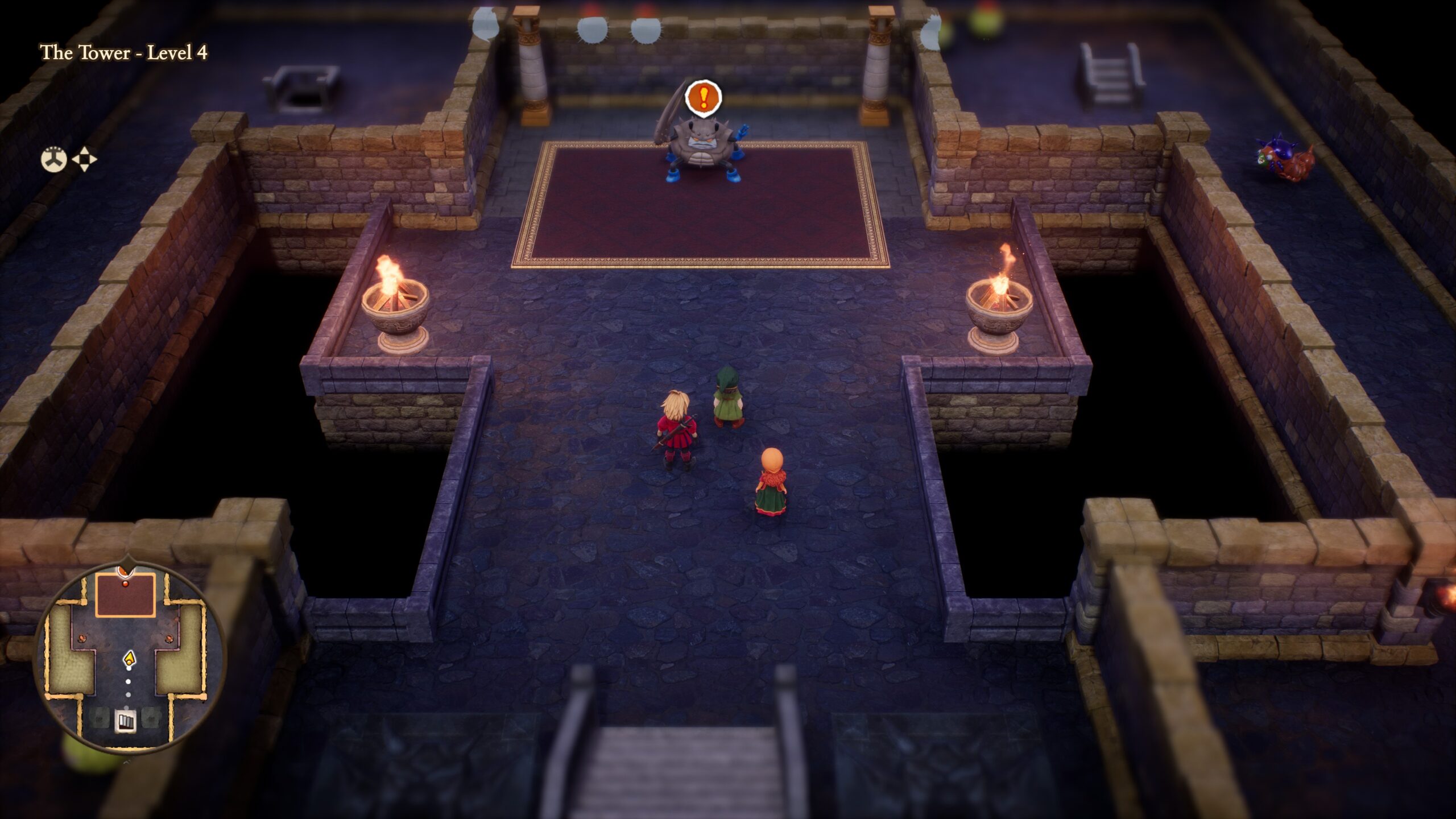
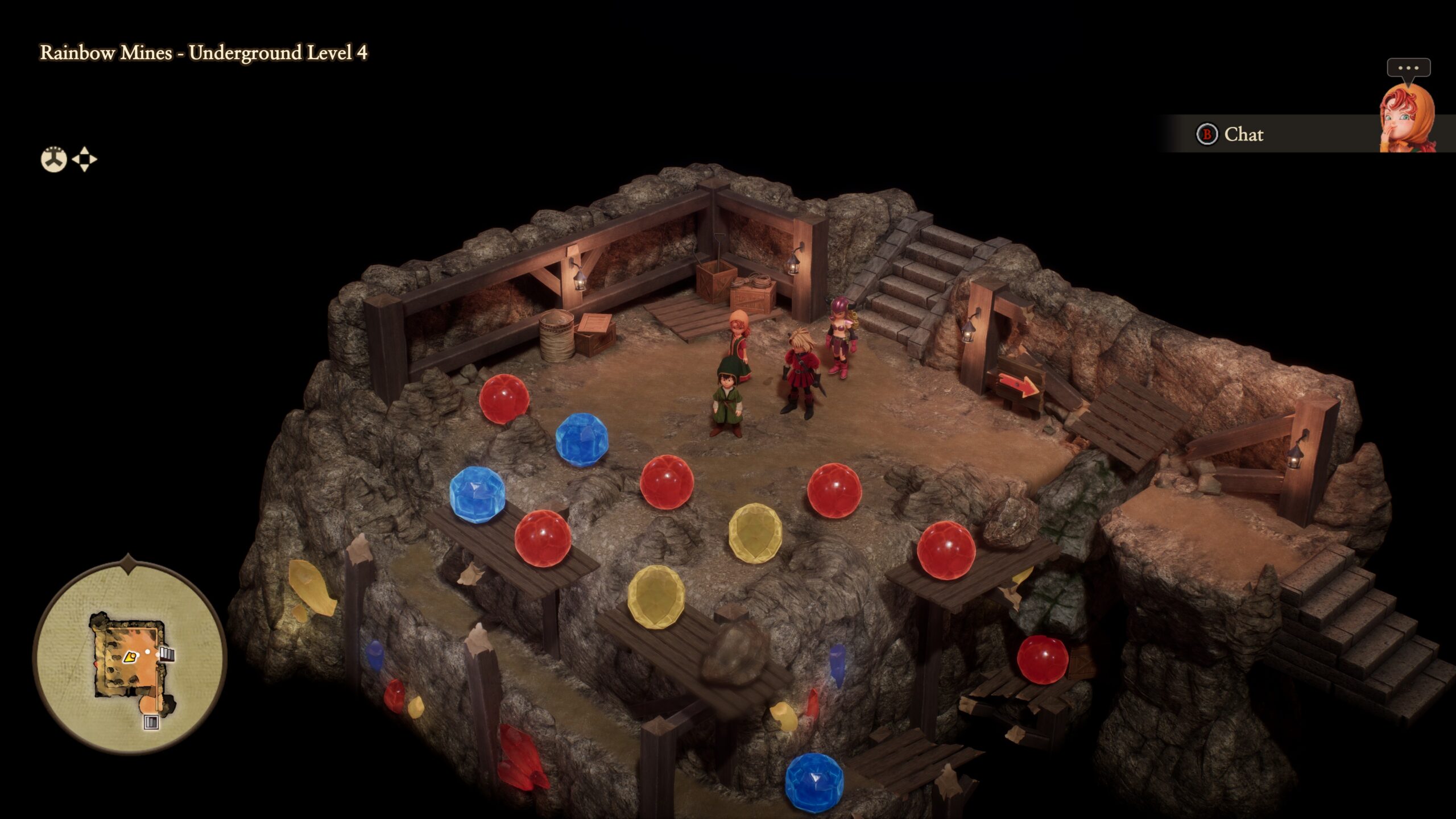
Despite fully reworked 3D visuals, the newly hand‑crafted diorama style still carries a distinctly retro Zelda-like feel, sometimes isometric, sometimes nearly top-down. While exploring the maps, you notice how small and segmented they still are: you walk a short distance, the screen fades to black, and the next area loads. Monsters are now visible on the world map and in dungeons, though the ship still triggers random encounters unpredictably, preserving some of the old-school tension—or the casual irritation. Fast travel is also absent, making backtracking an unavoidable part of the experience.
Exactly because of this, the game never pretends to be something it isn’t. This is a reimagining, a ground‑up rework with modernized systems and quality-of-life improvements, but not a complete overhaul—and visually and performance-wise, it is a well-executed one, running cleanly with a smooth framerate and high image fidelity.
I also genuinely enjoyed the musical score, built around classical compositions driven by strings and flutes—often upbeat, sometimes drifting into melancholic drama. Actually, the mood never misses a beat, and the voice acting holds up just as well, with solid performances in both English and Japanese. Voice acting is more complete than ever, but a few NPCs remain silent or only speak fragments of their dialogue.
Final Thoughts
Dragon Quest VII Reimagined’s colorful universe is a joy to inhabit. Its fragment-driven progression gives purpose to exploration, puzzles remain logical and satisfying, and the revamped turn-based combat proves highly accessible throughout. However, what contributes most to the game’s cozy, warm, and consistent atmosphere for me are the personality-rich characters, perfectly fitting classical music, strong voice acting, and a smooth overall presentation. This is a carefully crafted and inviting reimagining that unfolds its world slowly and deliberately, fragment by fragment—and once it pulls you in, letting go becomes surprisingly difficult.
Additional Information
Release Date: Feb 5, 2026
Reviewed On: PC. Download code provided by the publisher and PR agency.
Developer: Square Enix, Hexadrive Inc.
Publisher: Square Enix
Relevant links: Available on Steam