 DaRmaZat
These days, most metroidvanias seem determined to prove how hard they can be. Soulslike combat, roguelike punishment loops, and systems designed to test patience as much as skill have become the norm. MIO: Memories in Orbit also engages with that current. It embraces a punishing level of challenge while still leaning toward a more classic interpretation of the genre—featuring fast-paced combat, exploration both with and without a map, immersive atmosphere, and rewarding moments of discovery.
Awakening a Fragile Protagonist
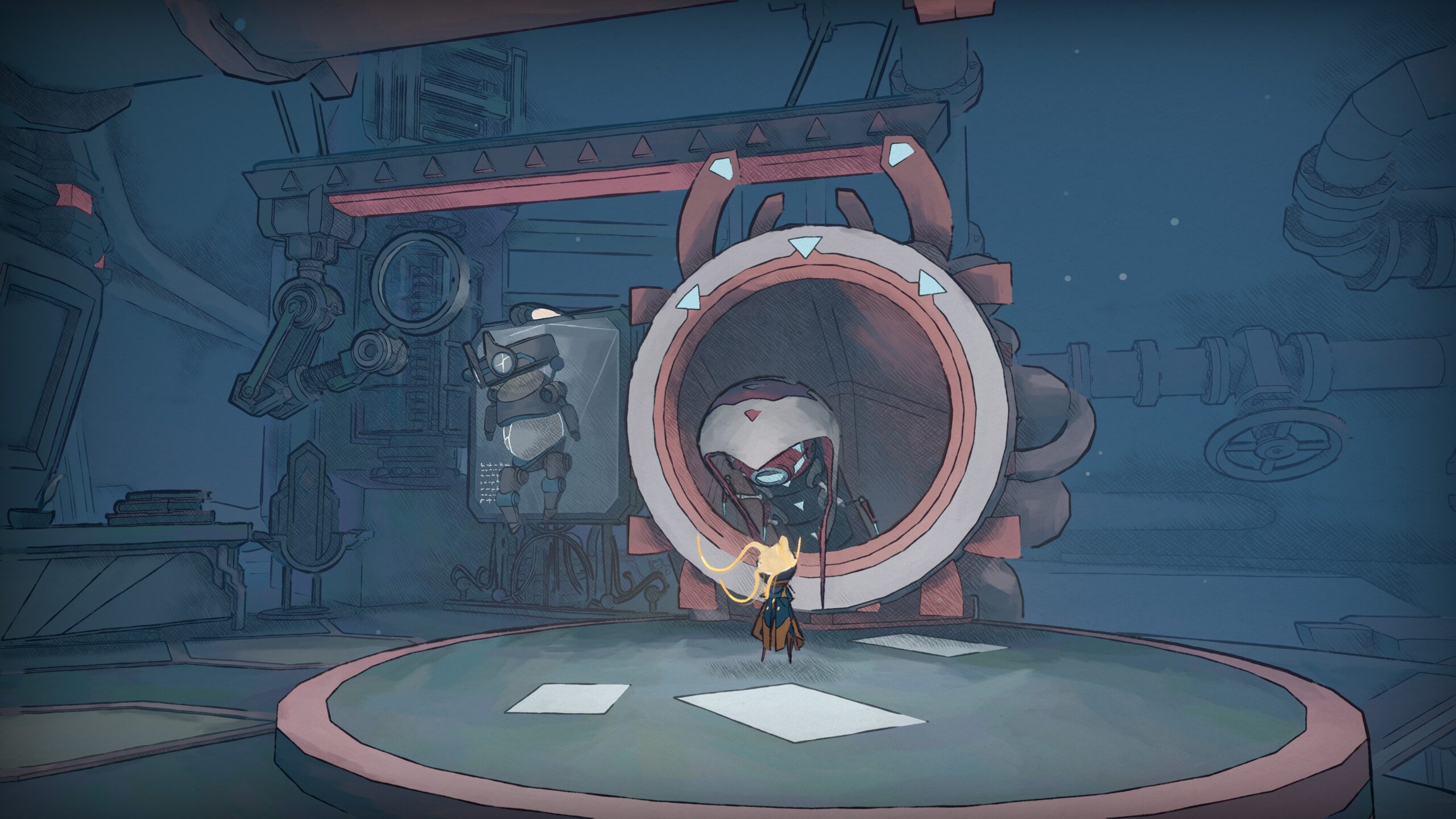
The game opens with an ethereal, almost cosmic tutorial sequence where protagonist MIO exists as a minimal, line-drawn anthropomorphic figure—something that looks like it was sketched by a child trying to capture the idea of a person rather than a realistic body. This introduction is highly symbolic, with its style echoing at various points throughout the rest of the game. Later, when MIO transforms into the fleshed-out version of herself, she is immediately striking. She is a feminine being, best described as a one-eyed robot wrapped in a robe, with long yellow hair that functions more like sensory tendrils than anything human.
Once the intro ends, MIO “awakens” into a fully realized, post-apocalyptic world aboard a massive spaceship on the brink of collapse. The Vessel is drifting, decaying, and slowly shutting down, and from the very start it is clear that you are there to prevent that final failure.
The Vessel and Its Inhabitants
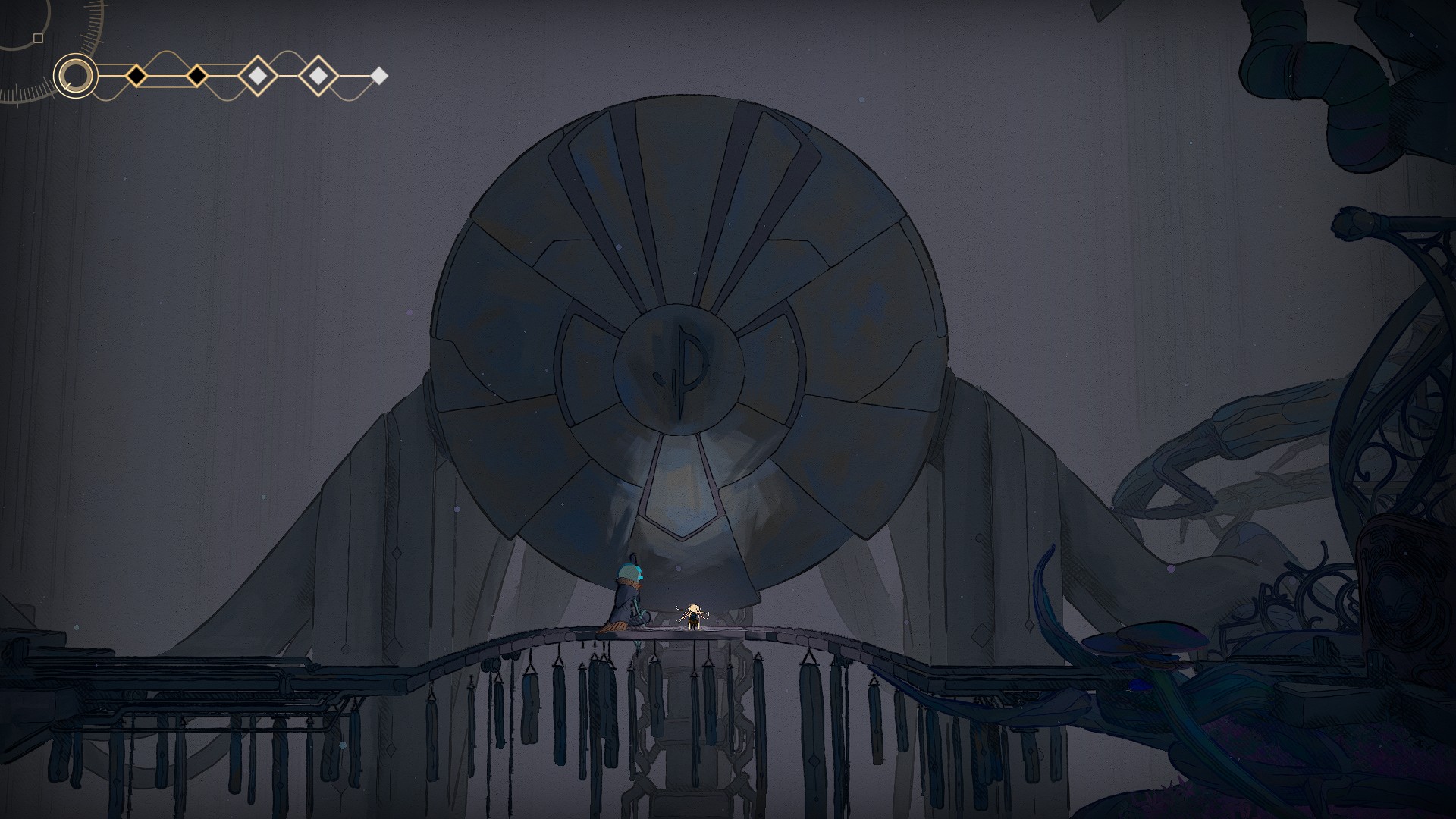
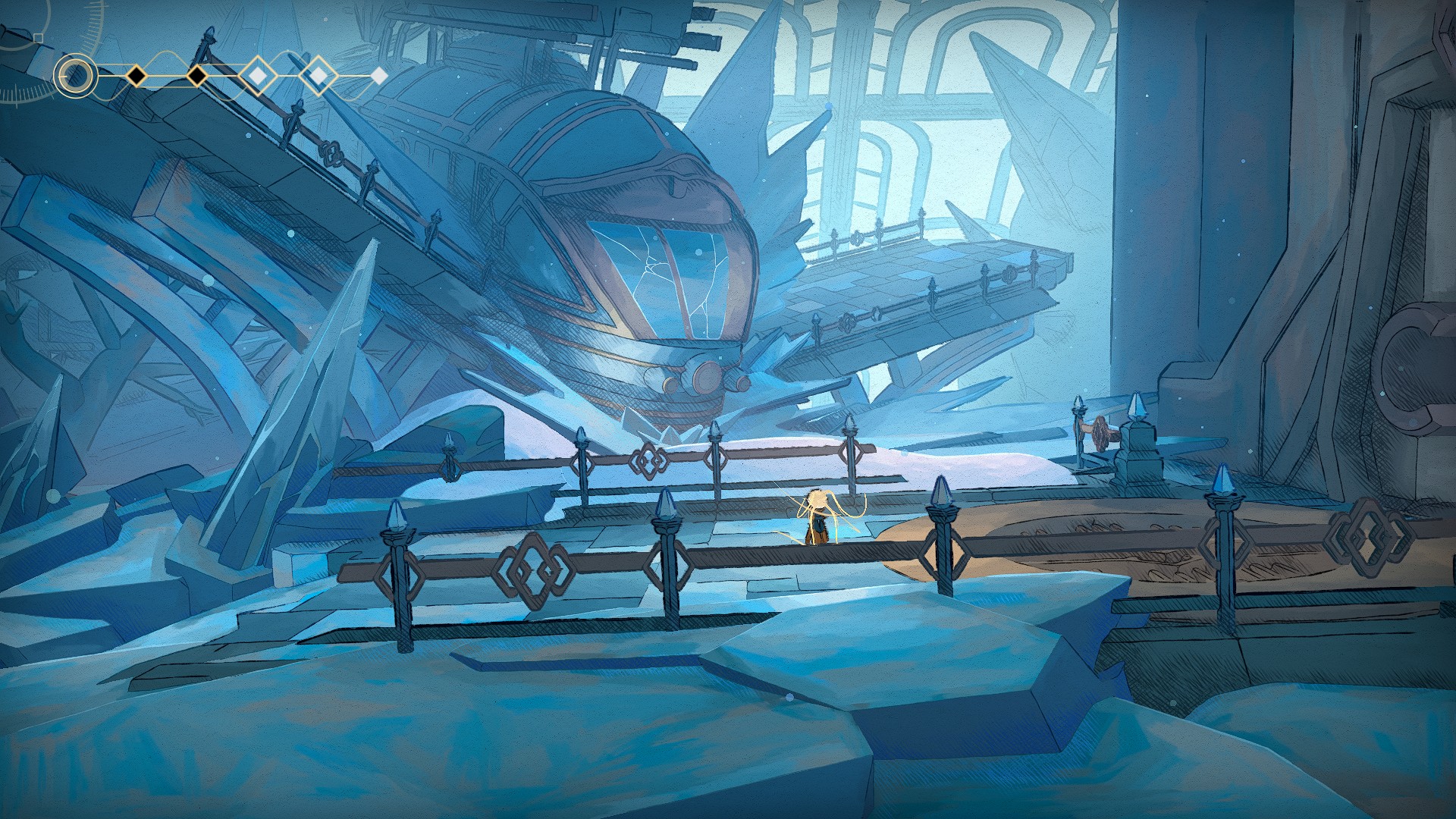
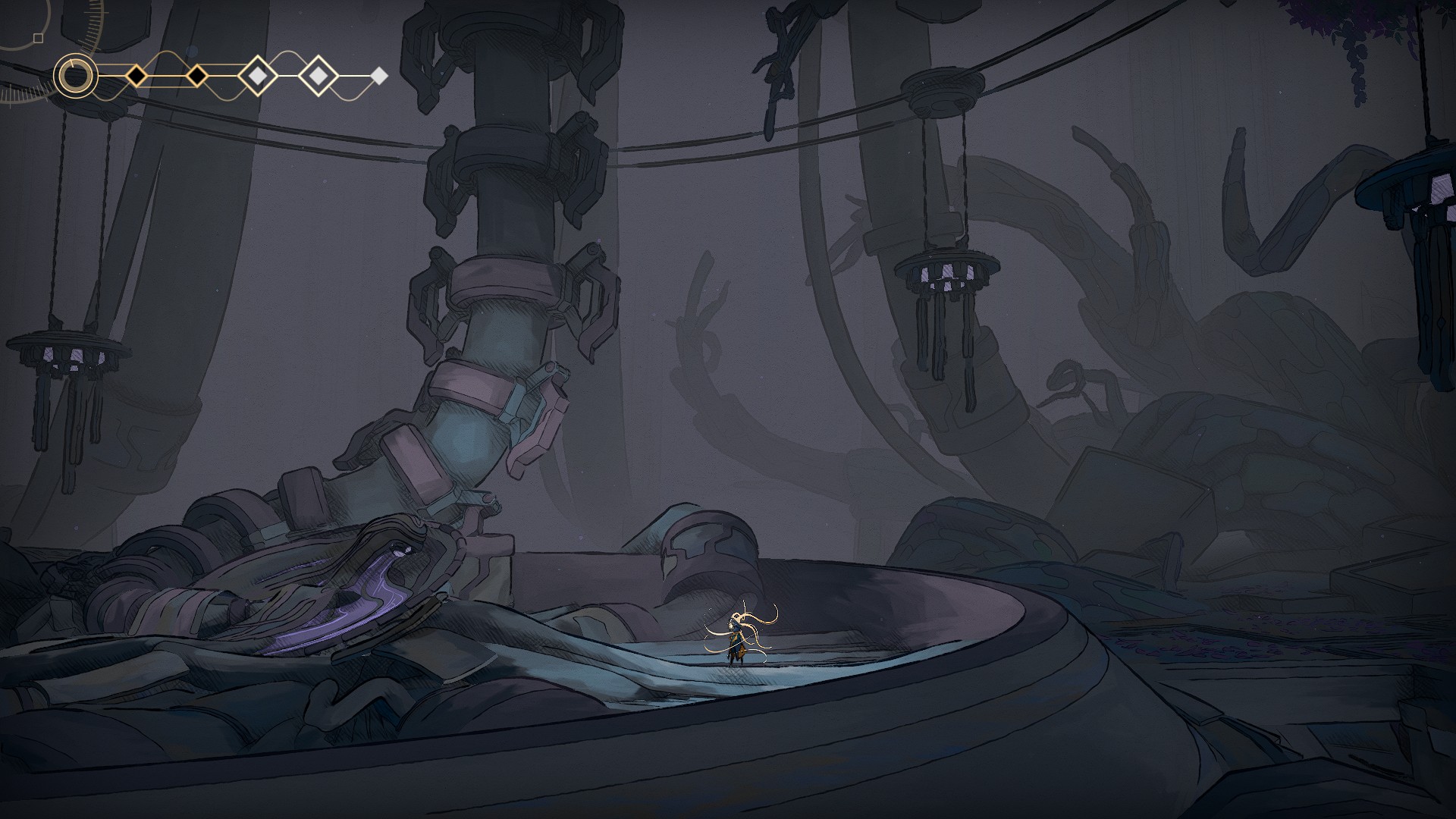
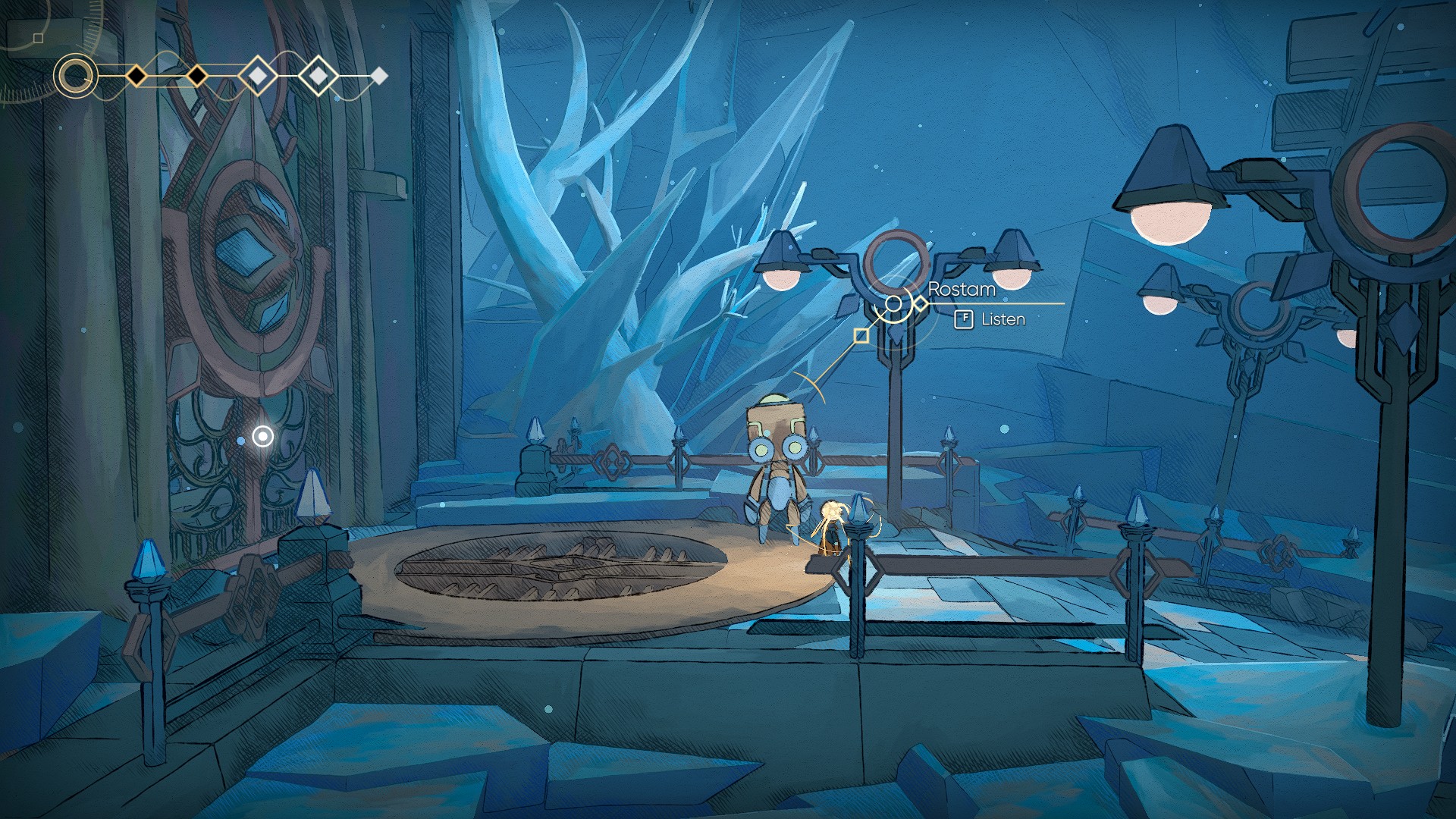
The Vessel is not merely a backdrop; it feels alive in its own broken way. This enormous technological ark is overgrown with rogue machines and reclaimed by vegetation, its original purpose long obscured. Its AI caretakers, known as the Pearls, have ceased functioning for reasons that are anything but straightforward, leaving the ship forgotten and facing imminent shutdown.
Helping the remaining entities (such as Shii) requires offering Nacre Droplets, the in-game currency obtained by collecting scrap and defeating enemies. Early on, this does involve some grinding, as progress is deliberately slow. Once you have gathered enough droplets, however, entire sections of the Vessel come back online. Power is restored, systems reactivate, and the world begins to open up in meaningful ways.
Among the other figures you encounter is Dr. Halyn’s property, also known as MEL. After discovering MEL’s shop, the location becomes an important anchor point in your journey. Here, you can purchase coating components, new Modifiers, and extension modules that expand the functionality of existing Modifiers, providing MIO with tangible upgrades and more customization options. In addition, MEL’s shop allows you to bring old cores, called “pearls”, salvaged from damaged units throughout the game. Combined with Nacre, these pearls can be exchanged at the shop for new parts or to repair broken modules, making MEL a key hub for both upgrading and maintaining MIO’s equipment.
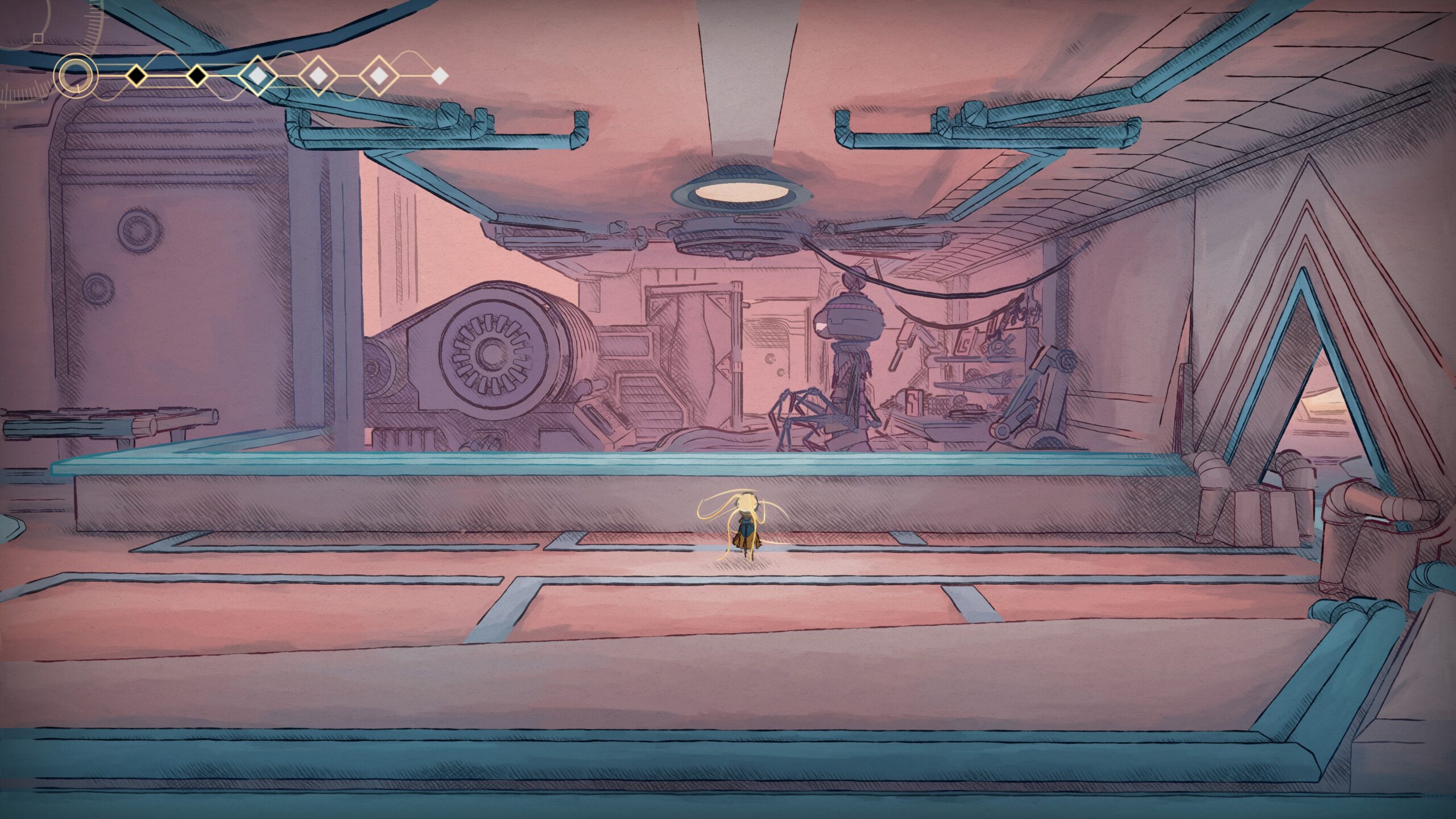
Navigation in the early stages of Memories in Orbit is quite restrictive. Most doors are locked, access badges are scarce, and progression often requires reaching areas from unexpected angles rather than moving straight ahead. Before long, however, MIO encounters strange mechanical beings and high-tech systems that are willing—sometimes conditionally—to help her move forward. As is typical for the genre, your map plays a crucial role, not only showing explored areas but also subtly indicating where further exploration is possible through dotted lines, without outright telling you where to go next.
About Pods, Modifiers, and Momentum
Your main point of interaction with the Vessel’s systems is the Nexus-pod, a network gate you physically connect to. From here, you can save progress, manage your inventory, temporarily view the area map, and customize MIO through the Attune system using Modifiers. Installing these Modifiers requires unlocking enough slots, and in some cases temporarily disabling others.
There are forty-two Modifiers hidden throughout the world, many of which are essential for progression or for overcoming particularly demanding obstacles. Some improve aerial movement and gliding, others expand dodge range and protection layers, while more advanced ones significantly enhance air control and precision during complex platforming sections.
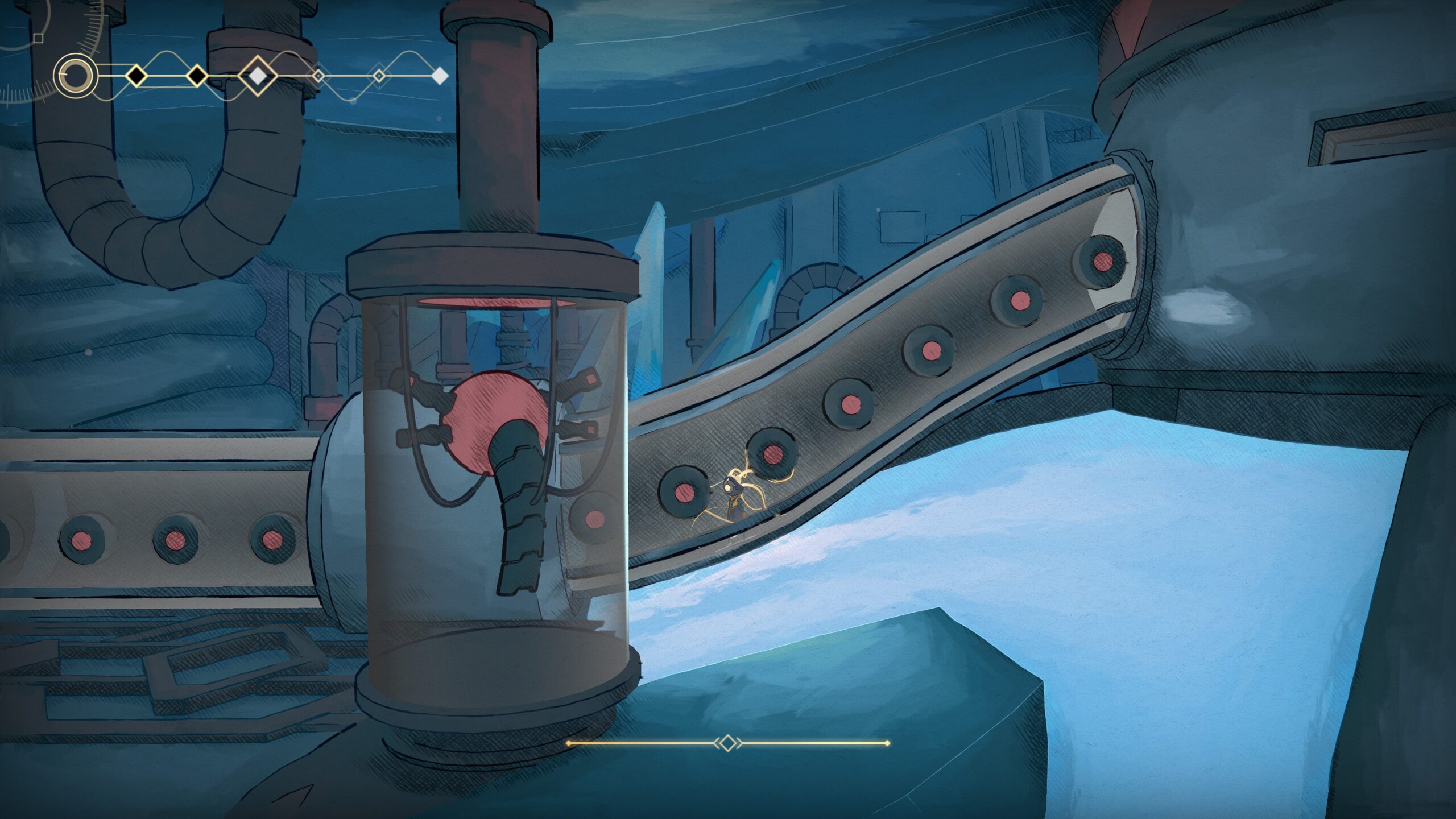
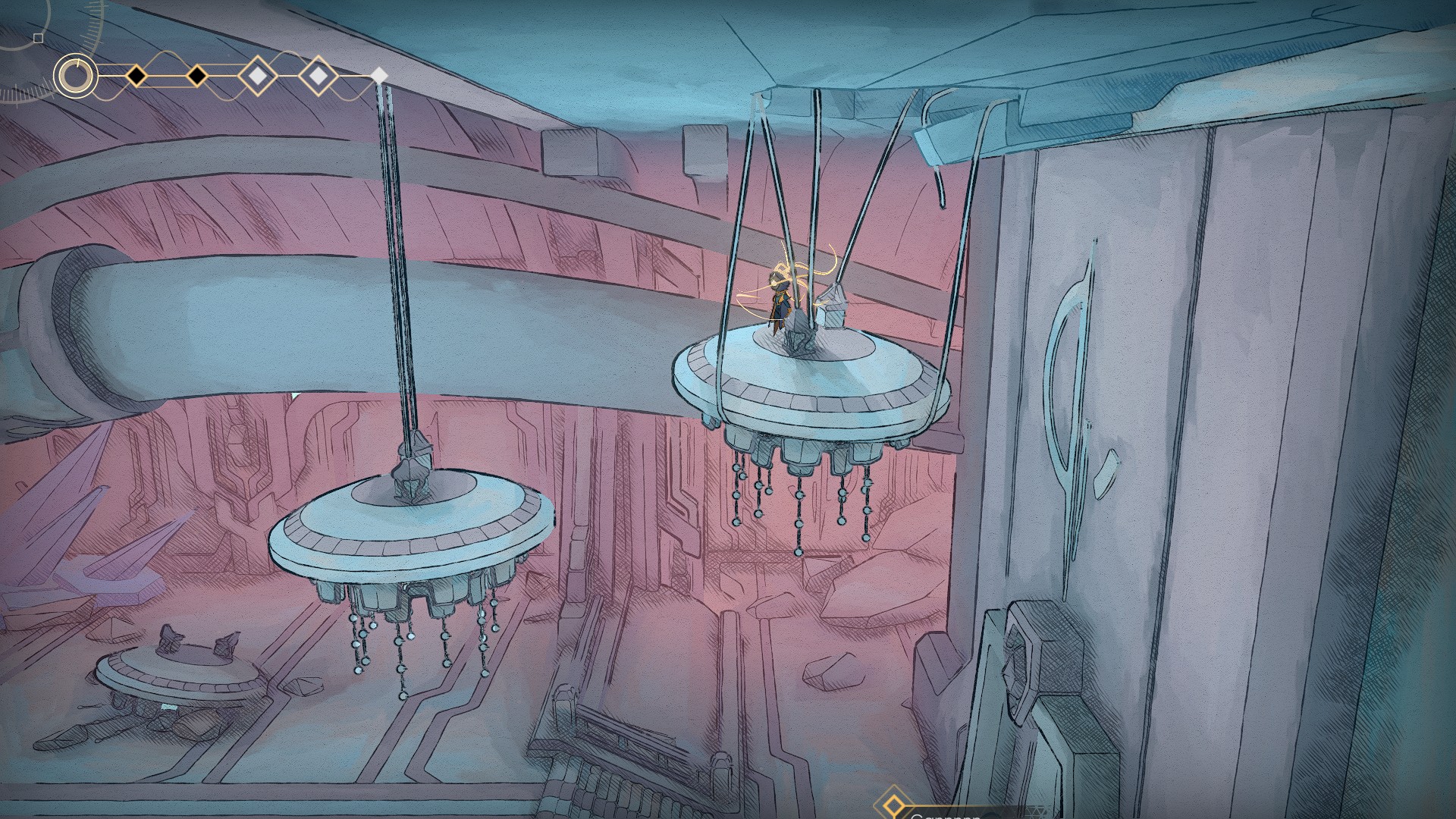
Movement itself is also heavily momentum-based. Certain surfaces cause MIO to accelerate, and that extra speed often needs to be carried into jumps, glides, or slings to reach distant platforms. After defeating the first true boss, a demanding traversal sequence that doubles as a hands-on tutorial rewards you with the Hairpin, allowing MIO to latch onto and swing from specific environmental objects using her living hair. The way MIO’s abilities layer on top of each other strongly reminded me of the Ori series, particularly in how classic metroidvania mechanics are applied with elegance rather than excess.
Fair Combat, Highly Accessible
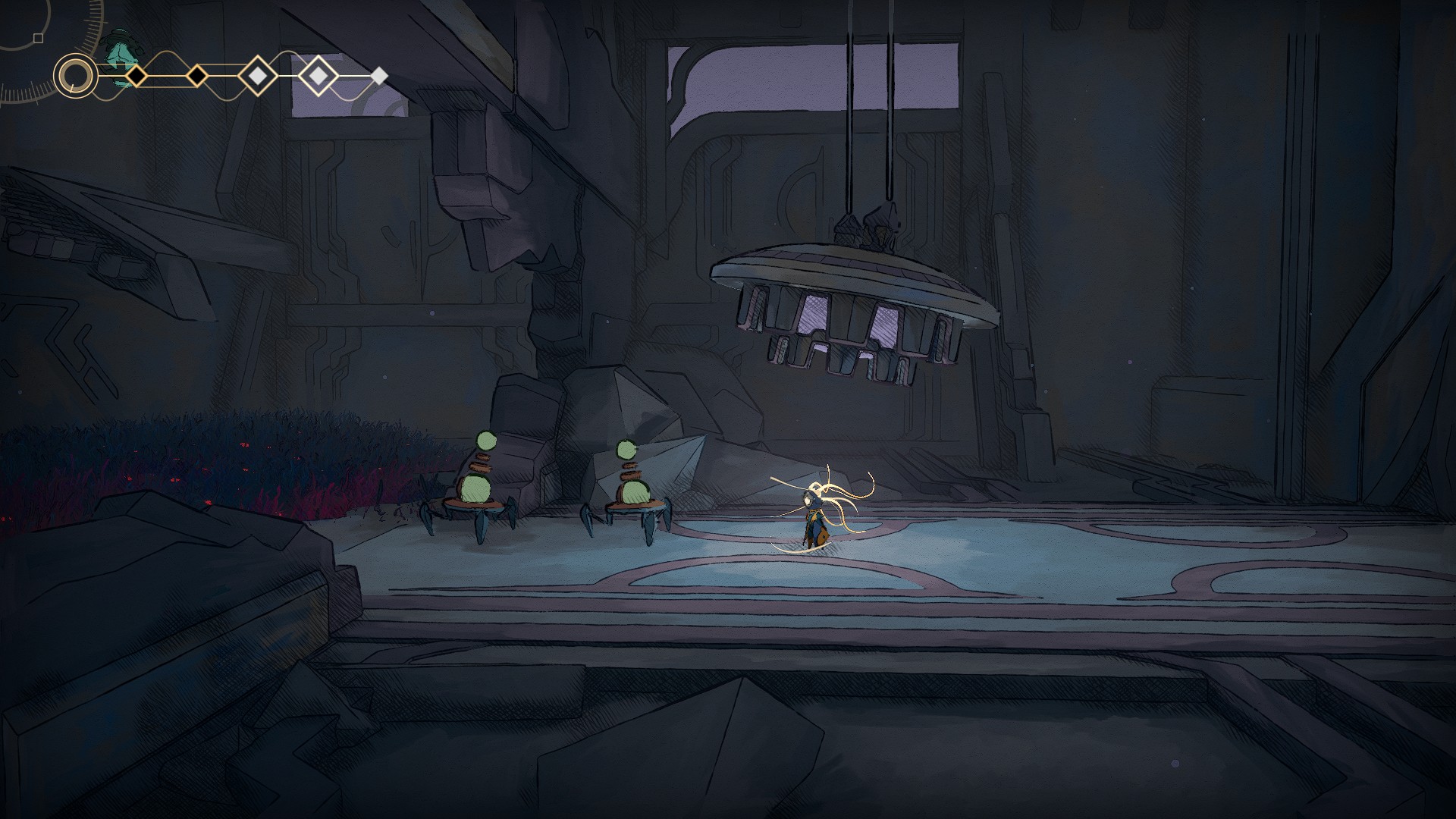
Naturally, not everything aboard the Vessel will let MIO move or act freely. Combat is fast-paced, with each enemy requiring multiple hits to defeat, yet it feels smooth and fair, thanks to MIO’s surprisingly generous default attack range. Enemy attacks are clearly telegraphed, and most opponents follow recognizable patterns, meaning failure almost always feels like a matter of execution rather than design. Beyond regular enemies, the area bosses shine as the highlights of each zone—but they’re also the most demanding encounters. Fast and precise, with distinct patterns and striking presentation, they require practice and careful learning to overcome.
That said, the game deserves credit for how it handles accessibility.The Pacifist setting keeps standard enemies completely passive until you strike first. “Eroded Bosses” is an adaptive feature that slightly weakens a boss each time MIO is defeated, making subsequent attempts more manageable. Finally, Ground Healing allows MIO to recover a limited amount of health simply by standing still. Together, these options accommodate a wider range of playstyles and compensate for the lack of healing, without trivializing the experience for those who prefer a greater challenge.
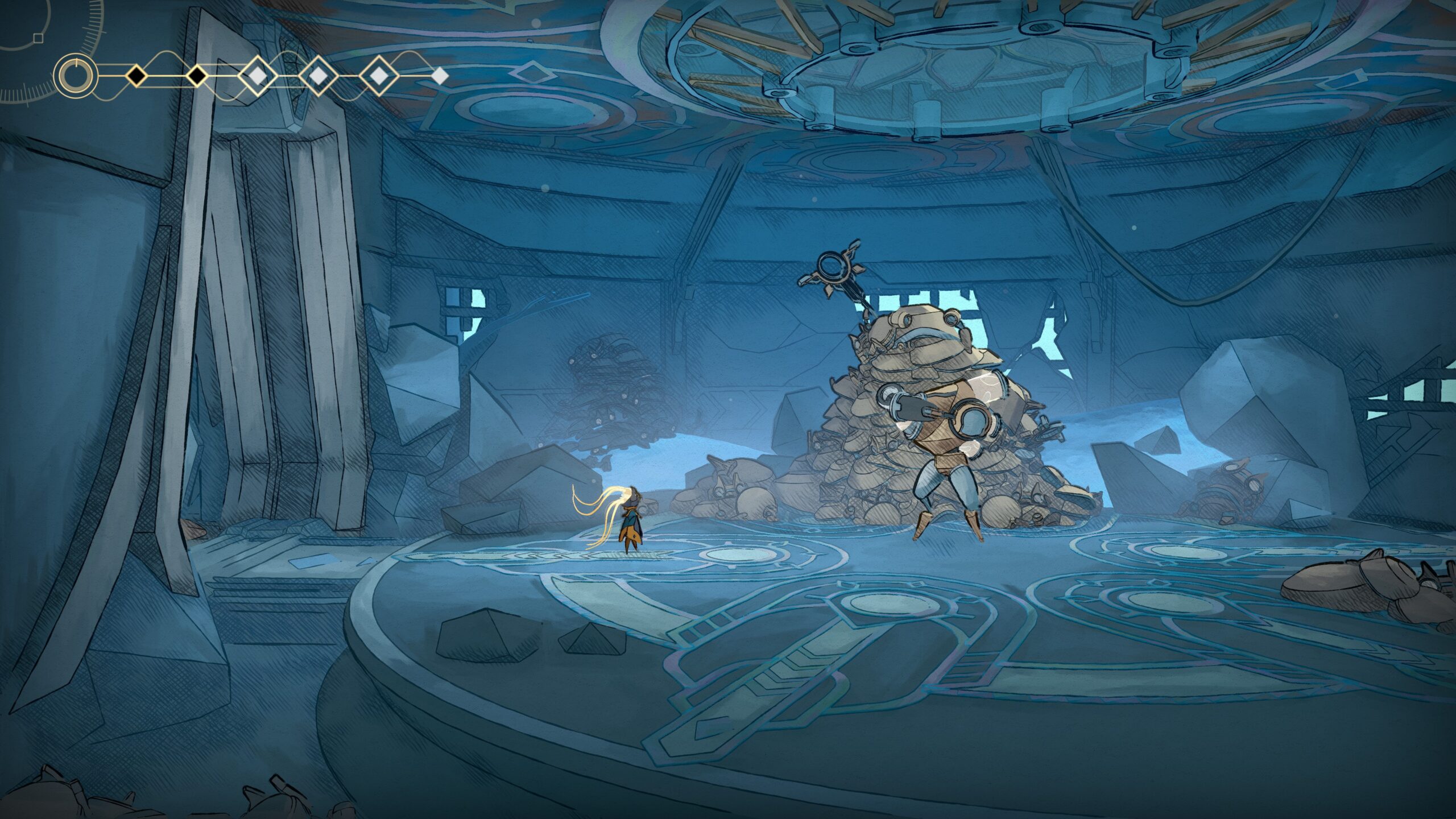
Captivating Art Meets Soulful Soundtrack
MIO: Memories in Orbit‘s hand-drawn art style consistently captivated me, often feeling like a comic book come to life, particularly during transitions where color and form seemed to shift and breathe. The Vessel is packed with visual detail, and exploration is frequently rewarded simply by taking the time to observe. There were many moments in which I simply stopped moving, taking in the scale of the Vessel, the strange creatures I encountered, or just the quiet fragility of MIO herself.
The soundtrack complements this atmosphere beautifully. It blends synths, violins, and soprano choral elements into a soundscape that reinforces both wonder and melancholy. Some of the slower, lingering choral passages may not appeal to everyone, but they undeniably strengthen the game’s emotional identity and sense of place.
Final Thoughts
MIO: Memories in Orbit confidently refines familiar ideas in a thoughtful, atmospheric journey that revolves around fast-paced combat, exploration, and gradual empowerment. Rather than overwhelming you with brutality or mechanical overload, MIO focuses on flow, discovery, and incremental mastery. It still demands precision and attention, but it never feels like it’s trying to intimidate you. That design philosophy quietly yet consistently shapes the entire experience, as my early frustrations gave way to steady momentum, and each new upgrade felt genuinely earned.
The result delivers an experience that feels intimate without feeling cramped, challenges without overwhelming, and becomes memorable without acting ostentatious. For players looking for a more classic, human take on the metroidvania formula, MIO: Memories in Orbit quietly delivers exactly that.
Additional Information
Release Date: Jan 20, 2026
Previewed On: PC. Download code provided by the developer and publisher.
Developer: Douze Dixièmes
Publisher: Focus Entertainment
Official Website: Focus Entertainment
Relevant Links: MIO on STEAM