 DaRmaZat
With its pixelated art style, driving synth-rock, and smooth 60fps combat, Moros Protocol hooks you fast. But dig a little deeper, and the cracks begin to show: beneath its striking veneer lies a shooter that struggles to escape repetition, offering a streamlined but ultimately limited survival loop aboard a derelict warship.
Awakening on the Orpheus
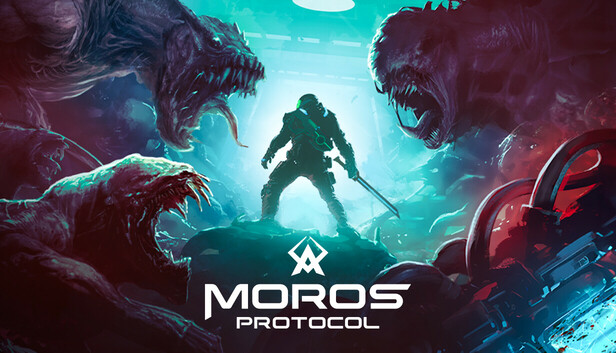
You play as Alex, a soldier who wakes from cryo-sleep aboard the capital warship Orpheus. The System unseals your pod, revealing a macabre scene: blood-slick floors, corpses strewn across storage bays, and radio silence from commanding officers. A quarantine is in place, communication is cut, and your only directive is to reach the storage security station to reestablish contact.
Fortunately, you’re not entirely alone. A sentry drone, ODY-6, accompanies you, helping unlock sealed doors, hack terminals, and cut through containers. Proceeding to the next room is gated by keycards, terminals, and the ever-present need to clear all hostiles. The red enemy-indicator arrows on your mini-map become essential—especially in towering rooms where enemies hide near ceilings, dragging out encounters and slowing momentum.
Inspired by Old Time’s Greatest, with a Modern Touch
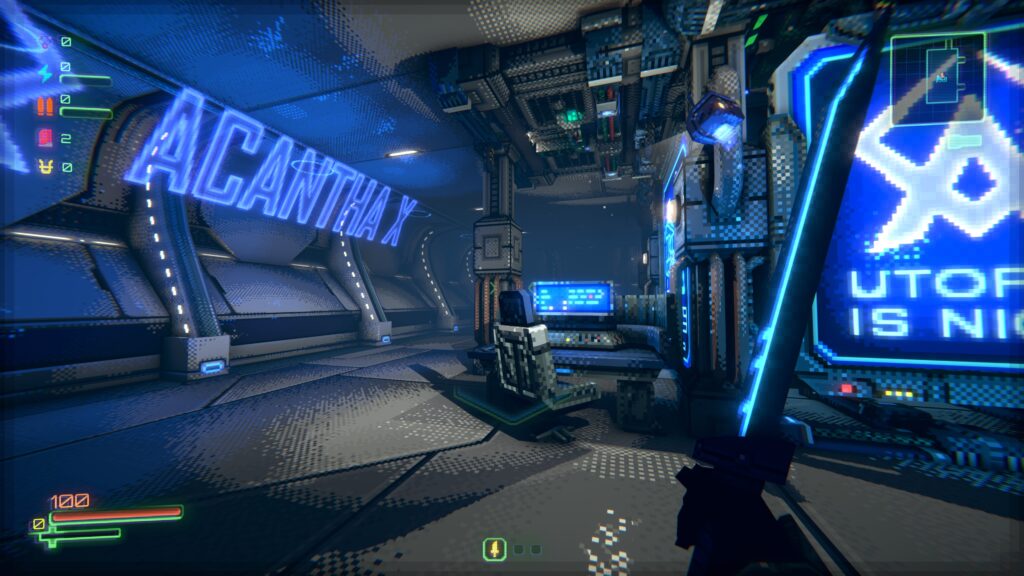
Moros Protocol‘s combat is fast and fluid, with a clear nod to classics like DOOM and Half-Life. Alex starts his quest with a sword, but soon scavenges guns, augments and perks from containers, vendors, and challenge rooms. The BioBoost system lets you spend Biomats to evolve your abilities, while rerolls at vendors provide some flexibility mid-run.
However, while Alex’s weapons feel punchy enough, the constant grinding for credits to afford upgrades or rerolls soon becomes a bit tiresome. Energy ammo and health shots are purchasable at scattered vending machines, but credits are rarely abundant. Luckily, a handy mini-map encourages exploration, helping you uncover all hidden rooms and destructible supply crates.
Challenge rooms also add variety, but they expose one of Moros Protocol’s rough edges: precision platforming while sprinting can feel finicky on both keyboard and controller. Certain jumps require a level of responsiveness the controls don’t always provide, and occasionally a jump onto a container fails, only to work unexplainably when retried in the exact same way.
Sector by Sector
On the positive side, each run pushes you through a series of procedurally mixed rooms leading toward mid-bosses and end-bosses—clearly the true highlights of Moros Protocol. Introduced with blood-soaked cutscenes, these encounters feature flashy attack patterns and force you to stay on your toes. Regardless of the fact that the bosses are relatively easy to defeat, these encounters remain the game’s most polished and rewarding moments.
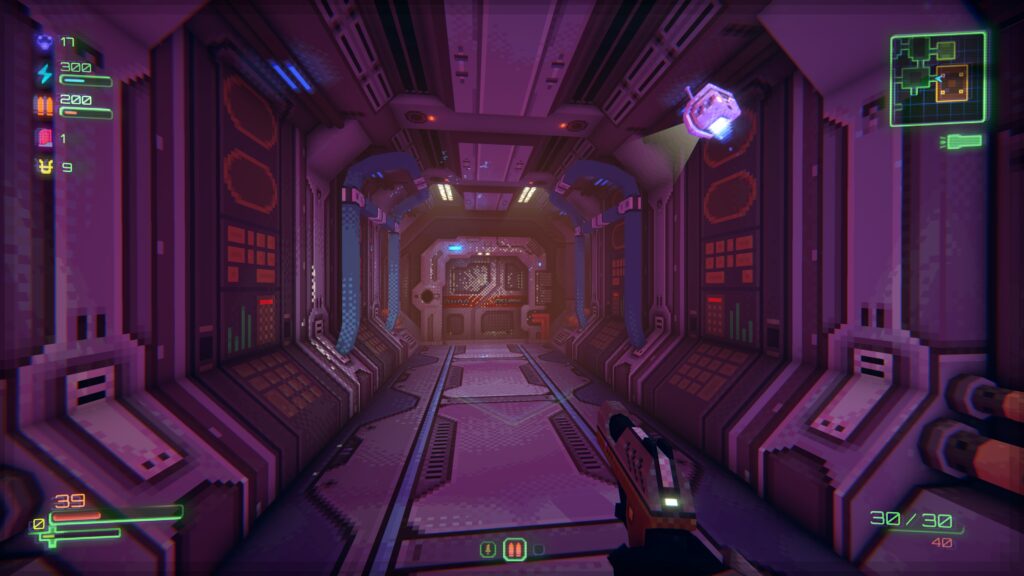
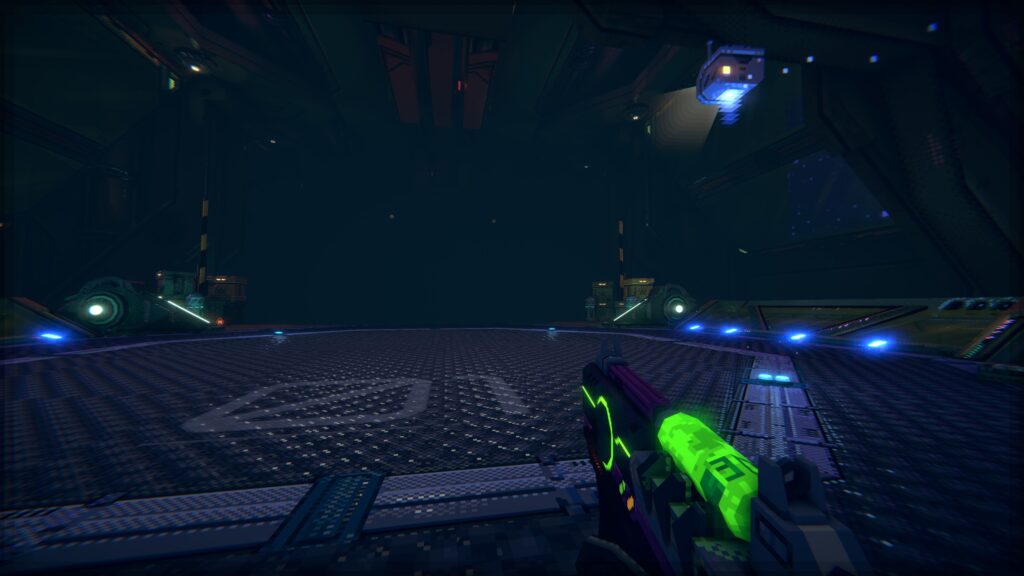
Between substages, a teleportation system lets you choose your next destination based on previewed rewards, perks, or risks. It’s a neat roguelike touch, but the thrill fades as environments repeat. Actually, across the three main areas, visual differences are minimal, as corridors and chambers tend to blur together, with only distinct color schemes and the occasional sci-fi set piece or slime-covered secret wall breaking the monotony.
The enemy roster—acid-spitting Darkphage plants, giant insects, worms, and mutants—hits the right retro notes, but their attack patterns feel uninspired. AI inconsistencies mean foes sometimes fail to track you properly, turning what should be tense firefights into anticlimactic hide-and-seek moments.

Technical Hits and Misses
On a technical level, Moros Protocol runs smooth, with a stable framerate and clean pixelated aesthetic. The custom renderer blends retro grit with modern lighting, creating striking scenes when it all comes together. Unfortunately, movement controls are hard-locked to QWERTY layouts, with no manual rebinding for AZERTY users. Even modern mouse side-buttons prove unrecognized.
Furthermore, the soundtrack deserves credit for its pulsing synth-rock, but it’s oddly implemented. Combat music triggers whenever enemies are “aware,” even if they’re technically just a few meters away but stuck behind geometry. This constant start-stop dynamic becomes grating over longer sessions.
Final Thoughts
Moros Protocol is a fascinating throwback, blending retro FPS action with roguelite structure in a way that feels both familiar and fresh. The bosses, smooth performance, and gritty sci-fi presentation prove Pixel Reign’s passion for the genre.
But passion only carries it so far. Repetitive level design, shallow enemy behavior, and limited gameplay variety drag the experience down. The lack of key rebinding is an unnecessary frustration, while grindy progression and awkward platforming make certain runs feel more like chores than challenges.
In the end, Moros Protocol offers a flashy, fast-moving trip through a pixelated nightmare, but one that rarely surprises after the first few hours. It’s enjoyable in bursts, but the repetition and lack of depth keep it from becoming the modern retro classic it clearly wants to be.
Additional Information
Release Date: Sep 18, 2025
Reviewed On: PC. Download code provided by the publisher and PR agency.
Developer: Pixel Reign
Publisher: Super Rare Originals
Website: Moros Protocol
Relevant links: Moros Protocol on Steam