 DaRmaZat
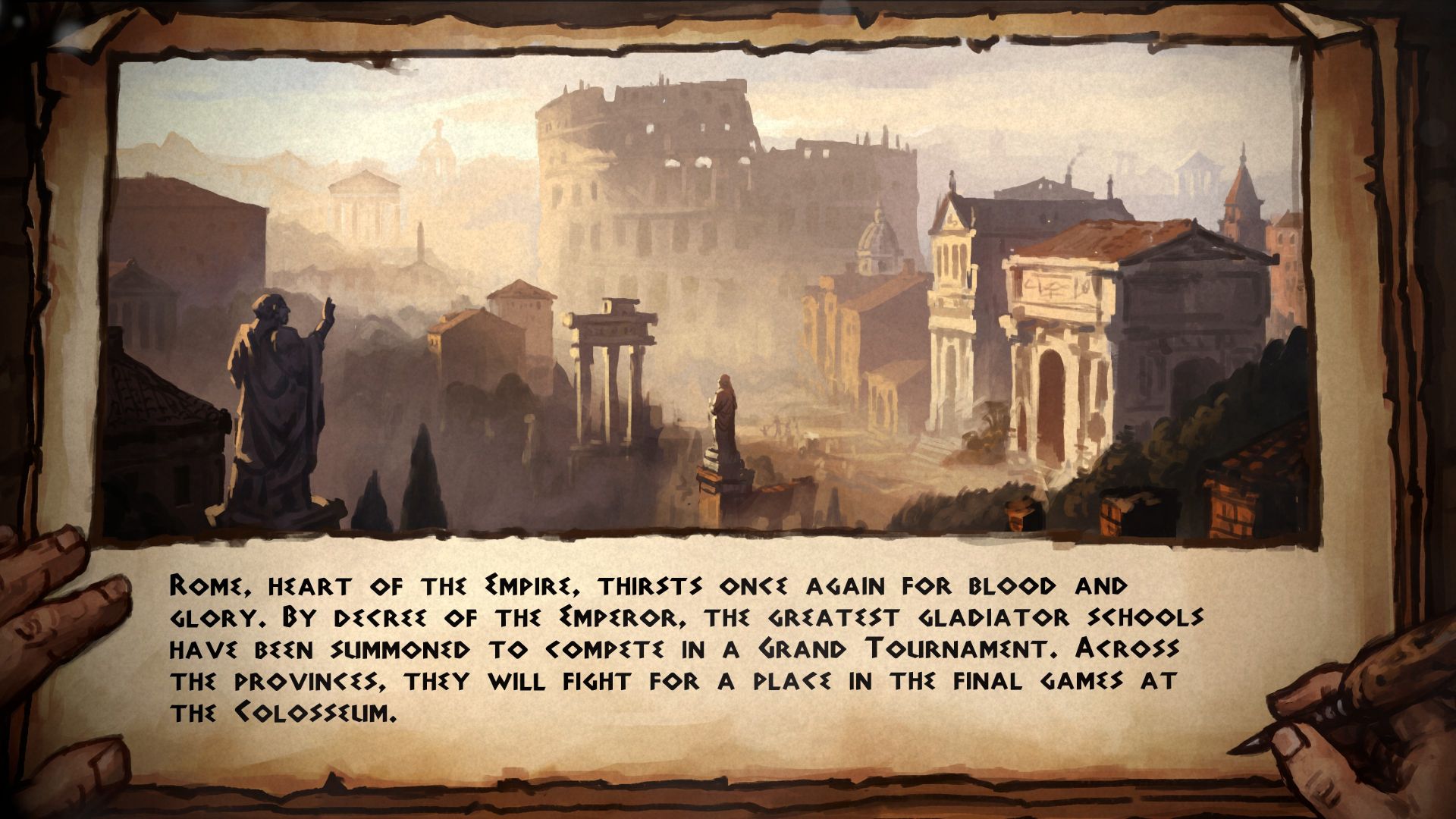
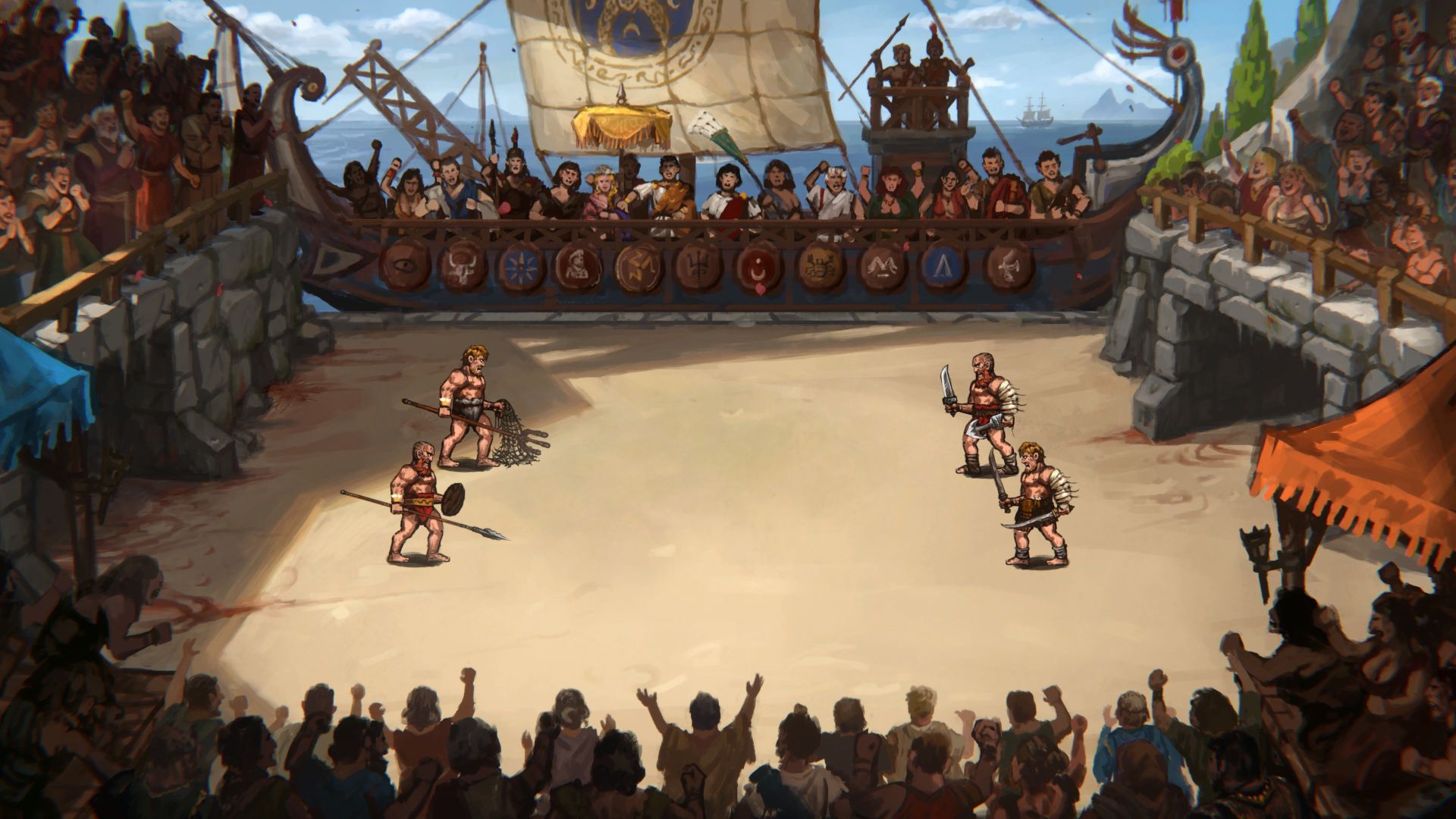
Imagine a gladiatorial arena in ancient Rome itself, capturing the brutal spirit of Spartacus’ time, where bloodthirsty crowds demand spectacle and every fight could be a fighter’s last. Dominus Gladiatus is a fun little game that, at first glance, looks remarkably similar to a mobile game, but surprisingly enough, hides a deep and addictive gameplay loop beneath its cartoony exterior. Managing my own gladiator school, recruiting slaves, training warriors and sending them into brutal arena fights eventually turned out to be a lot more engaging than I initially expected.
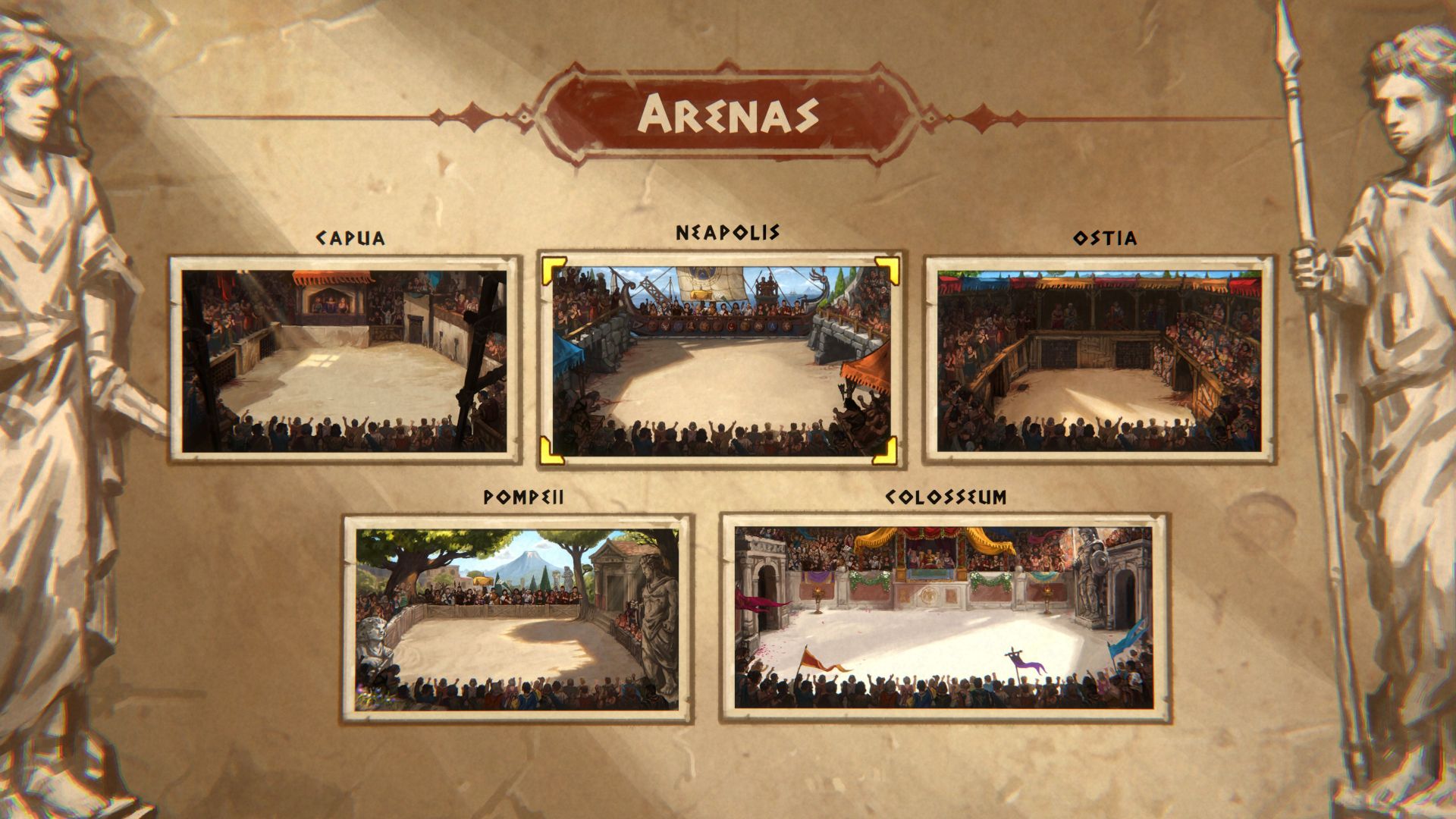
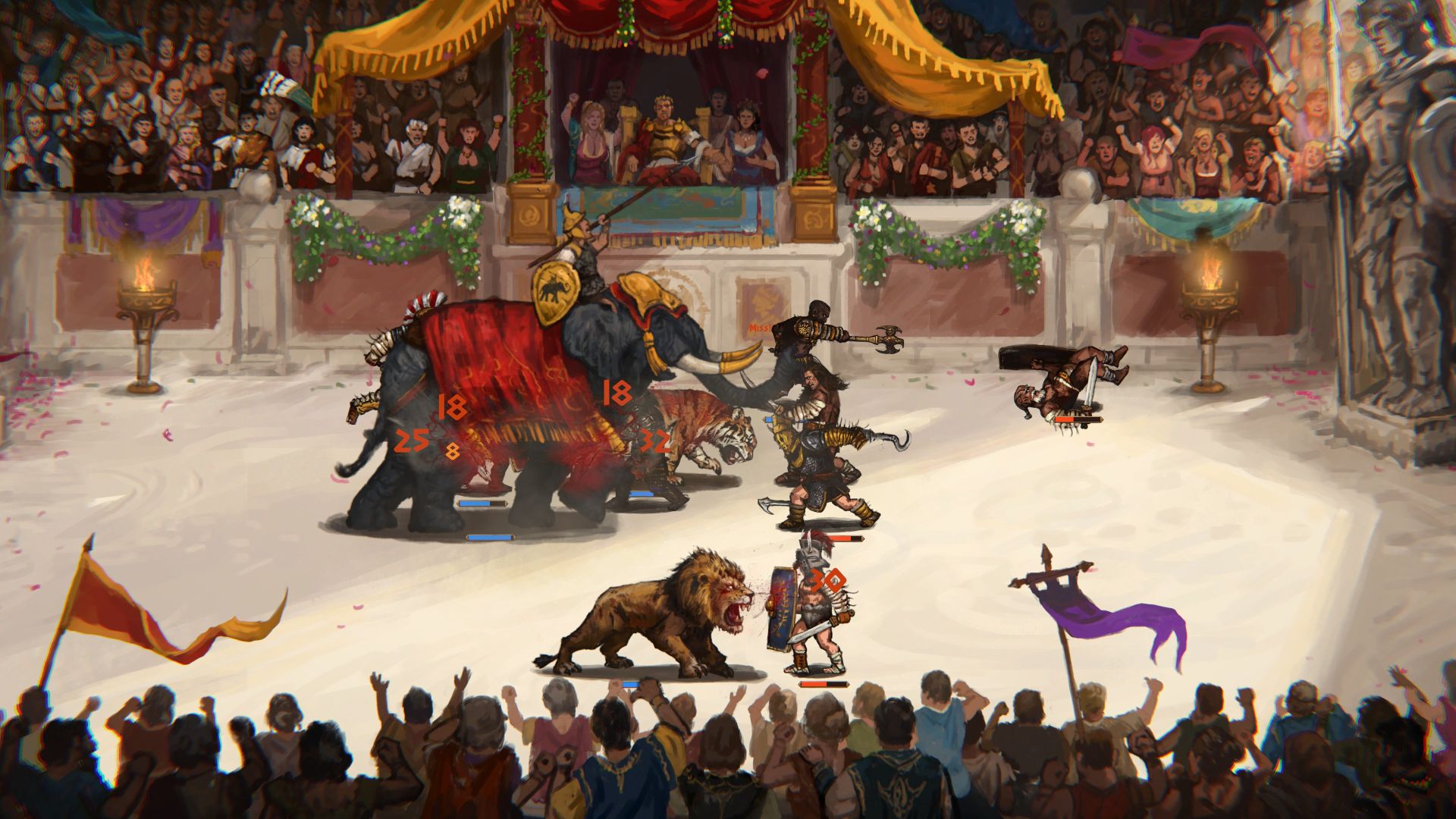
Dominus Gladiatus features two game modes, with Battle Simulation being the less substantial of the two. Here, you can set up custom gladiator battles, choose both sides and watch them fight in the arena. There are five arenas to choose from, including Pompeii and the Colosseum. Besides the seven gladiator classes, you can also field Veterans and Rookies, as well as animals such as elephants, lions, tigers and, rather bizarrely, ostriches. All these units can be pitted against each other on the battle grid before starting the simulation. This mode is primarily intended for testing things out, experimenting with different matchups and seeing how various fighters perform against each other. There really isn’t much more to it than that.
Grand Tournament Mode is where the real meat of the game lies. Your goal is to survive a brutal 165-day campaign against six rival Domini and win the tournament final. Naturally, this means building a powerful gladiator business capable of taking down the big shots working for your competitors. You need to recruit promising fighters, develop their abilities, manage your finances and make sure your Ludus can withstand the increasingly dangerous challenges ahead. Only one Dominus can ultimately claim the glory, and regardless of the difficulty level you choose at the start, getting there requires considerably more than simply throwing the strongest warriors into the arena.
What makes Dominus Gladiatus so addictive is its surprisingly elaborate warrior management system. There is a tremendous amount to consider, and playing it is an absolute joy, even if the difficulty can be pretty unforgiving. You will take some serious beatings along the way, but learning from your mistakes is part of the experience. Every decision matters, and a seemingly minor mistake outside the arena can have disastrous consequences once the fighting begins.
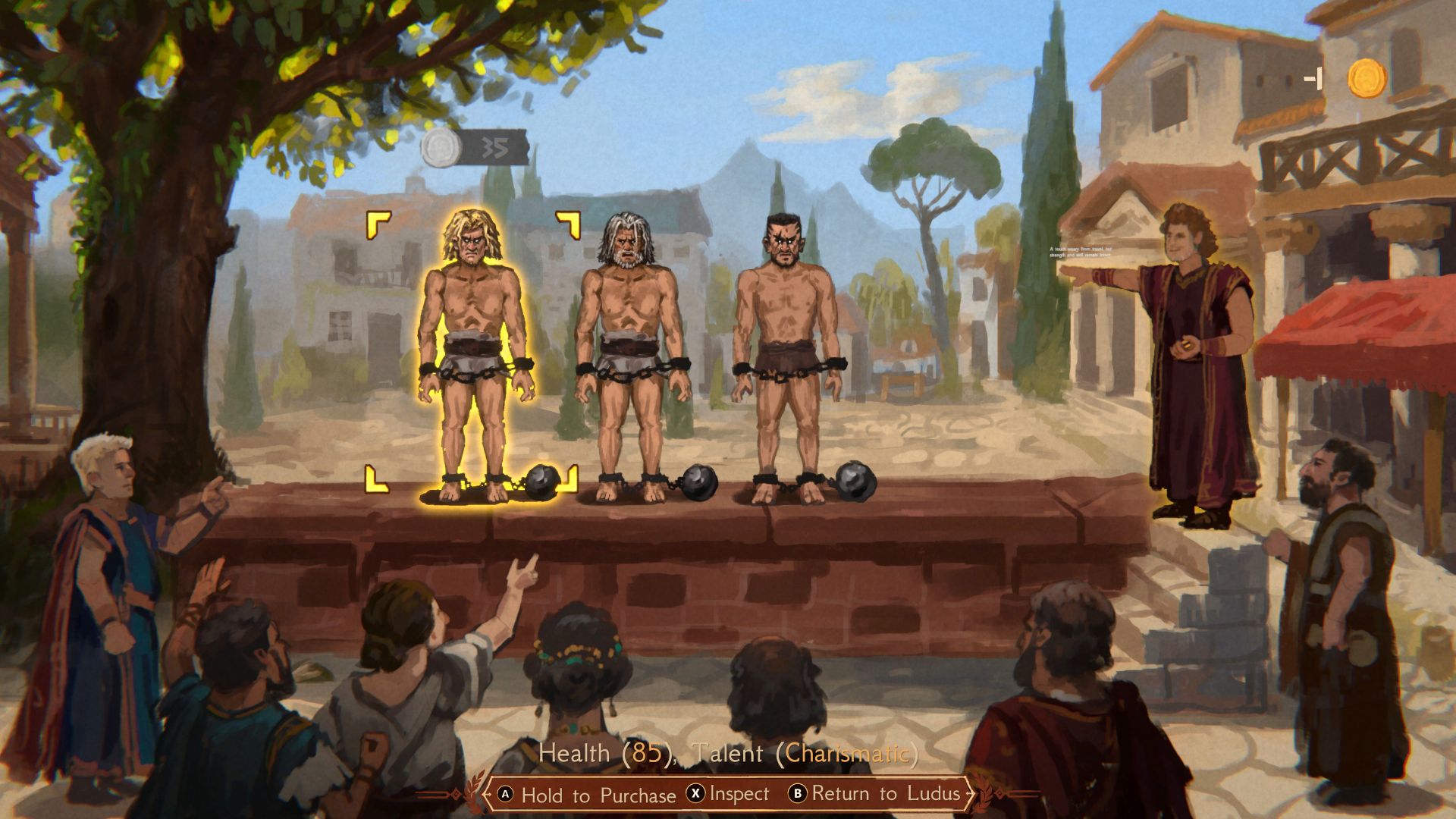
Your journey starts at the slave market, where you purchase men at different prices depending on their stats. Once a new recruit arrives at your Ludus, you must give him a name and assign him a gladiator class.
There are seven gladiator classes in total, each with its own specializations, strengths and weaknesses. The Hoplomachus, for instance, excels at controlling the battlefield with his spear, while the Thraex is more of a counter-fighter who punishes enemy attacks. The Retiarius, on the other hand, relies on nets, critical strikes and evasion rather than heavy armor. These differences give each class its own tactical identity, and since you can inspect your opponents before each fight, choosing the right gladiator is an important part of your preparations. You also need to make sure they have enough time to get ready, as some are quicker learners than others, while certain body types already give some fighters a natural advantage against bulkier opponents.
Naturally, you will also want to invest in decent equipment using your hard-earned coins. Weapons, bracelets, helmets, leg protection, pants and off-hand equipment such as shields all have their place in your inventory. When a gladiator dies or you decide to sell him, his old equipment can be reused or sold off to recover some of your investment. Keeping the business financially healthy is essential, because running out of money for too long can cause your entire operation to collapse. Go bankrupt, and it is game over.
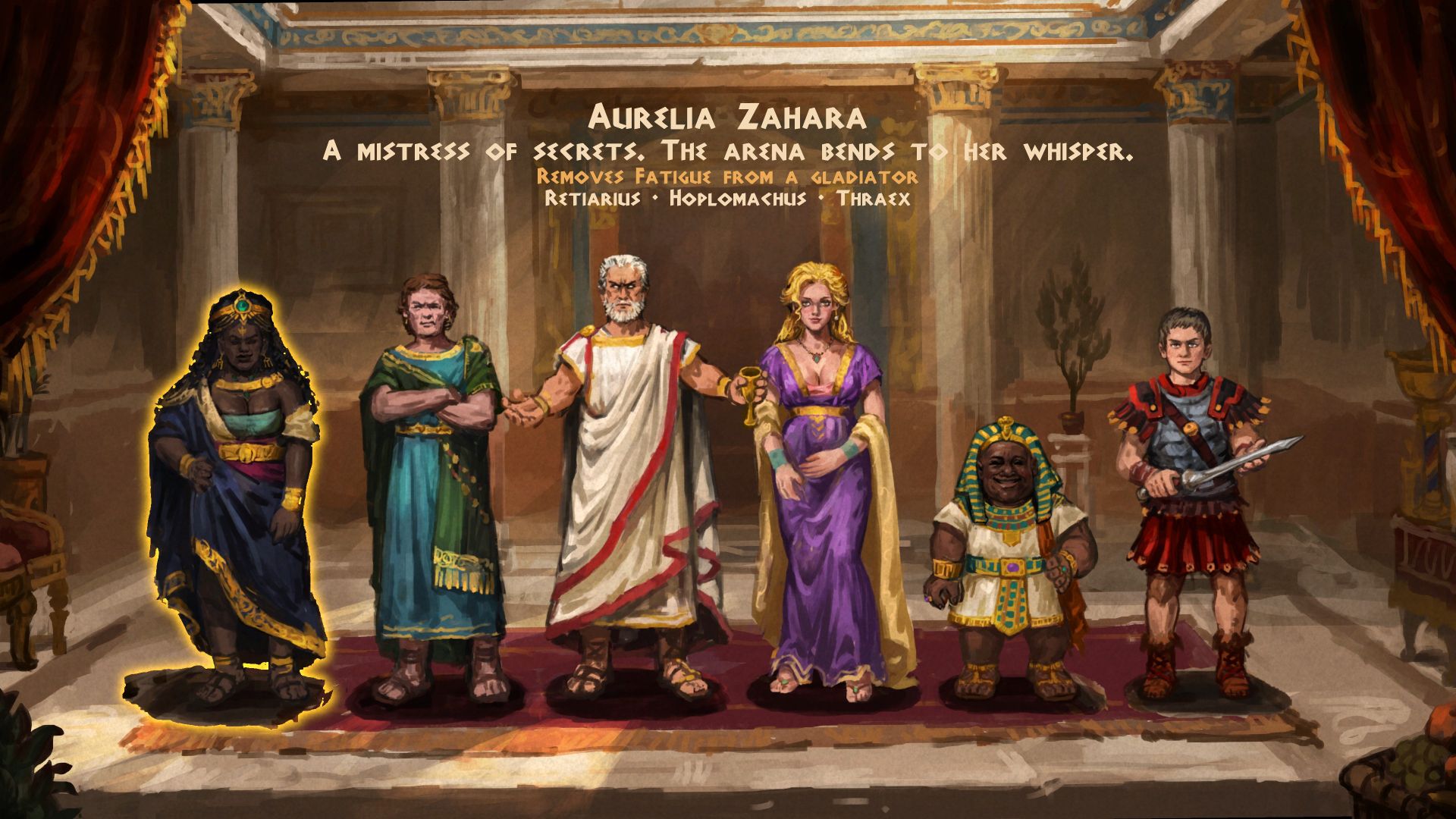
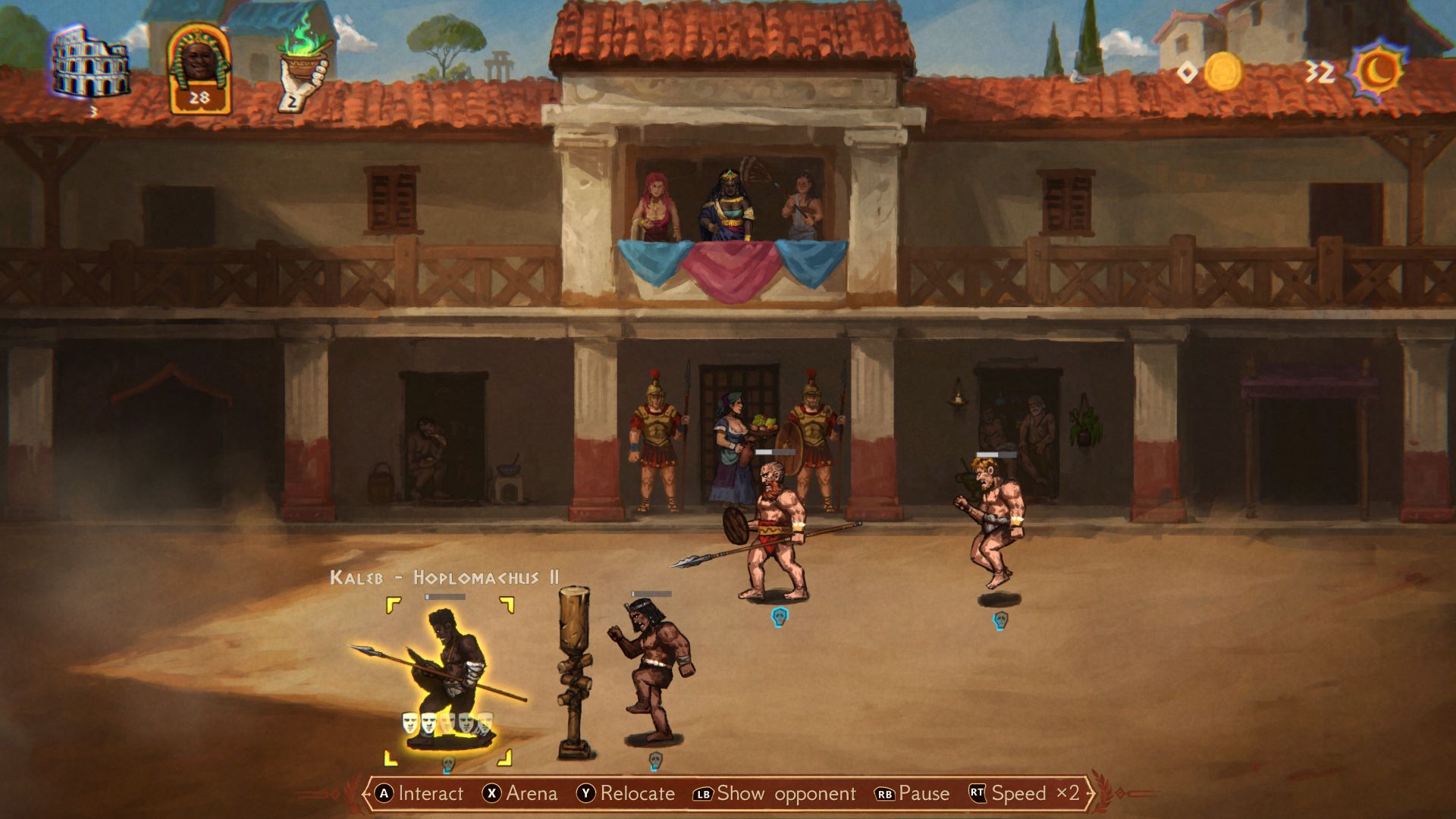
You can also hire staff members who provide various specializations and benefits, while expanding your Ludus with additional facilities. These include quarters where your gladiators can rest, an Infirmary for treating the wounded, training equipment to improve their abilities, and even a pleasure house. All these facilities cost money to maintain on a daily basis, so expanding too quickly can easily become a financial burden. Sometimes, you will have to reconsider your plans, demolish facilities or sell things off to keep the business afloat. Rome was not built in a day, and neither should your gladiator empire be.
Plenty of things happen between arena fights as well. Outsiders may approach you with offers to provide financial assistance in exchange for money, or attempt to buy one of your slaves for an absurdly high price. Whether you accept these deals and take the financial risk is entirely up to you. Random events can also throw a spanner in the works, and they certainly do not always work in your favor. One particularly nasty example involves a corrupt Domina who regularly has your gladiators shot in the neck with poisoned arrows before their fights, leaving them weakened before they even enter the arena.
Training your gladiators is another important part of the management process. You can teach them additional skills, including both offensive and defensive moves, giving them strategic advantages in combat. Whenever the opportunity arises, you can also grant a slave his freedom, sell him, reward him or give him a break from training. Deciding what to do with each individual fighter becomes increasingly important as your roster grows and the stakes get higher.
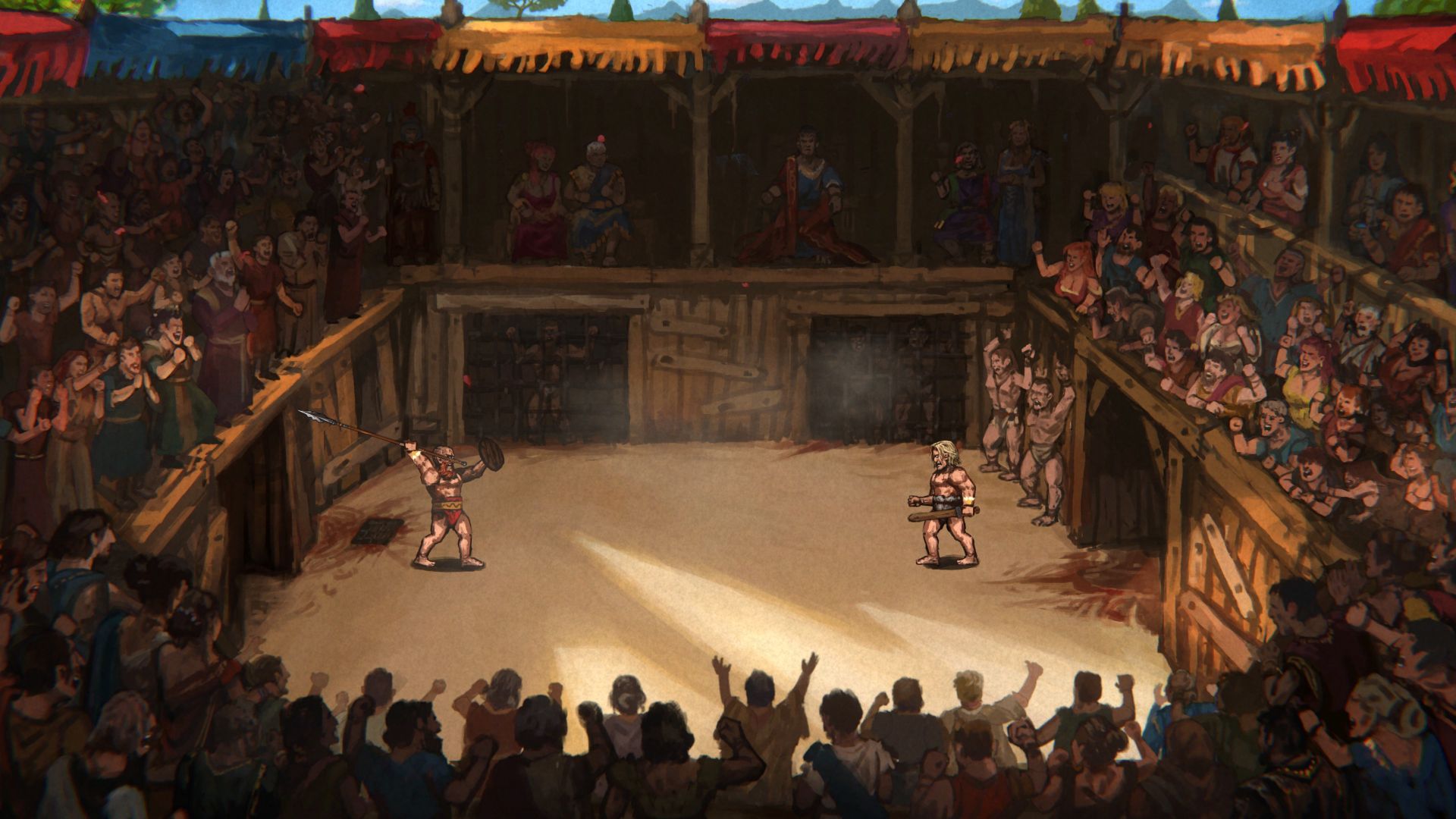

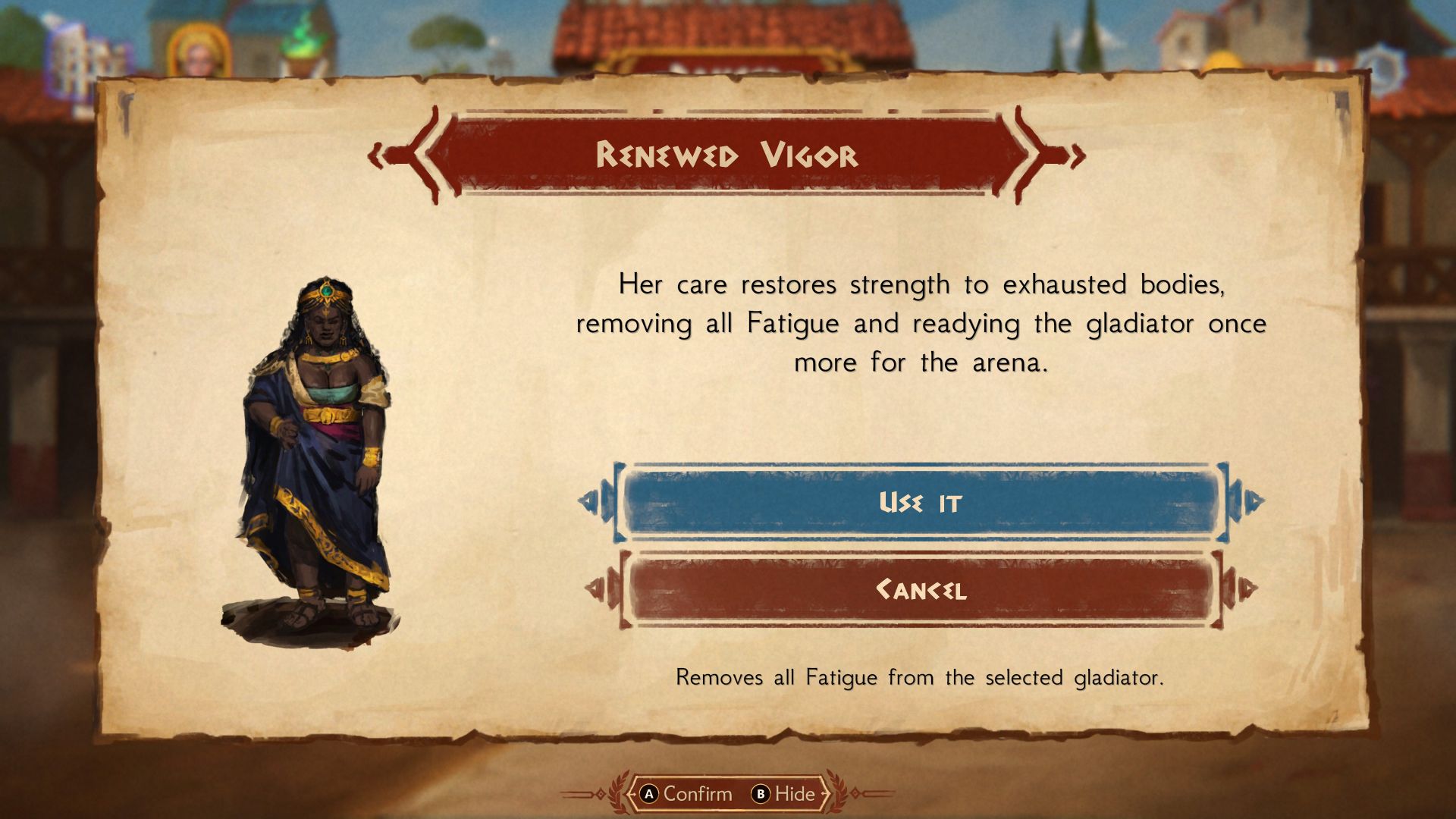
The bloody auto-battler matches take place every few days, with a loud blast of a horn clearly announcing when a fight is about to begin. You can then send one or more warriors into the arena, as some encounters involve two-versus-two battles. However, you are not always forced to participate. If you believe a fight will inevitably end in defeat, you can refuse it instead. Sometimes, knowing when not to fight is just as important as knowing how to win.
Once your gladiators enter the arena, the combat plays out automatically, with their equipment, skills and preparation determining much of the outcome. The crowd also has a role to play. When spectators are on your side, their encouraging words can help your gladiators recover a small amount of health during the fight. Winning over the audience can therefore make a real difference, although it certainly does not guarantee victory. Even in defeat, you still receive a reward, albeit only a percentage of what you would have earned from a victory.
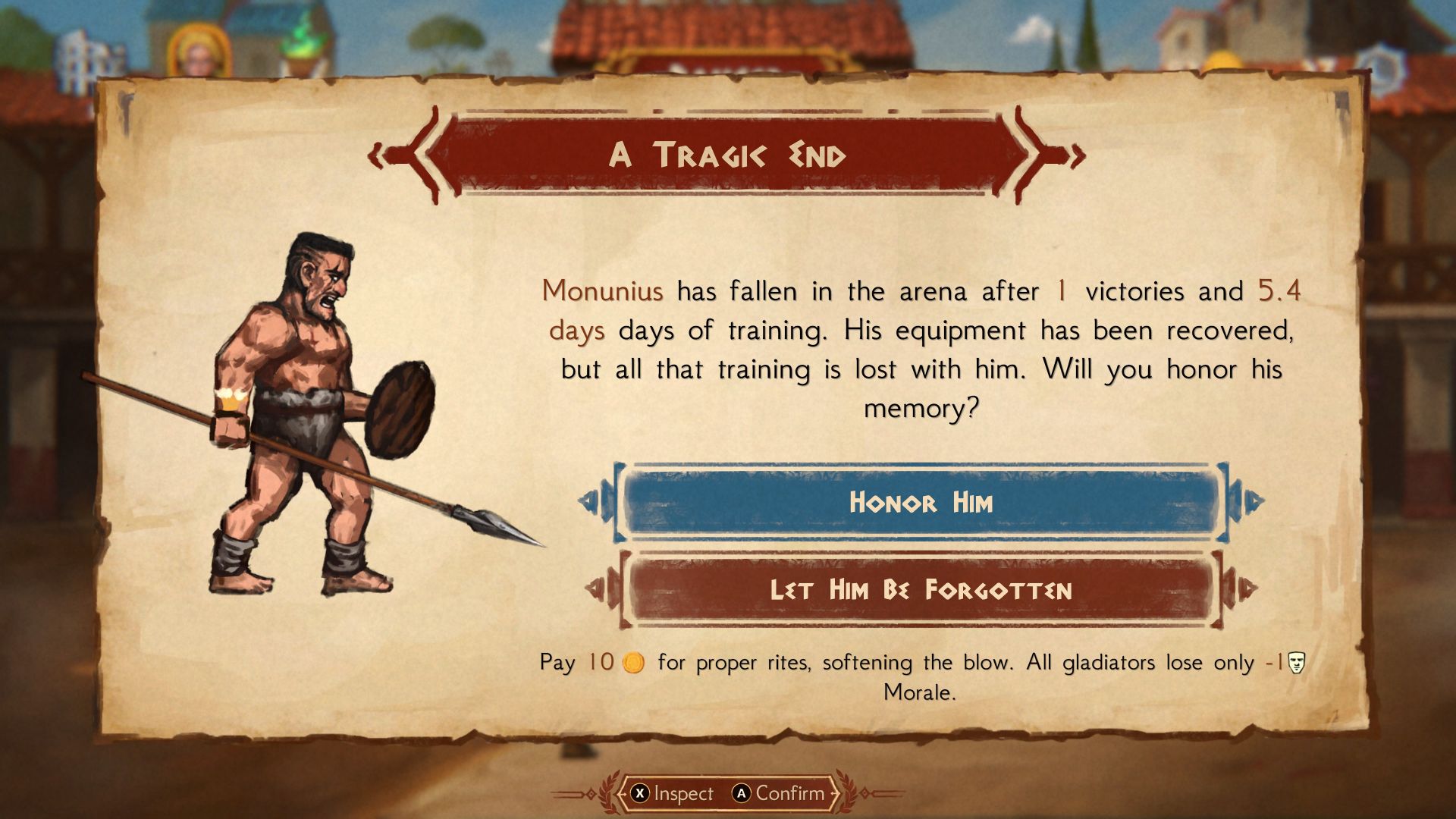
Losing a fight can still have devastating consequences, particularly when a gladiator is killed. Some fighters can behead their opponents, meaning that any battle could potentially be their last. Fortunately, death is not the inevitable outcome of every defeat. Sometimes, a beaten gladiator is spared and returns to your Ludus, where you can patch him up and prepare him for the next fight. Sending a valuable fighter into the arena always involves a certain degree of risk, and losing one of your best warriors can seriously disrupt your plans.
Fatigue is another factor you need to keep under control, but the morale of your fighters is equally important. Their mental well-being is influenced by the rewards and punishments you hand out, as well as the decisions you make throughout the campaign. Your gladiators can occasionally get up to some nasty business themselves, such as stealing, forcing you to decide how to deal with the offender. Freeing a slave can give the remaining gladiators hope, while the Pleasure House can also help improve their spirits. Even the way you treat your fallen fighters matters. Failing to give a dead gladiator a proper funeral, for example, can make the others sadder. Let morale deteriorate too far, and your fighters may even refuse to train.
Not everything in Dominus Gladiatus is immediately intuitive, however. Depending on your settings, particularly if you have auto-pause enabled after certain events, it can sometimes be unclear what you are supposed to do next. You may find yourself clicking through menus and trying to figure out how to proceed. Once you understand how the different menus and systems fit together, things become considerably more manageable, but the initial learning curve could certainly be smoother with the help of a more comprehensive tutorial.
Another small but significant drawback is the lack of a manual save system. There are no multiple save slots or options to roll back to an earlier point, leaving you entirely dependent on autosaves. Given how unforgiving the game can be, with permanent deaths and financial decisions that can ruin an entire campaign, this makes mistakes feel particularly final. A little more flexibility here would have been welcome.
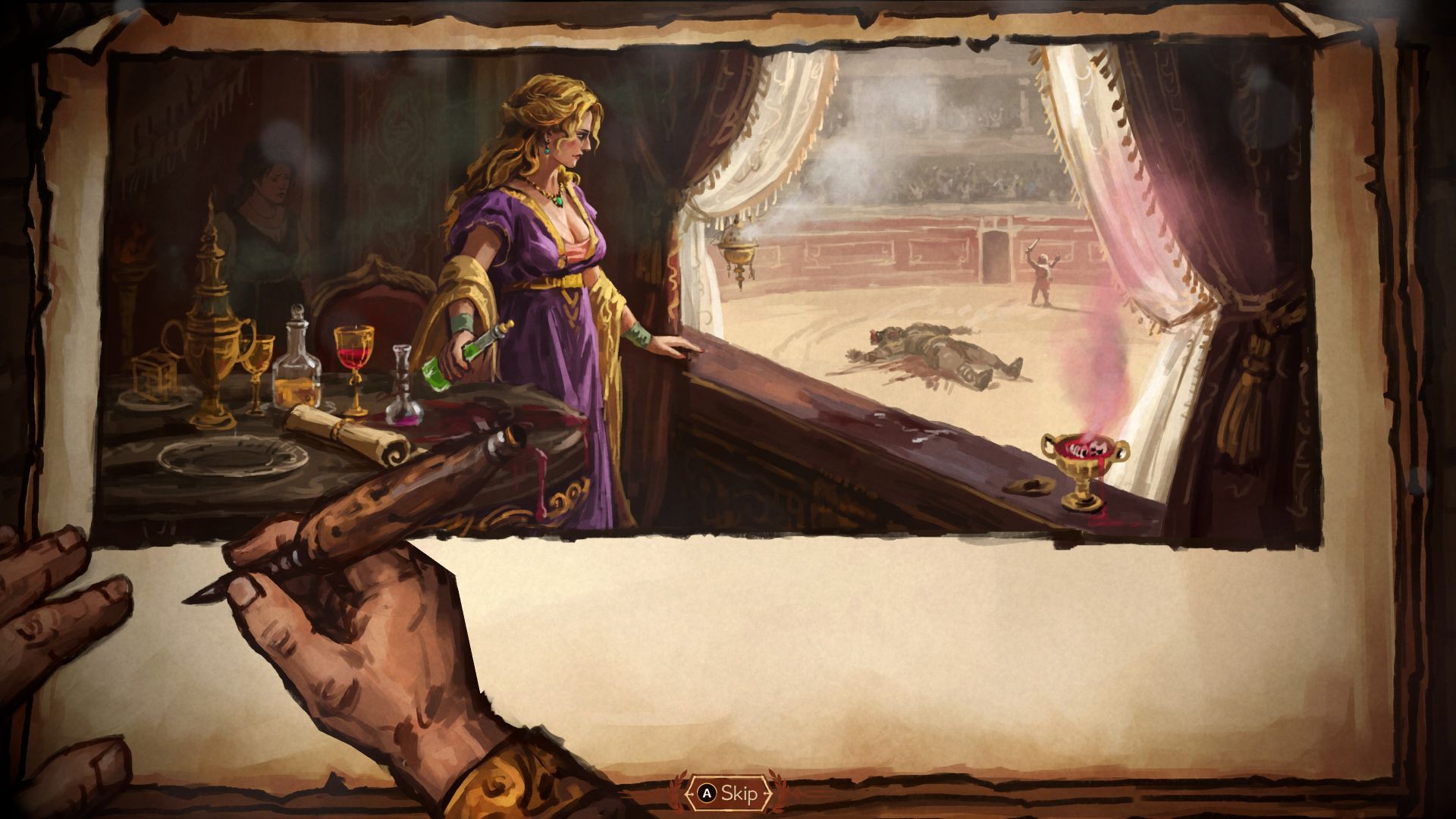
Thankfully, Dominus Gladiatus has plenty of personality. It can be genuinely funny, not just because of its animations, but also thanks to the many voiced lines that help bring the whole spectacle to life. Combined with all the little details rooted in Roman culture, the game does a surprisingly good job of making you feel immersed in its world. The cartoony art style suits this quirky experience perfectly, giving the brutality a distinctive visual identity without taking away from the underlying management challenge.
The soundtrack is another pleasant surprise. Rather than sticking to one particular style, it ranges from atmospheric ambient music to energetic, catchy tunes that fit the action remarkably well. It is an eclectic mix, but there are some genuinely excellent tracks in there.
Final Thoughts
Dominus Gladiatus is a surprisingly addictive gladiator management simulator with a deep gameplay loop, plenty of strategic choices, amusing animations, great voice work and a surprisingly diverse soundtrack. Its cartoony presentation hides a challenging experience where managing your Ludus and preparing your fighters for brutal arena battles is thoroughly satisfying. The occasionally confusing interface and unforgiving difficulty can be frustrating, but the biggest downside is the lack of a manual save system, which makes mistakes and their consequences permanent. Despite this shortcoming, it is a thoroughly entertaining surprise that is easy to recommend to fans of management games, autobattlers and gladiator-themed games.
Additional Information
Release Date: November 5, 2026
Reviewed On: PC. Download code provided by the publisher and PR agency.
Developer: Brain Seal Ltd
Publisher: PlayWay SA
Relevant links: Available via Steam.
 Mr_PoOL