 DaRmaZat
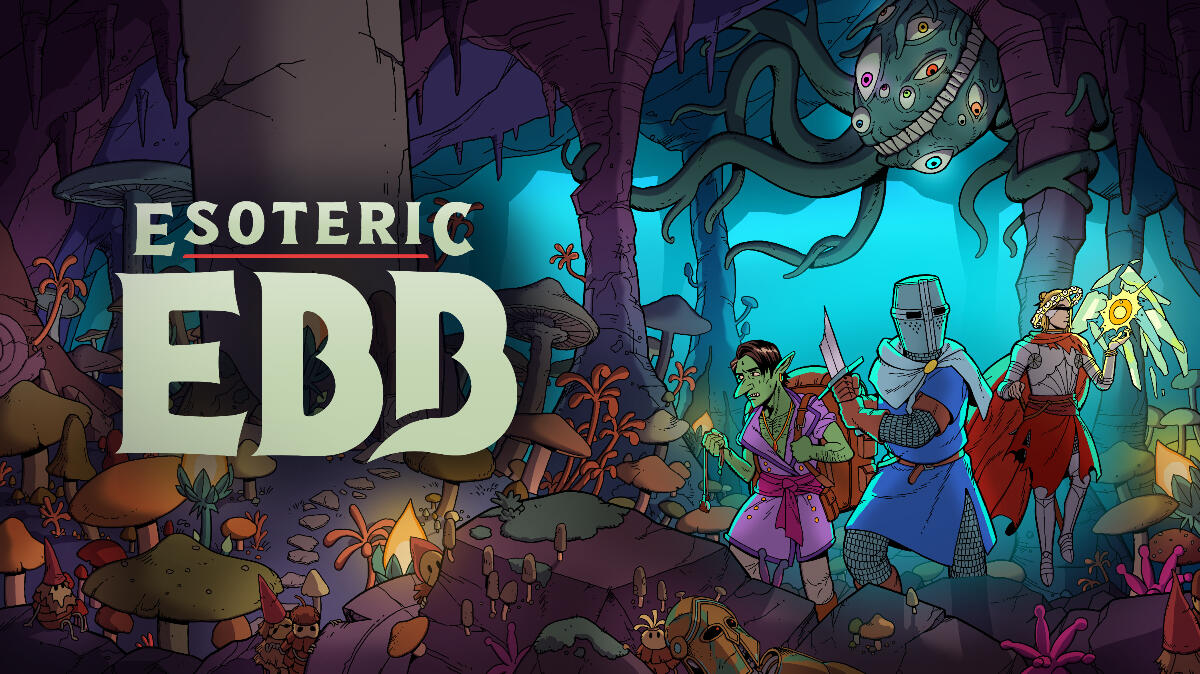
The classic CRPG landscape has a bizarre and brilliantly twisted new contender with Esoteric Ebb, the brainchild of Christoffer Bodegård. This isometric, ‘Disco-like’ experience drops you headfirst into a political hornet’s nest as you step into the boots of the Cleric: a government-mandated magic user tasked with investigating a tea shop explosion in Tolstad, the heart of the kingdom of Norvik. With only five days remaining until the city’s first-ever election, the tension in this post-Arcanepunk metropolis is at a breaking point—and apparently, it is up to you to sort it out.
Closed Doors, Quiet Revelations
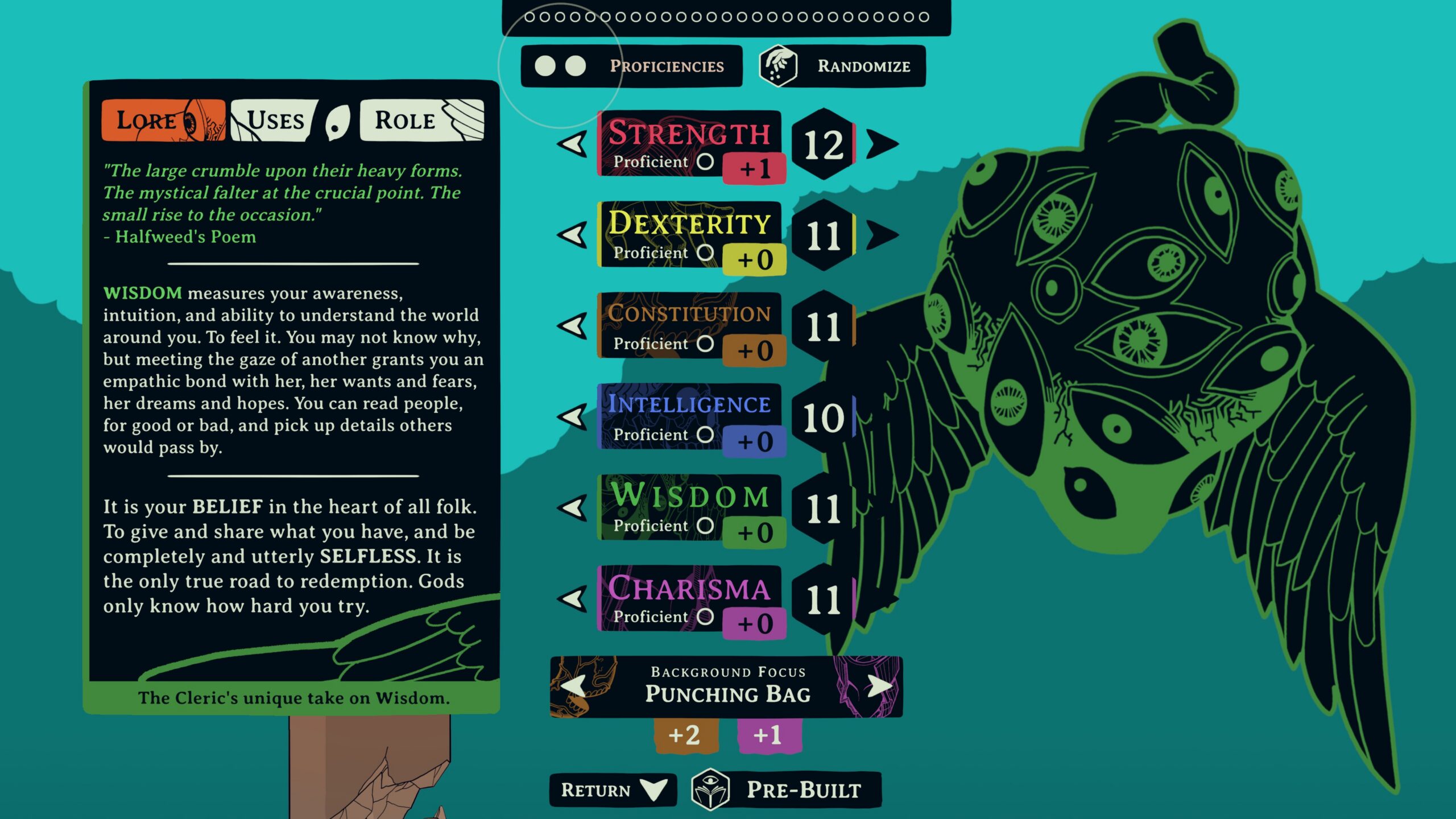
Getting started with Esoteric Ebb involves tinkering with a fairly bare-bones, old-school UI that I immediately encountered some friction with. You have to hunt for a tiny radio button to mark your proficiencies before the “Finish” button even appears—yes, this game deliberately opts for flashy, busy UI design packed with text and color, and because of that, it does not always clearly signal where your attention should go.
Anyway, right after, you wake up abruptly, defined by those disorienting first minutes in which you barely know who you are beyond your official mandate. Without any gentle onboarding or emotional runway, the game simply hands you a disaster scenario and expects results before the deadline strikes. Only through probing conversations do fragments of your past begin to surface, slowly allowing an identity to coalesce as the puzzle pieces click into place one by one.
Walking through Tolstad, you’ll find a city drowning in lore and ideological rot. Yet, for all its grand tabletop ambitions, I quickly discovered that freedom in this city has its limits. Since not every passerby can be addressed and many doors remain stubbornly shut as mere decoration, the world can feel a bit more restrictive than the genre usually promises. Despite that friction, the lack of quest markers feels strangely liberating. Finding quest locations becomes a puzzle in itself, and gradually unlocking the full city layout on the map through pure discovery and trial and error feels refreshing in this age of hand-holding waypoint-driven design.
At the same time, this “figure-it-out-yourself” approach can just as easily become frustrating when clues run dry. At one point, I needed to wait until midnight to proceed, yet the in-game clock refused to tick unless I actively engaged with NPCs or objects. With limited hit dice to skip a single hour and no clear explanation on how to accelerate time, the situation felt like a perceived softlock—just one example of how opaque Esoteric Ebb‘s systems can unnecessarily stall momentum.
Bad Luck And Its Brutal Consequences
Every object and every NPC you encounter in Tolstad is approached through three distinct lenses: Engage, Behold, or Trifle. This tripod of interaction acts as your sensory toolkit, triggering a myriad of opportunities but also perils, all gated by skill checks—like using Intelligence to decipher a cryptic language. It turns the environment into a dense puzzle of rules and lore, where you must constantly filter through information and use your skills, items and magic to determine the best outcome for your Cleric—unless you are really looking for the dark path, that is.
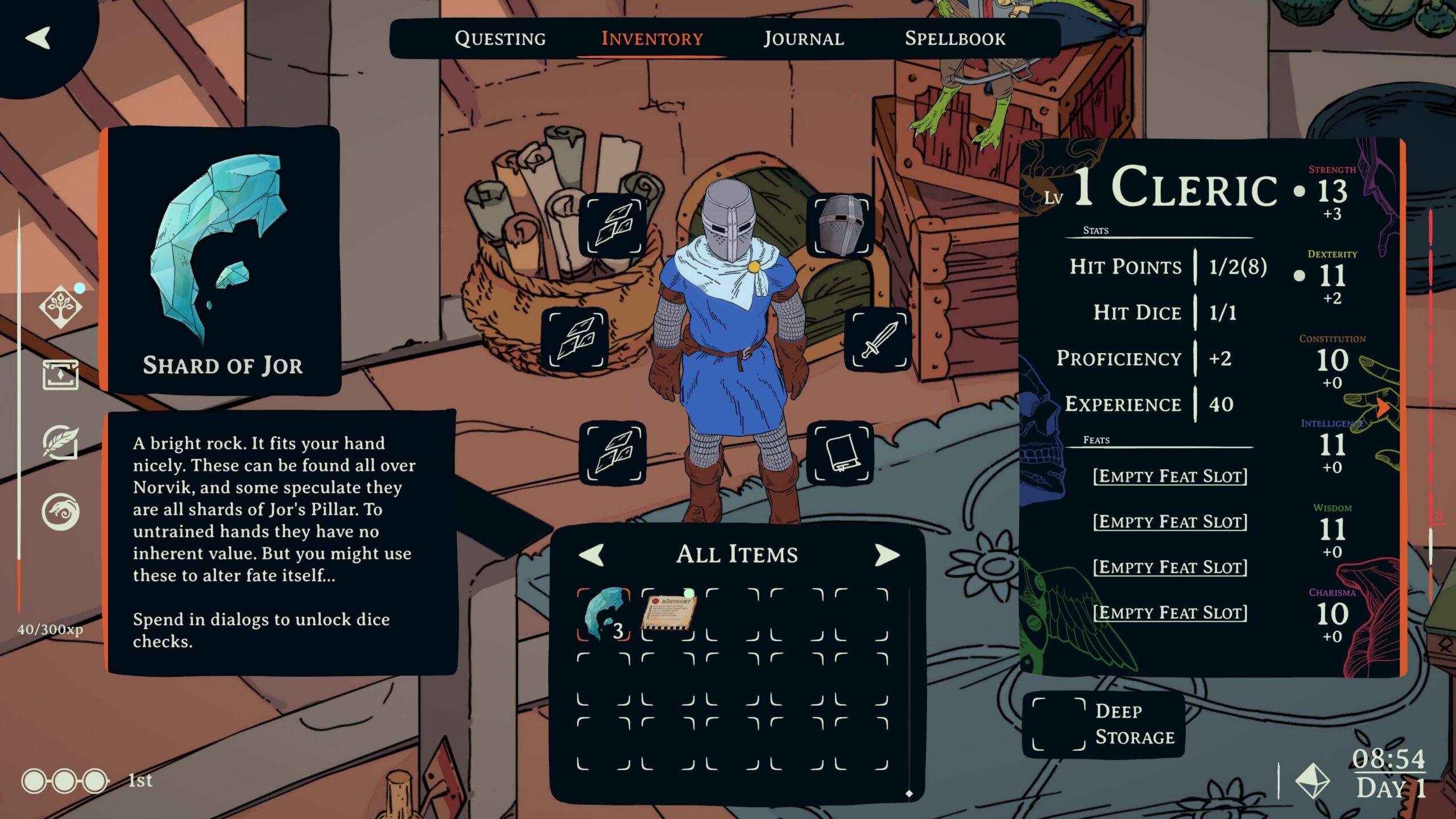
Right out of the gate, you have access to spells like Shield of Faith, Cure Wounds, or Inflict Wounds, yet the game is conspicuously silent on how to actually prepare them—that is, until you discover the shrines. Since many tutorials only seem to pop up on loading screens, you’re left to figure it out through trial and error—a process that involves a lot of clicking. And I do mean clicking; while controller support is there, the design clearly favors a mouse above all else.
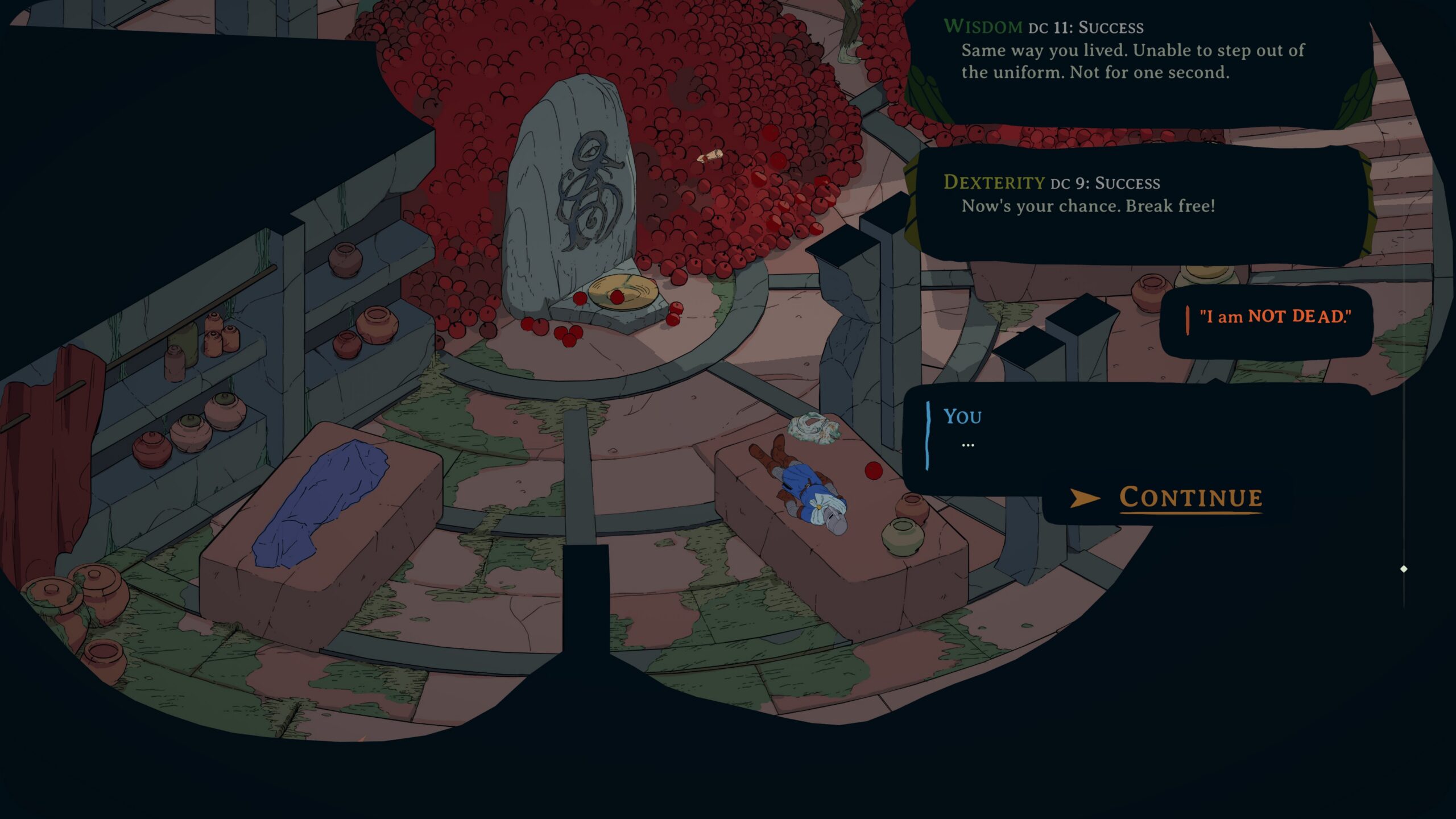
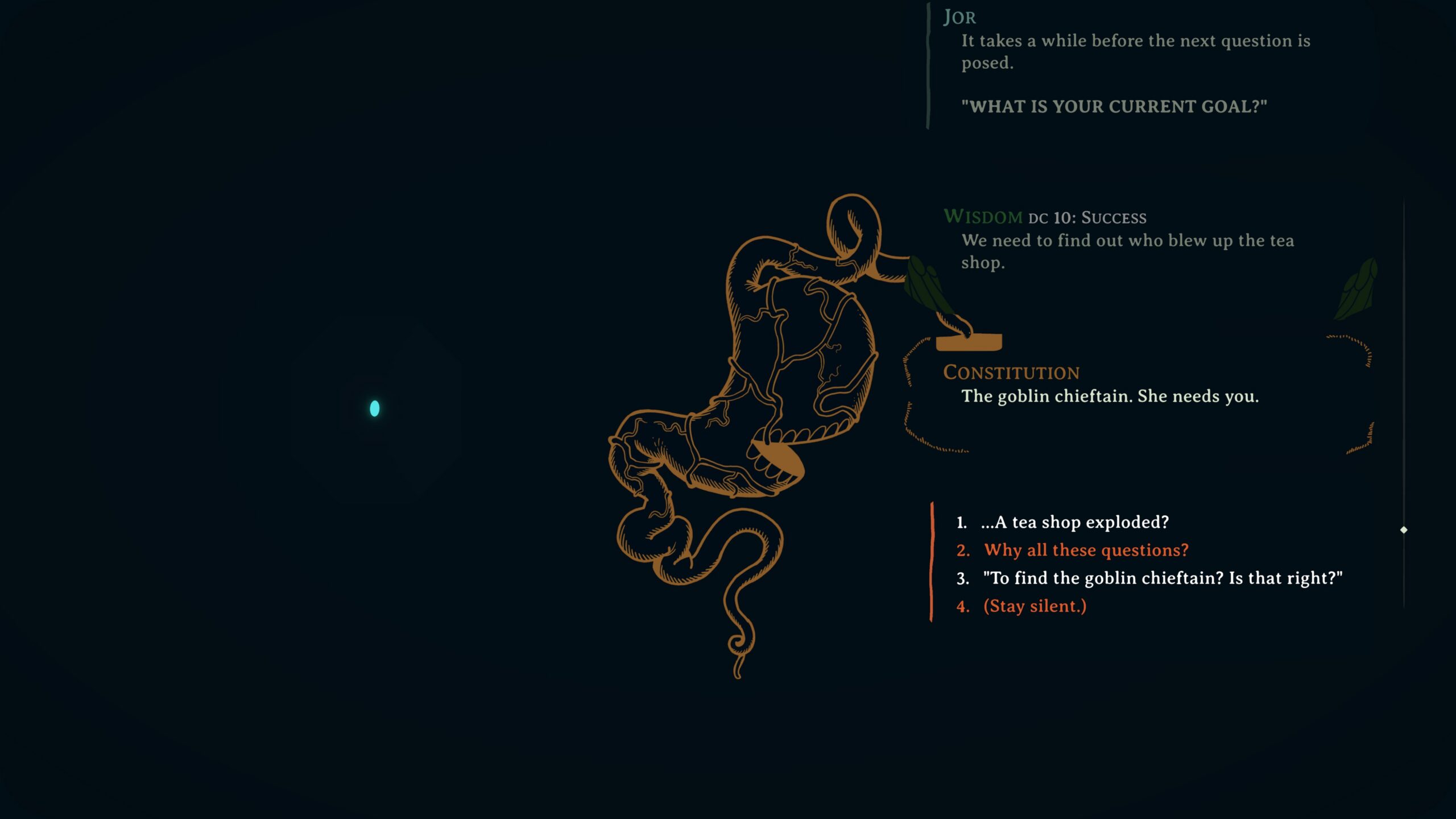
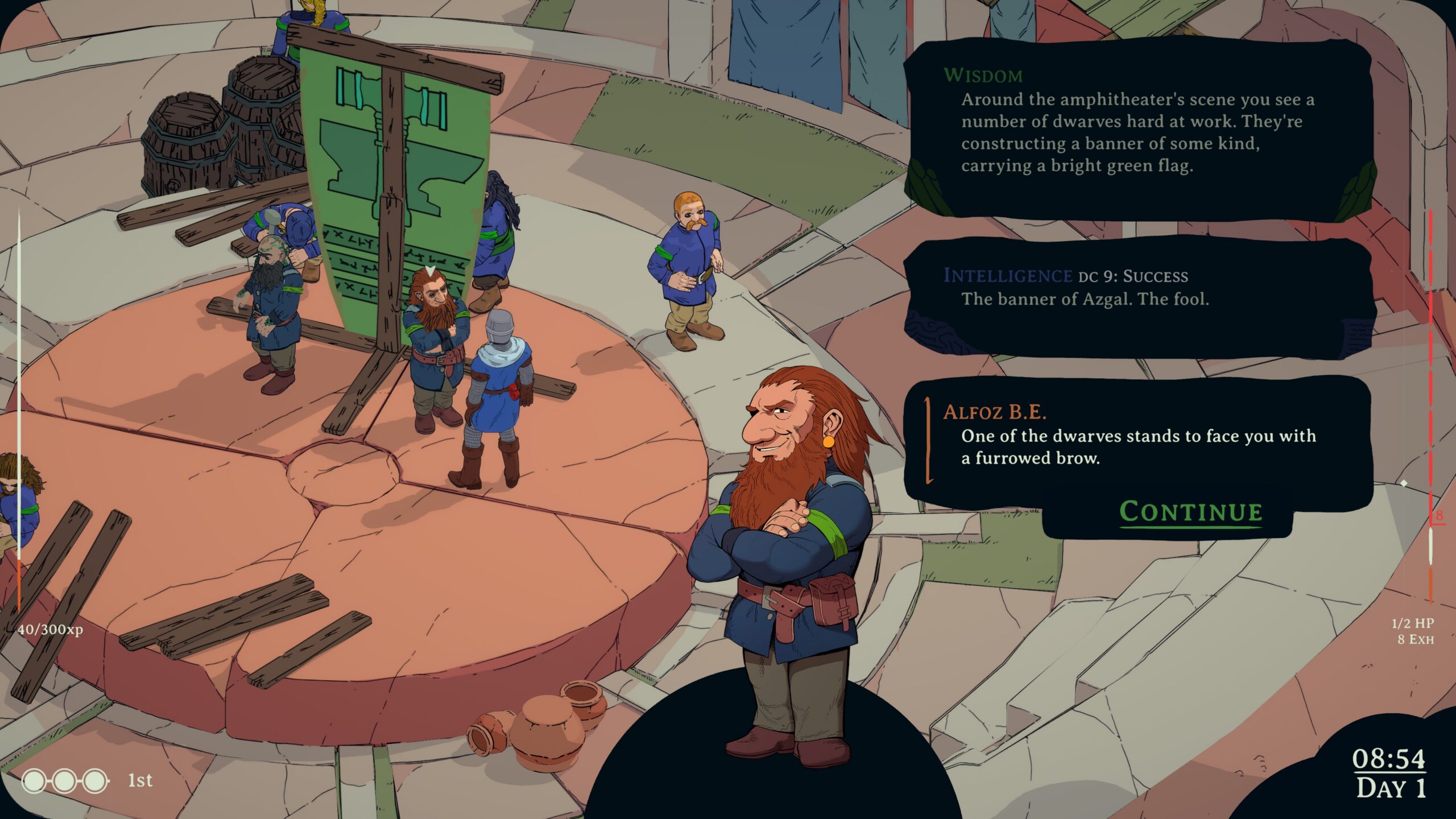
Once the game truly sinks its teeth in, the Disco Elysium comparisons are impossible to ignore, from the branching dialogue to the skill checks woven into every chat. The way your abilities and the distinct personalities of your party members chime in truly gives the game its flavor, injecting constant internal commentary into your decisions, making every encounter feel wonderfully ridiculous. Consequently, the gameplay blurs the lines between a tabletop session and a dense fantasy novel. I also liked the hyperlinked keywords as a way to filter the narrative noise—letting you maintain momentum while still having the option to dive headfirst into the political intrigue.
The randomness, however, is where the game bites hardest. Death saving throws can snowball after just a few poor rolls, and with no sliders to tune the difficulty, every impulsive choice can spiral into a disaster. From petting a seagull too often to offending a goblin or simply trying to climb an innocuous staircase: a single minor slip-up can trigger a chain reaction that sends you into the abyss. While failure can certainly be interesting, most outcomes here feel unrelentingly punitive, leading to jarring, nonsensical ends to your journey.
Without any visual feedback to warn you that you’re nearing a fatal threshold, a sudden death screen simply boots you back to the title menu. For me, the unpredictability hits too hard; it often felt like an unbalanced quirkiness that stripped away my sense of agency. The game desperately needs something akin to Baldur’s Gate 3’s ‘Karmic Dice’—an optional toggle to smooth out these brutal streaks of bad luck—because right now, the game tries too hard to convince you that these ‘bad’ choices are enriching the experience.
A Painterly Metropolis in Half-Silence
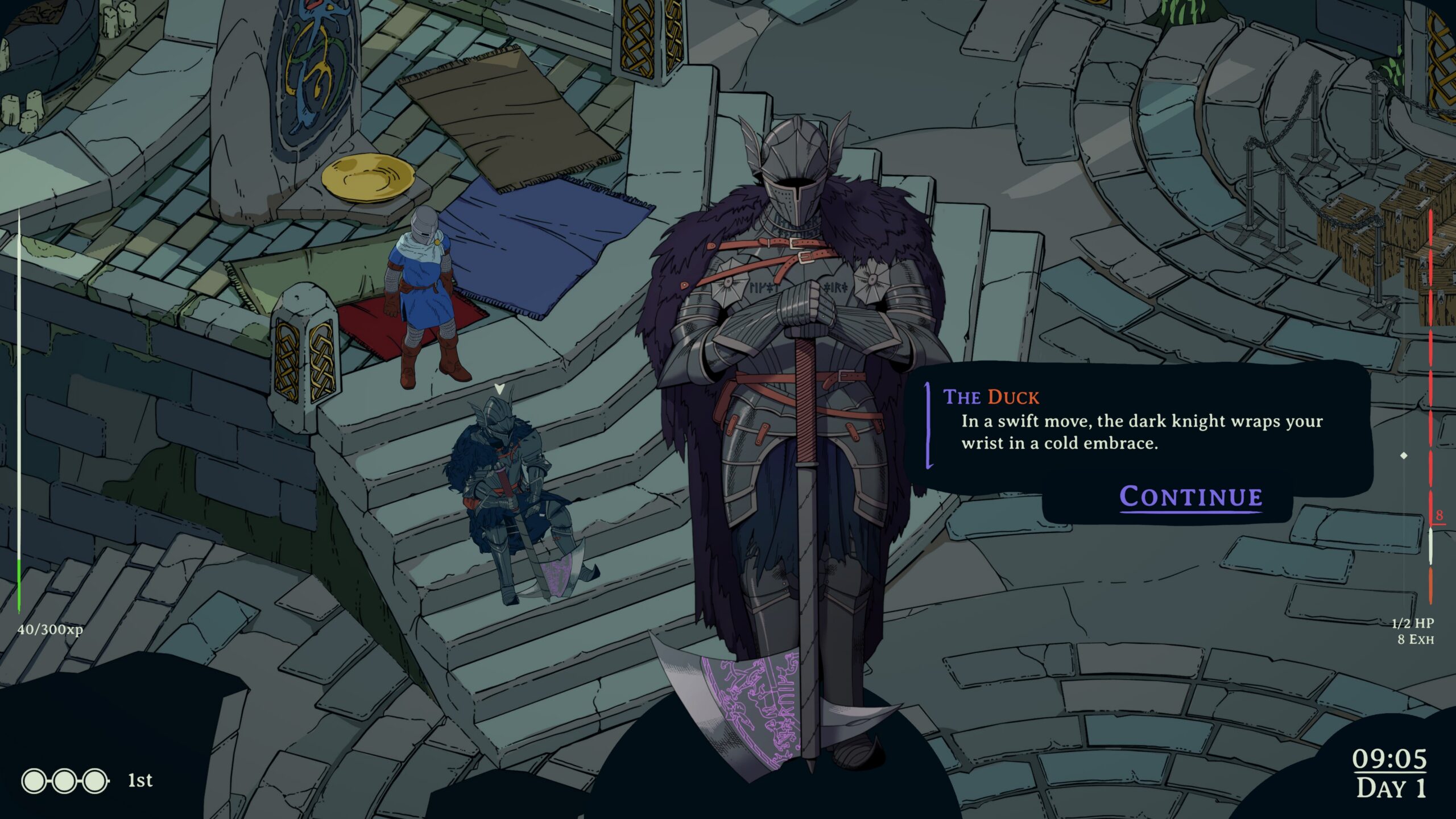
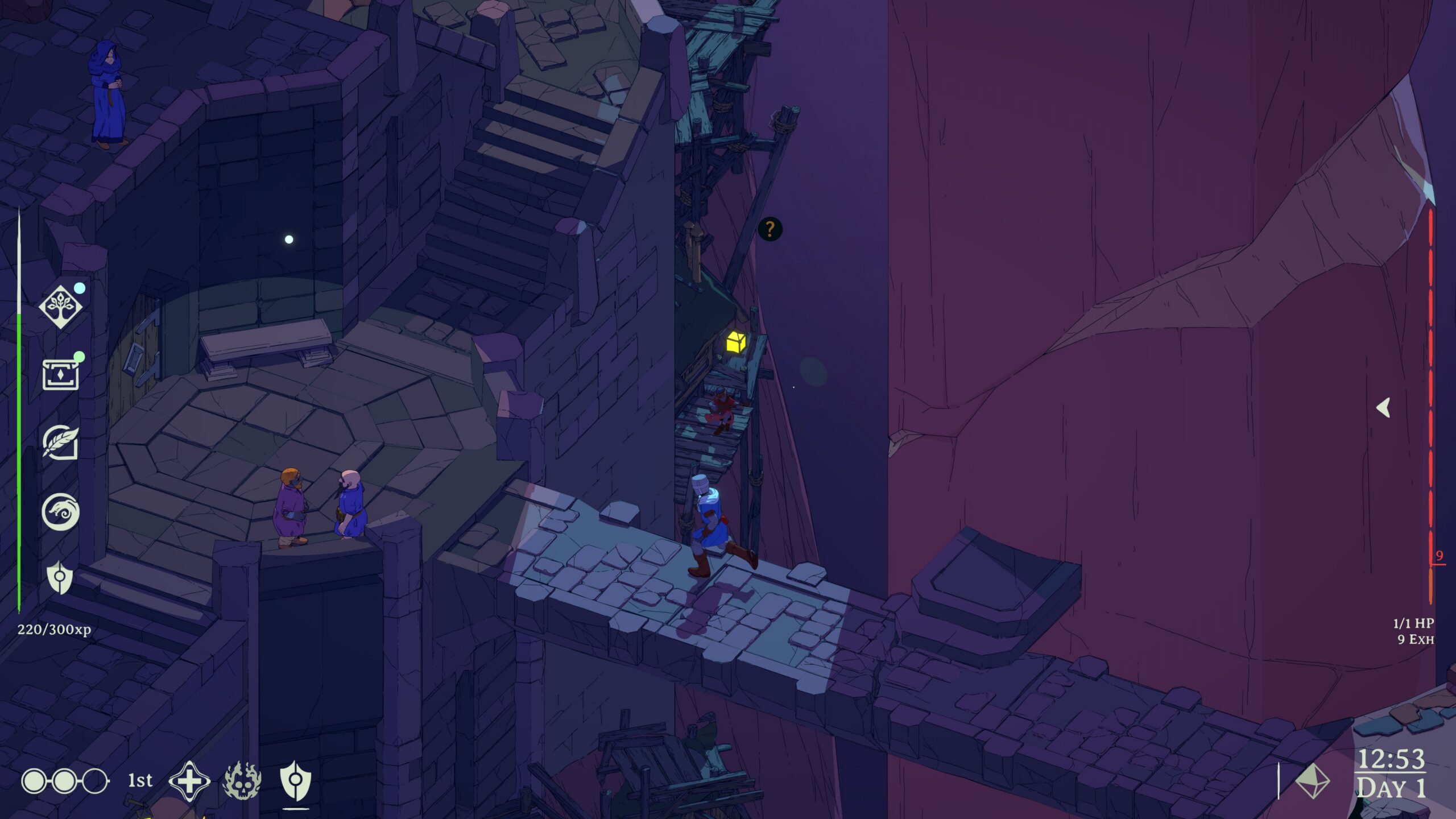
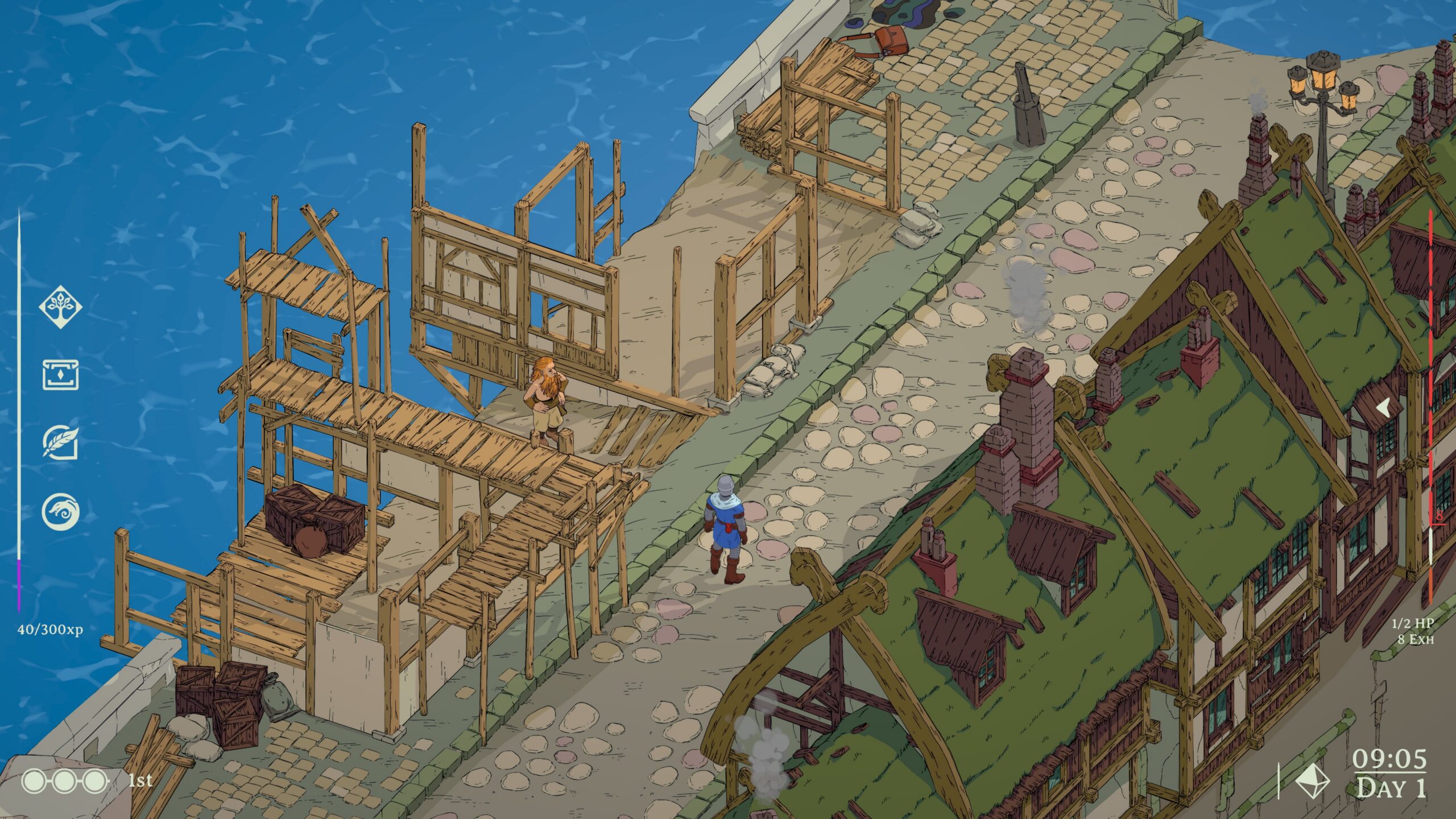
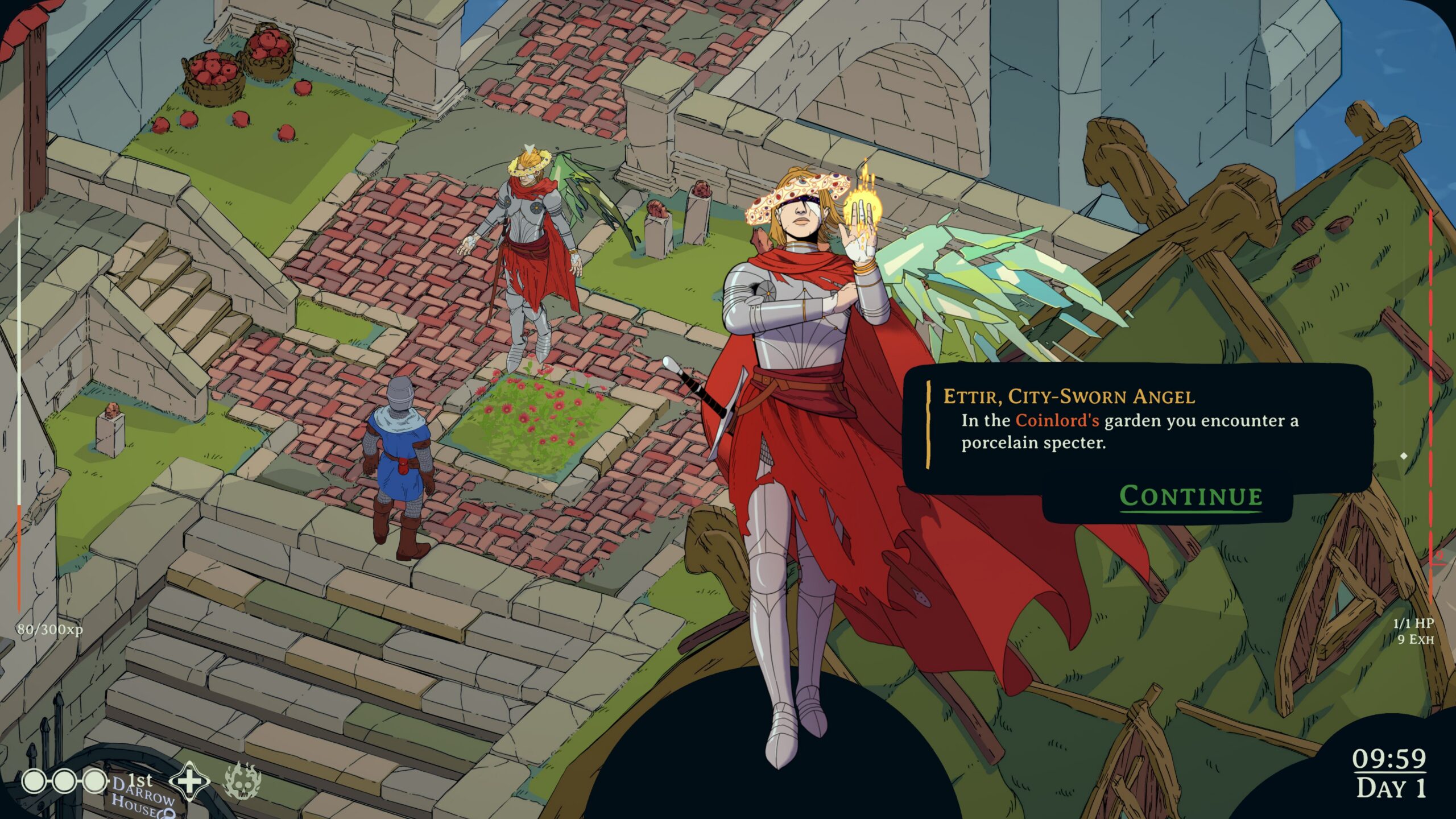
With its striking, painterly comic-book style that breathes personality into every cityscape and portrait, Tolstad is an absolute delight to engage with. The audio, however, is a more complicated affair. While the atmospheric soundtrack is nothing short of excellent, silence often lingers far too long between the synth melodies. Luckily, ambient effects like crashing waves and seagulls keep it from being dead quiet, but the frequent musical drop-offs still broke my flow during long exploration segments.
The technical side feels similarly rigid with its fixed camera—unless we talk about zooming—and heavy reliance on text against static images. Or even plain black screens that I couldn’t help but associate with the minimalist vibe of early Zork adventures. It’s certainly a treat for a specific niche, but it might feel a bit barren for others.
Final Thoughts
Esoteric Ebb radiates ambition and intrigue from every corner, and wandering Tolstad without quest markers feels like a genuine breath of fresh air. The way your stats function as internal voices, frequently chiming in to debate your decisions, and the fact that combat is seamlessly integrated into the same dice-based, turn-based dialogue, elevates the psychological layer into a consistently compelling experience.
However, as randomness often overwhelms your choices and sudden deaths occur without warning, the experience becomes fragile in a way that feels far too punitive. If the game were to offer a way to mitigate the consequences of a chain of bad rolls through a more controlled system, it would have the potential to be an outstanding, unapologetically niche CRPG.
Additional Information
Release Date: Mar 3, 2026
Reviewed On: PC. Download code provided by the publisher and PR agency.
Developer: Christoffer Bodegård
Publisher: Raw Fury
Relevant links: Available on STEAM