 Quentin Clemens
In Death Howl, described as a Soulslike deckbuilder by Danish developer The Outer Zone, the spirit realm holds eyes glaring from the shadows and cards waiting to be added to your deck as you put the twisted critters standing in your way to reviving your son, to rest.
In my first few hours with Death Howl, I found myself asking, what makes this spectral deckbuilder a “Soulslike” one. It’s challenging, sure. You’re surrounded by decay and hauntingly twisted versions of creatures we might otherwise call friends. And yes, you have to collect your XP again from the same place you died. But is that really all that term means?
Layer by layer, the rationale behind this unique experience’s level and combat design unveiled itself to me: the key is that Death Howl, much like Demon’s Souls’ then-revolutionary lack of animation cancelling, locks you into exactly the position you put yourself in. There’s no undo button in the grid-based combat encounters, so if you make a mistake, you’ll either live long enough to tough it out or die to the consequences of said mistake. In between every checkpoint, you are given 20 HP. No more, no less: there is no healing aside from a few very specific circumstances. That means that every hit point taken in one battle will directly influence the difficulty of the next fight ahead.
While that gives Death Howl an admirable sense of purity, it also leaves the impression that it aims to waste your time. Either you try and retry the same battle five times over, eking out the strategic advantage from any opportunity the cards afford you, even with low health… or you give up, respawn at the checkpoint, and fight through the same encounters again, hoping you can avoid damage on the way to the fight you landed on. It can feel frustrating and downright demeaning… but when you pull it off, you do feel like you’ve mastered the cards enough to beat the odds.
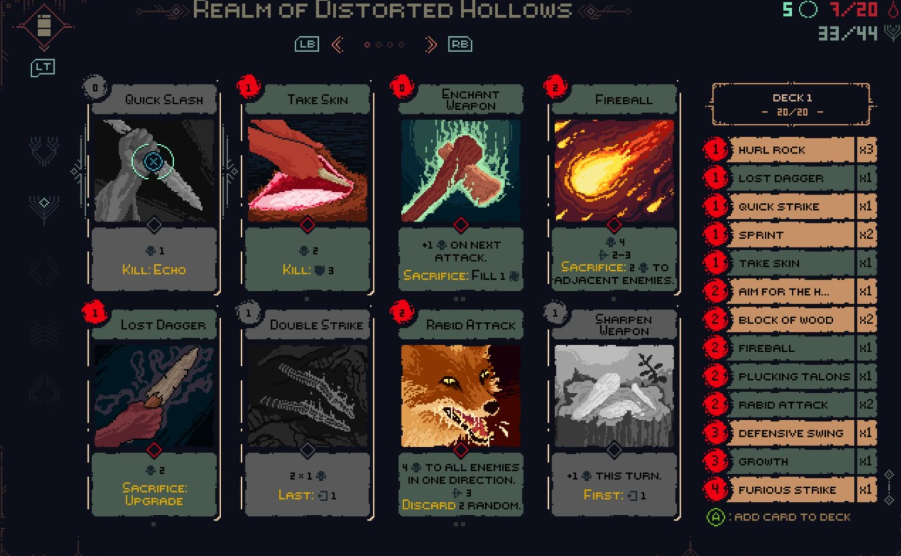
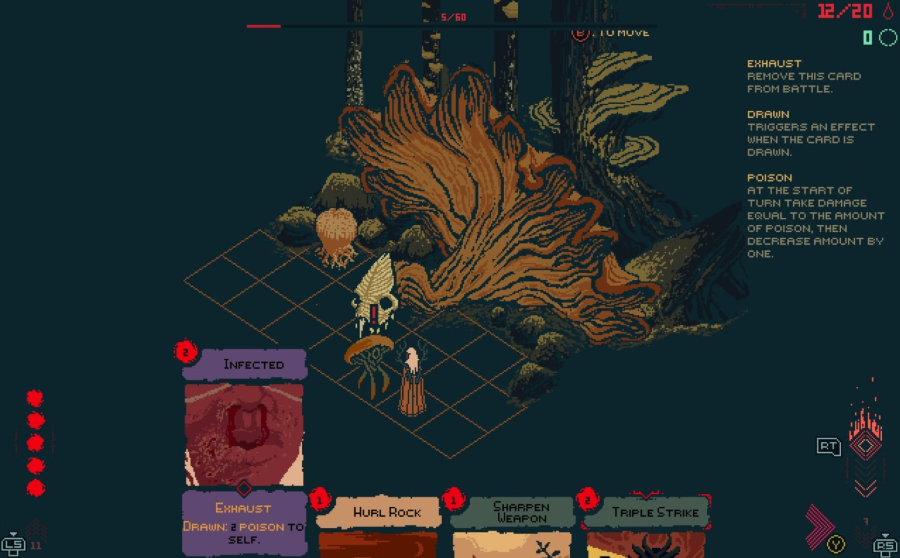
And in some respects, the odds are entirely under your own control: the player has full control over the makeup of their deck, assembling fifteen to twenty cards with various effects, synergies, and costs. There’s no roguelite element here as with many deckbuilders: you always have access to the full album of cards you’ve unlocked, and are free to select any combination of them anytime you’re not in combat. That allows the player an enormous amount of freedom and expression — no two players will have the same deck.
This freeform approach opens up many engaging decisions to make: do I focus on drawing, defense, attack, support, or even summoning cards? How do I balance mana costs and choose synergies that are likely to work in multiple situations? The fact that you always have the ability to switch out cards in between encounters means you can even tailor your deck to every specific upcoming encounter. (Fair warning: if you spot a floating goat head out in the field, you better pump all your strongest attack cards into him at once, before he revives all other enemies!)
One thing I wish Death Howl’s deck had, though, was a deck-saving feature. As it stands, you have to manually rearrange your single deck every time you want to make a change. This is cumbersome, not only if you want to try out a wholly different approach, but also when you move between regions: Death Howl’s various maps all use different sets of cards, and while they are each delightfully distinct and a joy to uncover, crossing the threshold between regions always involves manually rebuilding a deck you had perfected before. Rebuilding decks would also be made easier with features such as card tagging or filters, but Death Howl’s confusing menus offer no such options.
The use, variety, visual design, and balancing of cards is excellent overall, but the same cannot be said about the way you unlock them. Every action you undertake nets you a few experience points, and at regular intervals, those will translate into a new album page of cards you can unlock. To be able to use those, you have to craft them with both materials you pick up along the way, as well as another form of XP that can be expended on either cards or character upgrades (within a lacklustre upgrade tree). Without a way to track which enemy will drop which resource, I often found myself in a situation where I could not craft the card I was most interested in. That’s also due to the fact that the XP used for crafting cards must be banked for upgrades at a checkpoint if you want to heal. With the creativity and trust in the player’s intelligence on display in the actual cards and combat, it’s a letdown that the acquisition of those cards is both so mundane and packed with arbitrary limitations.

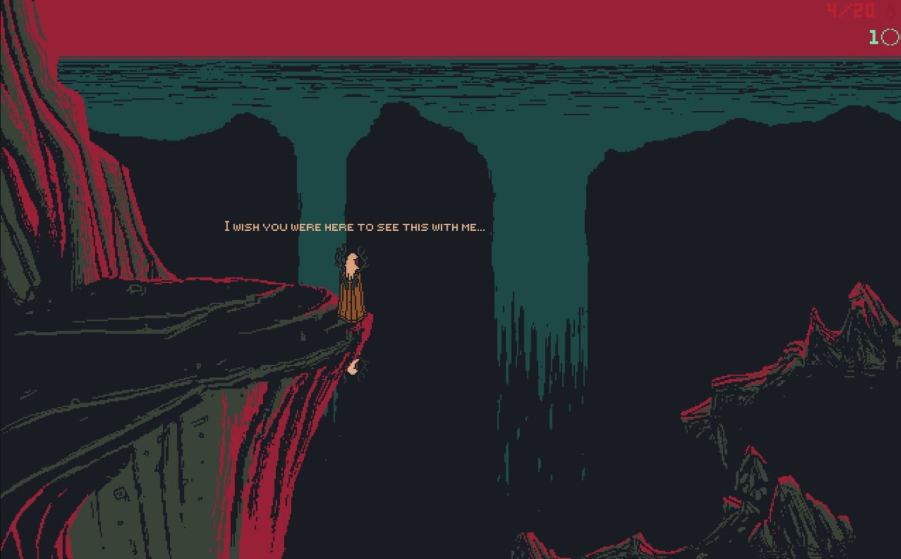
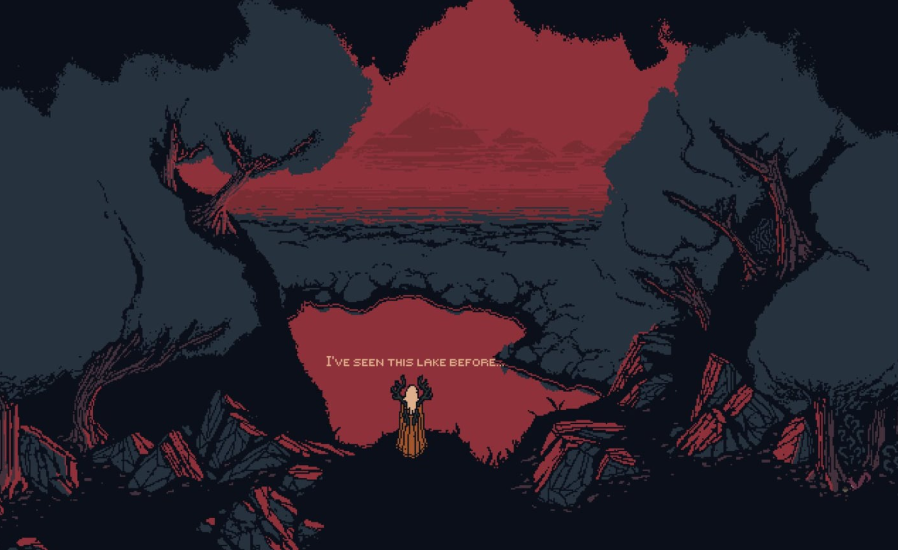
While the story, concerning a mother traversing the spirit world to bring her lost son back to the world of the living, is on the shallow side, Death Howl’s backdrop of an eerie spirit world teeming with lost souls is an evocative one. The first area sees you slog through the smog of a mystical forest where woodland creatures and worse lurk in the dark. Despite the fact that everything onscreen is technically dead in one way or another, the world feels quite alive: the trees have creepy-crawlers on their trunks as well as cute critters scurrying away at their base.
In later areas, rocks crumble from cliffsides as you approach them, cracks form in the ice you walk on. Noses and hands may even appear, breathing and swaying with the wind. Side quests (though sometimes tedious, since they disable fast travel) offer sinister tales that don’t quite flesh out the world, but do add to its eerie, otherworldly atmosphere. And wherever you go, the flickers of light from the darkness ensure you feel watched at all times.
Conclusion
Death Howl is chilling in both its challenge as well as its visual design, but allows players an impressive amount of expression (and catharsis) through its creative and varied tactical card gameplay. Though held back by poor UI, a lack of quality-of-life features, and an uninspired approach to actually gaining new cards, Death Howl breathes new life into the genres that inspired it. Ubiquitous deer carcasses notwithstanding.
Recommended for: patient fans of versatile strategy and deckbuilder games, supported by an eerie atmosphere.
Not recommended for: players who demand convenience or a fleshed-out story.
Additional Information
Release Date: Dec 9, 2025
Reviewed On: PC (Steam Deck). Download code provided by developer and publisher.
Developer: The Outer Zone
Publisher: 11 bit studios
Relevant links: Available on STEAM
 DaRmaZat